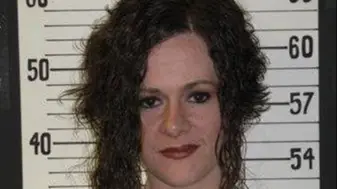
What happens to your body after pentobarbital lethal injection as Christa Pike suffers two failed attempts

Despite reports of 'torturous' symptoms experienced during lethal injections, Christa Pike was able to survive two attempts to carry out her execution on September 30.
The lethal injection is intended to provide a swift and controlled method of execution. However, there have been multiple cases in which executions have gone seriously wrong, with prisoners reportedly experiencing prolonged pain, distress and other severe symptoms before dying.
Christa Pike was scheduled to become the first woman in more than 200 years to be executed by the state of Tennessee yesterday (September 30) - until she miraculously survived two attempts to carry out her execution.
Journalists inside the execution chamber reportedly recalled the 50-year-old 'snoring loudly' for up to 40 minutes after she was administered the so-called 'lethal' drug.
Advert

And while her case is among the most unusual, it has raised further questions about what can happen when a lethal injection goes wrong - and what prisoners are expected to experience when it goes according to plan.
A federal court in Ohio found in 2019: "All medical witnesses to describe pulmonary edema agreed it was painful, both physically and emotionally, inducing a sense of drowning and the attendant panic and terror, much as would occur with the torture tactic known as waterboarding."
But following yesterday's botched execution, Jonathan Groner MD, Emeritus Professor of Clinical Surgery at Ohio State University College of Medicine, has spoken to UNILAD about pentobarbital (the drug that was administered during Pike's execution attempt).
Explaining what it is, Groner said: "It is a short acting barbiturate. It is used to treat seizures and can be used for 'medically induced coma' for patients with severe head trauma.
"It can also be used for procedural sedations. It is no longer used for general anesthesia."

According to Groner, the sedative is 'less effective' if the drug leaks out of the vein or if the IV doesn't successfully go into a blood vessel. In those instances, 'the drug will end up under the skin instead of in the circulation', and therefore will not work as intended.
It's thought that if it's administrated correctly, somebody should stop breathing and die within 15 to 20 minutes.
In terms of pain felt during the process, Groner said it's 'unlikely' to cause discomfort if it's done correctly, but 'highly likely if administered improperly'.
His remarks come after Matt Wells, the Deputy Director of Reprieve US, expressed his concerns about Pike's method of execution and said it was there was a 'high risk' the death row inmate was suffer an 'agonizing death'. He used the case of Tony Carruthers as an example.
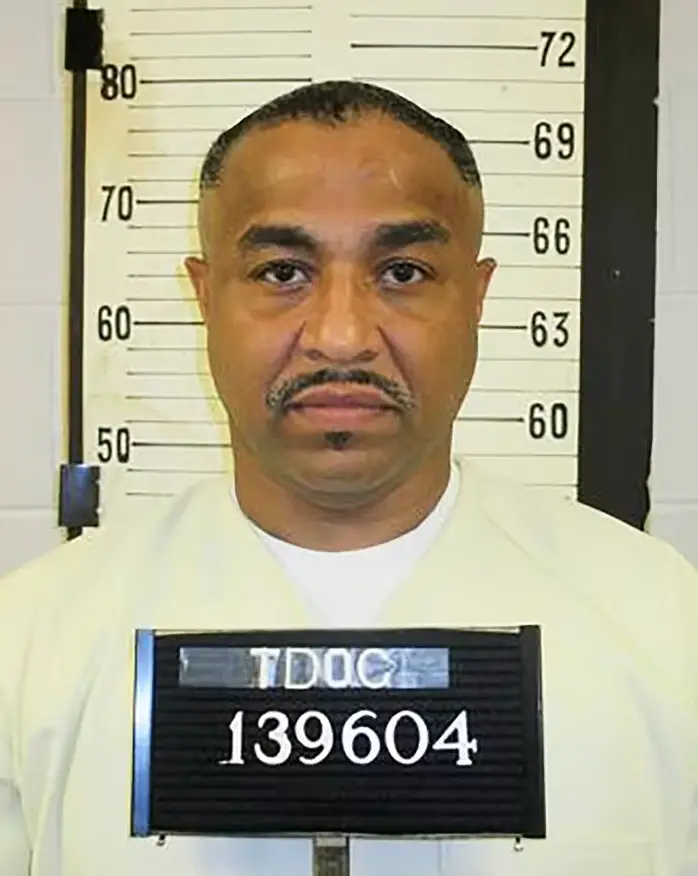
Wells said to UNILAD in July: "Two months ago, Tony Carruthers was strapped to a gurney for over an hour while prison staff stabbed him with needles more than a dozen times as they failed to establish an IV line."
"This is not an isolated incident," he went on. "Our research showed that more than a quarter of botched lethal injections in the modern era lasted over an hour.
"The fact that Tennessee is doubling down on this broken execution method, so soon after torturing a man in the chamber, is beyond belief. There is a high risk that Christa Pike could suffer a prolonged and agonizing death."
The last update given about Pike's condition was that she was still alive and had been hospitalized after her execution went wrong.
 Mia Williams