FIFA share update after Argentina's 'disgusting' behavior after World Cup final whistle

FIFA has launched an investigation into Argentina's conduct following the World Cup final, after Lionel Scaloni's side were accused of violent behaviour in the aftermath of their 1-0 defeat to Spain.
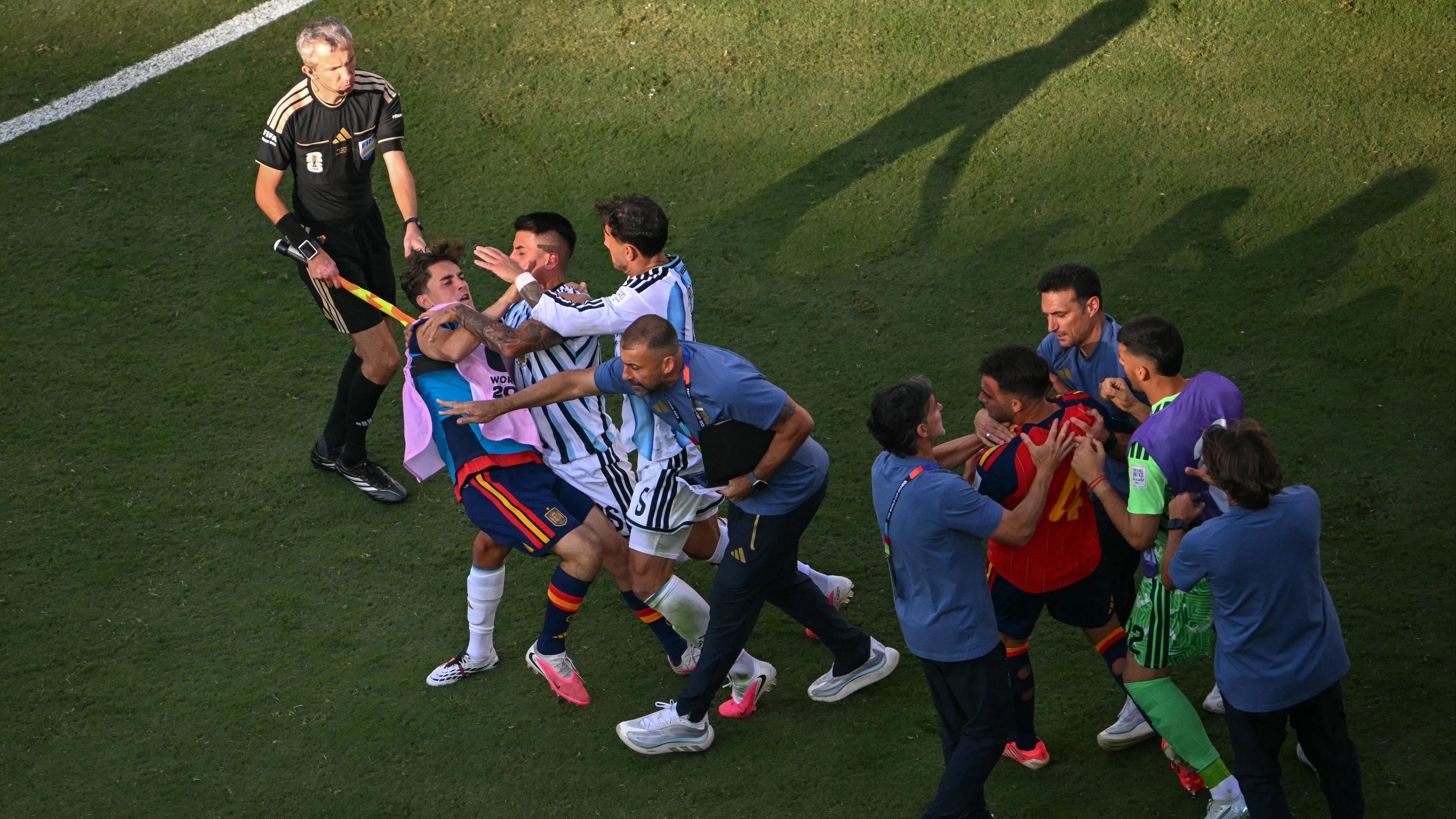
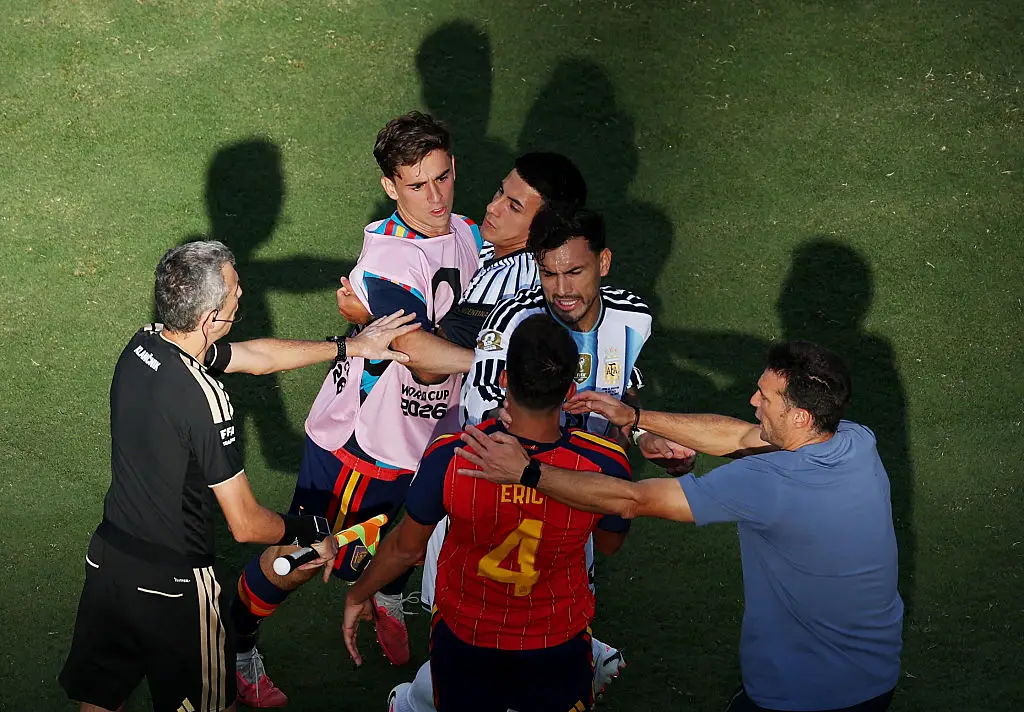
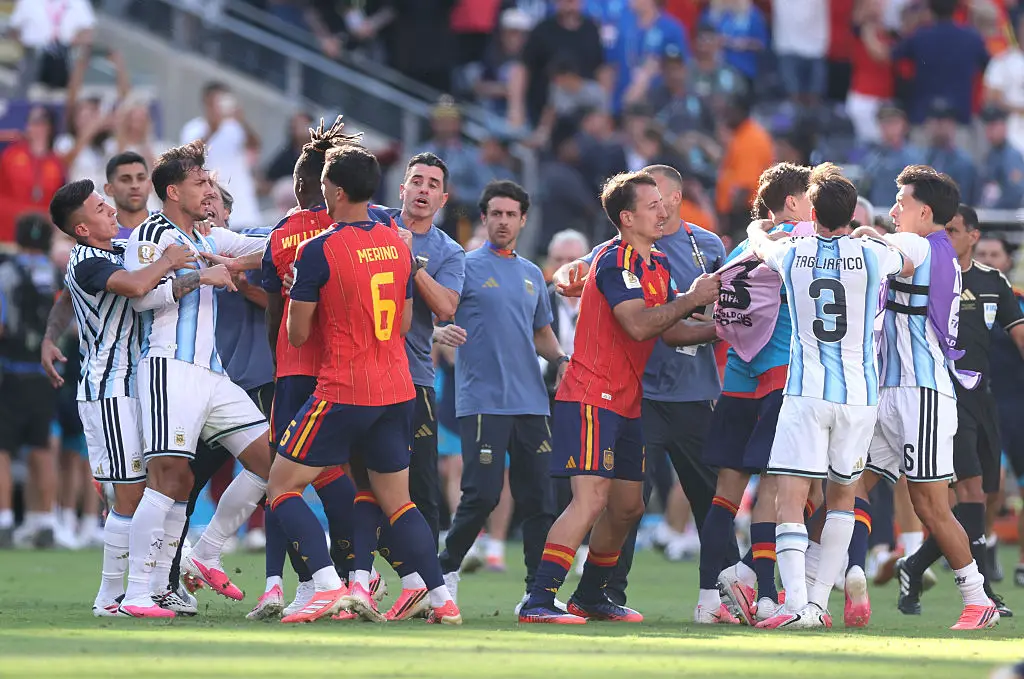
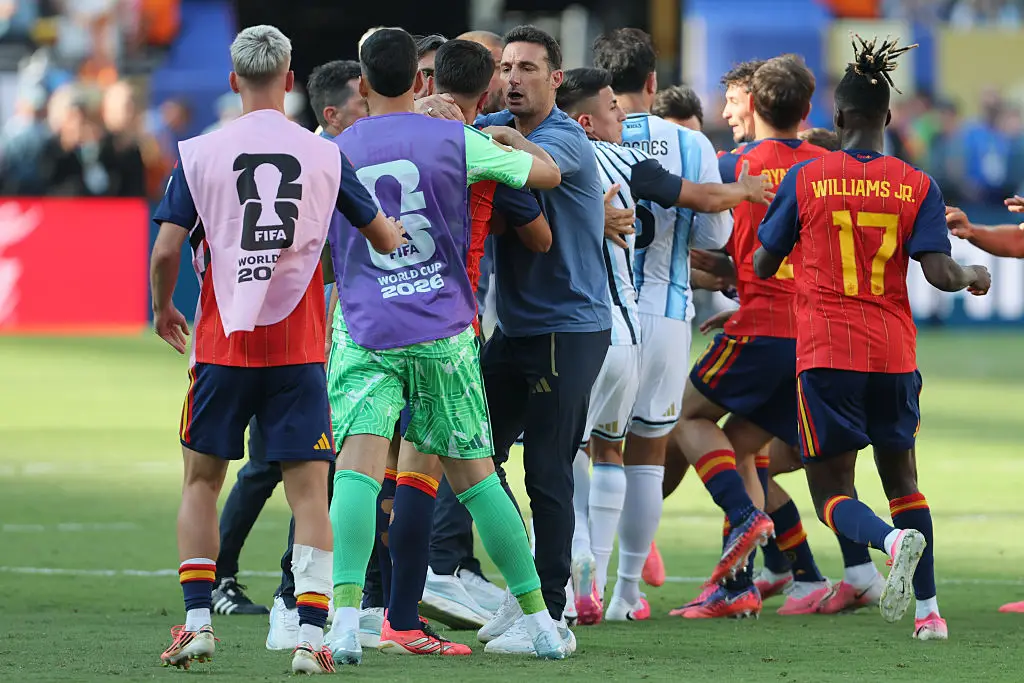
World Cup players were seen getting into physical altercations with their Spanish opponents once the full-time whistle blew at MetLife Stadium on Sunday, with several separate incidents breaking out across the pitch.
Leandro Paredes was shown a red card after the game for placing his hand around Spain defender Eric Garcia's throat before kicking him to the floor.
Paredes then became involved in a heated exchange with Spain's Gavi, appearing to swing at his head before shoving him to the ground.
Advert
Scaloni, talking to reporters after the ugly scenes, said: "We are gracious in victory, and we must be so in defeat."
The incident has prompted FIFA to open a formal investigation into Argentina's behaviour, according to Sky Sports.
What happened between Argentina and Spain after the World Cup final?
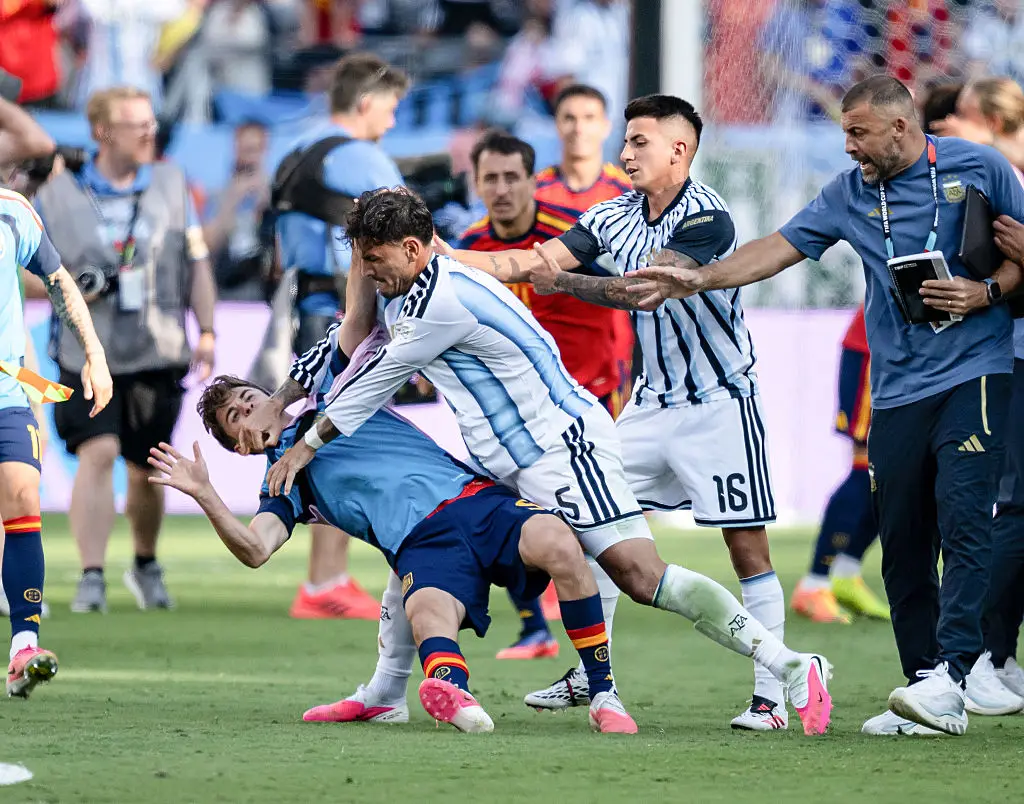
Argentina defender Nahuel Molina was also involved in a post-match scuffle, appearing to strike Rodri in the stomach as the Spain captain ran to celebrate his side's victory.
The blow reportedly drew a furious response from the Manchester City midfielder, who confronted Molina immediately afterwards.
Elsewhere on the pitch, 38-year-old Argentina defender Nicolas Otamendi confronted Rodri separately, this time over pre-match comments made by Rodri and Aymeric Laporte regarding the match officials.
Argentina assistant coach Roberto Ayala, a former professional player himself, was also reported to have thrown a punch at Spain forward Dani Olmo, with Garcia stepping in to separate the pair.
Why is FIFA investigating Argentina after the World Cup final?
The full-time chaos capped off a bad-tempered finale to the tournament, with Spain ultimately lifting the trophy after edging out the defending champions in extra time.
FIFA's investigation will examine the conduct of the Argentina players and coaching staff involved in the post-match incidents, though the governing body has not yet confirmed a timeline for its findings or whether any bans or fines could follow.
The final had already been a fiercely contested affair before the full-time whistle, with tensions simmering between the two sides throughout the 90 minutes and beyond.
Argentina, chasing back-to-back World Cup titles, will now face scrutiny not just for the result, but for how several of their players responded to defeat.
FIFA are also weighing up options to fine Argentina after they displayed a banner which said 'Las Malvinas son Argentinas', which translates as 'The Falklands are Argentine' following their dramatic victory over England in the semi-final.
Where is the next World Cup?
Morocco, Portugal and defending champions Spain will co-host the FIFA World Cup in 2030, marking the football tournament’s 100th anniversary.
It’s set to run from June 8 2030 to July 21 2030, making it the longest World Cup in history at 44 days.
FIFA also announced that three separate matches will take place in Argentina, Paraguay and Uruguay, as a tribute to the first-ever World Cup back in 1930.
All six host nations will automatically qualify, which means we'll definitely be seeing Morocco, Portugal, Spain, Argentina, Paraguay and Uruguay in at least the group stages.
In Spain, matches will take place in Barcelona, Bilbao, Las Palmas, Madrid, San Sebastian, Seville, Valencia, Vigo and Zaragoza.
In Portugal, stadiums in Lisbon and Porto have been earmarked, while the games in Morocco will be played in Agadir, Casablanca, Fez, Marrakesh, Rabat and Tangier.
Plus the three special opening centenary games will be played at the Estadio Monumental in Buenos Aires, Argentina; the Estadio Centenario in Montevideo, Uruguay; and the Estadio Osvaldo Dominguez Dibb in Asuncion, Paraguay.
 Thomas Bamford