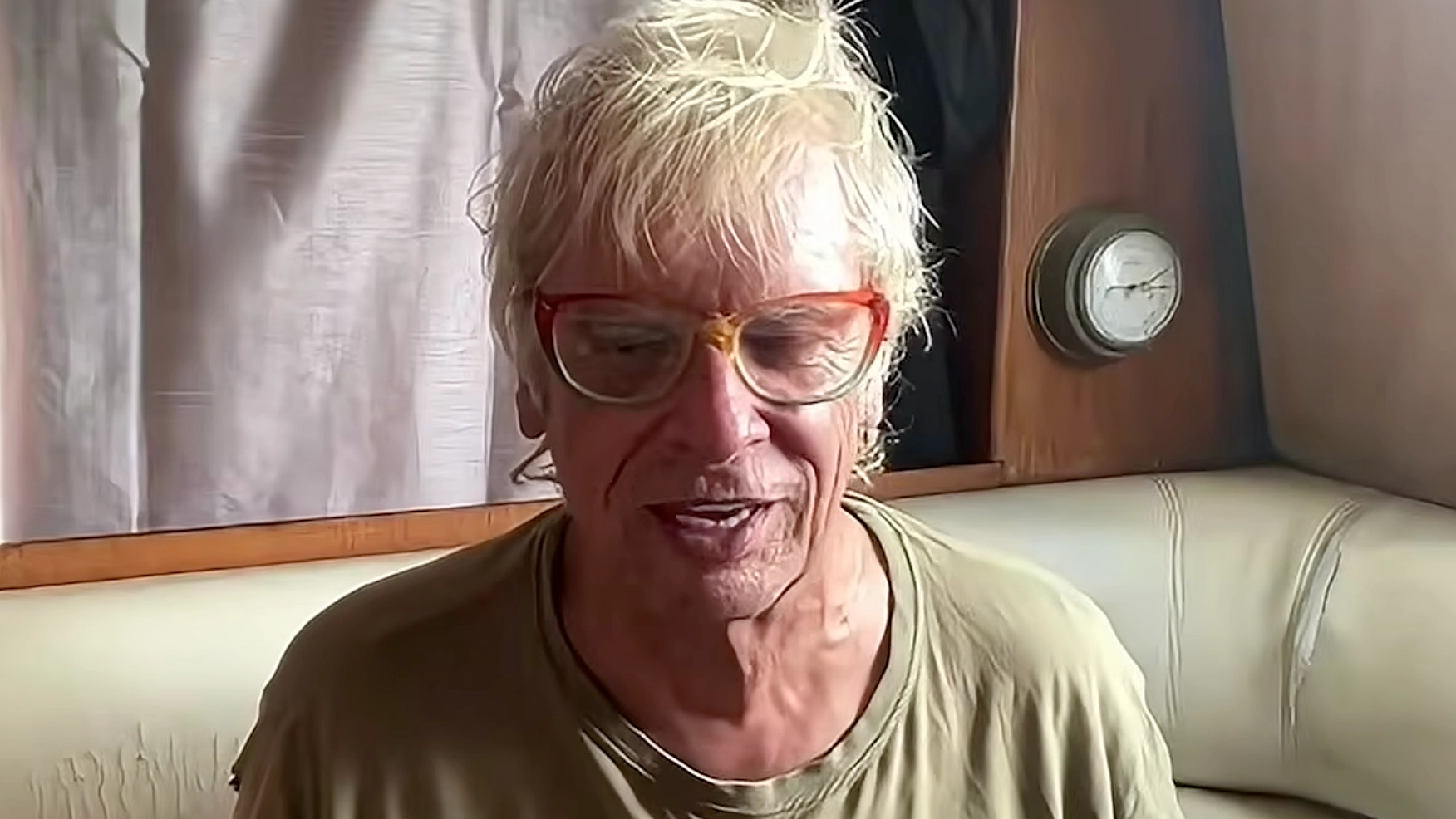
Filmmaker who interviewed Christa Pike decades ago reveals what she's really like behind bars

A documentary filmmaker who interviewed Christa Pike on death row nearly three decades ago has revealed what the convicted killer was really like behind bars, arguing that the state should not attempt to execute her a second time.
Steve Payne sat down with Pike at Nashville’s Debra K. Johnson Rehabilitation Center in 1998, just two years after she was sentenced to death for the brutal 1995 murder of 19-year-old Colleen Slemmer.
Prior to the killing, Pike, her then-boyfriend Tadaryl Shipp, and friend Shadolla Peterson lured Slemmer to an isolated area under false pretences.
Once there, the group subjected the teenager to a horrific 30-to-60-minute assault—beating, slashing, and torturing her before carving a pentagram into her chest.
Advert
Pike ultimately crushed Slemmer's skull with a piece of asphalt, later keeping a fragment of the bone as a trophy and bragging about the murder to classmates.
Pike, who was 18 at the time of the killing and 20 when sentenced, became the youngest woman sent to death row in the United States.

Yet despite the gravity of the crime—which was fuelled by jealousy and a mistaken belief that Slemmer was trying to 'steal' Shipp—Payne remembered being struck by how different Pike appeared in person compared to her demonised public reputation.
Speaking on the Crime World podcast, the filmmaker described the convicted killer as “a scared young girl who, if you met her normally, she wouldn’t come across as being evil.”
“She just was like a normal girl. How she got wrapped up into all this, I don’t know,” Payne said. “She didn’t come across as an evil person at all. She also seemed very remorseful. She was just: ‘I didn’t mean to kill anybody.’ She has always said that she understands what she did. She’s like, ‘Oh, I’ve always been prepared to accept my punishment. I just don’t think I should have ended up on death row.’”
Payne also heavily criticised her original legal representation, arguing her defence counsel failed to present extensive mitigation regarding her upbringing.
“She had a terrible defence lawyer. He was a nice person, but he was a bad lawyer, and he didn’t bring up any of her childhood,” Payne said. “She had the most horrendous childhood. Everyone she came into contact with in her family just beat her.”

His reflections follow global attention on Pike’s case after Tennessee’s unprecedented botched execution attempt on September 30, where lethal injection drugs failed to end her life.
After surviving two doses of pentobarbital, Pike was rushed to an off-site hospital before being discharged and returned to prison on October 10.
With legal battles mounting over whether a second execution attempt would constitute cruel and unusual punishment, Payne insists Pike has already served an effective life sentence.
“I don’t think she should be executed. I don’t think she’s a threat to society. I think she’s paid her penalty,” Payne explained. “Not only was she put in jail for 30 years, which is a life sentence as far as I’m concerned, she was in solitary confinement for 20 of those years.”
Addressing capital punishment more broadly, Payne dismissed the notion that execution acts as an effective deterrent against violent crime.
“There’s this strange kind of dumb attitude that people won’t commit murder if they think they’re going to be executed and that’s just not true,” he said. “I mean, I’ve been on death row. I’ve talked to people. None of them expected to get caught, you know? It’s not a deterrent.”
Topics: Christa Pike, Crime, Death Row
 Phoebe Tonks