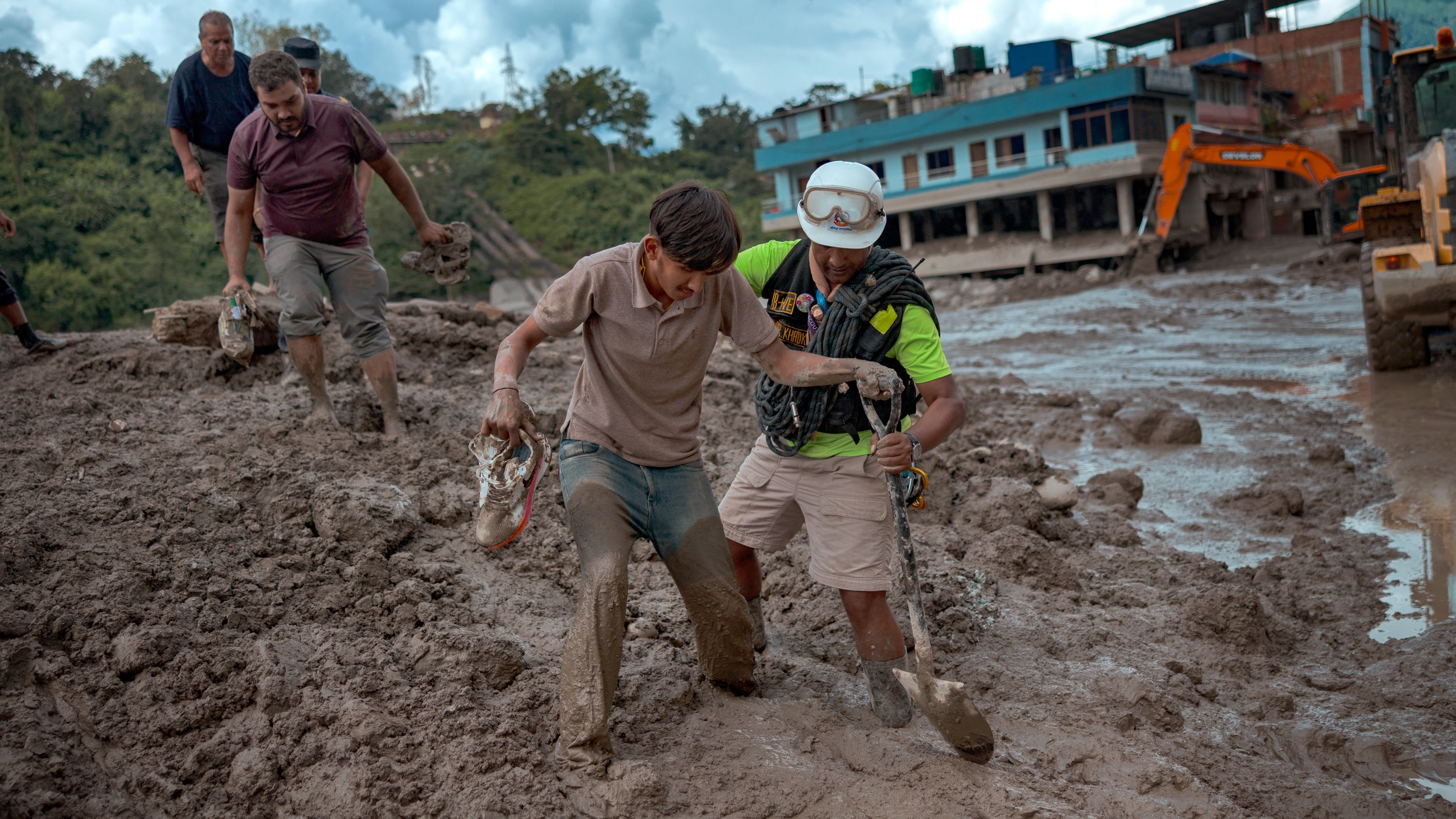
Man tasked with returning flood victims’ bodies to their families speaks out as Nepal death toll soars

A police official working to identify victims of the Nepal flash floods has revealed the reality of his grim daily task.
Sub Inspector Hari Sharan Dhakal is stationed at the Nepal Poultry Entrepreneurs Forum in Bharatpur, where he is leading the heartbreaking mission of reuniting grieving families with their deceased loved ones.
Operating from a desk covered in laptops, Dhakal manages a list of 837 missing individuals, with documents including contact details and smiling photographs provided by desperate relatives.
His office is filled with anxious families waiting to hear of any updates, while new arrivals file in to add names to the rapidly expanding database.
Advert
Identifying the victims is becoming increasingly difficult, with many having spent several days submerged in the river following last Wednesday's (August 26) sudden glacial collapse.
Dhakal explained that the recovered bodies often look 'totally different' from the happy photographs provided by their families, but physical markers like unique tattoos have become vital to the ongoing recovery efforts.
Meanwhile, the tragic discovery of school ties on some deceased children has helped authorities track down their parents.
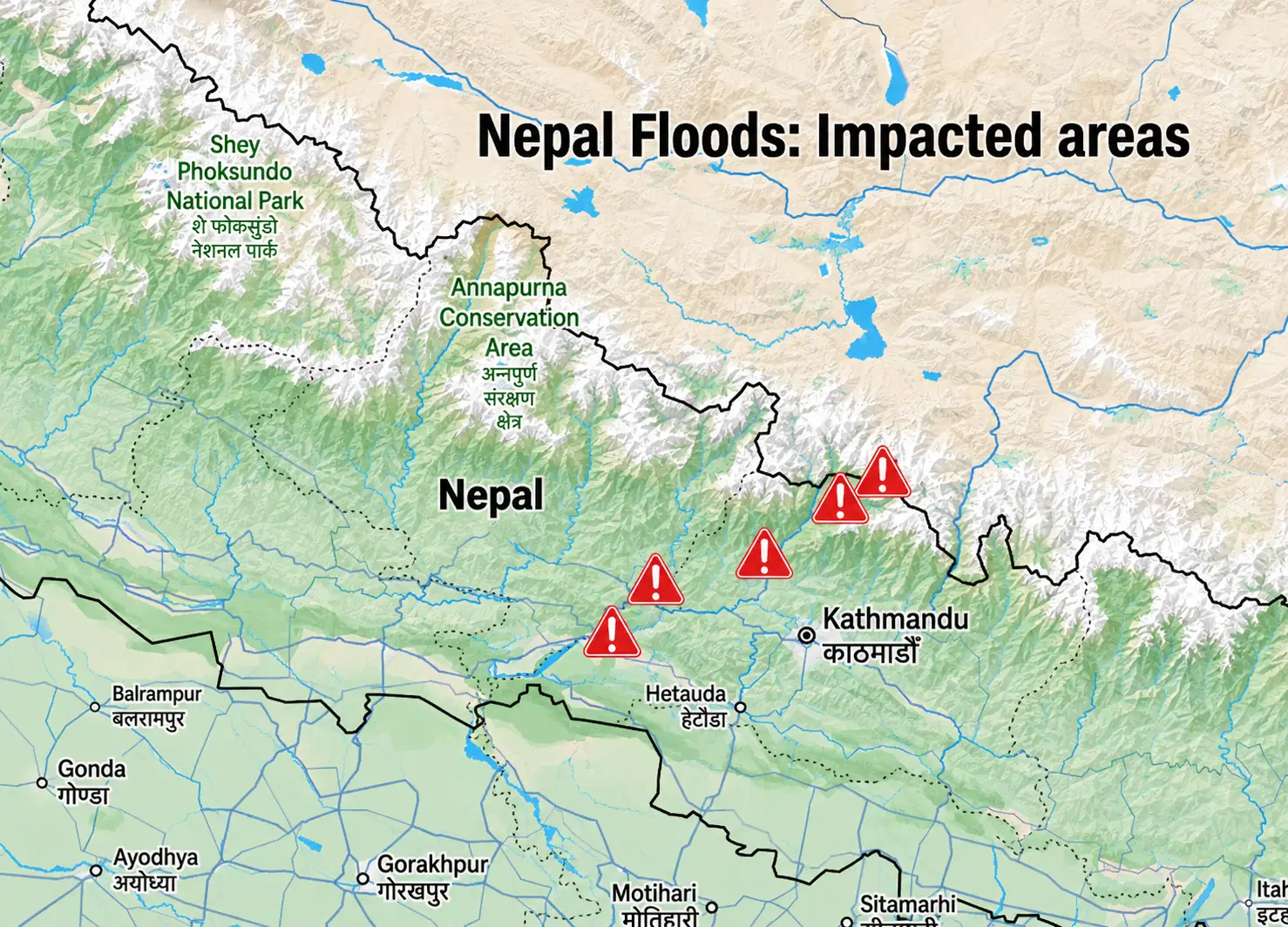
Rescue teams are currently scouring a staggering 70km of riverbanks, while officials are also coordinating with hospitals nationwide to take DNA samples from victims.
On Monday evening alone, 12 bodies were reunited with their loved ones at the forum.
"It’s too much challenging," Dhakal said, per CNN.
"People come to us crying. We feel their pain."
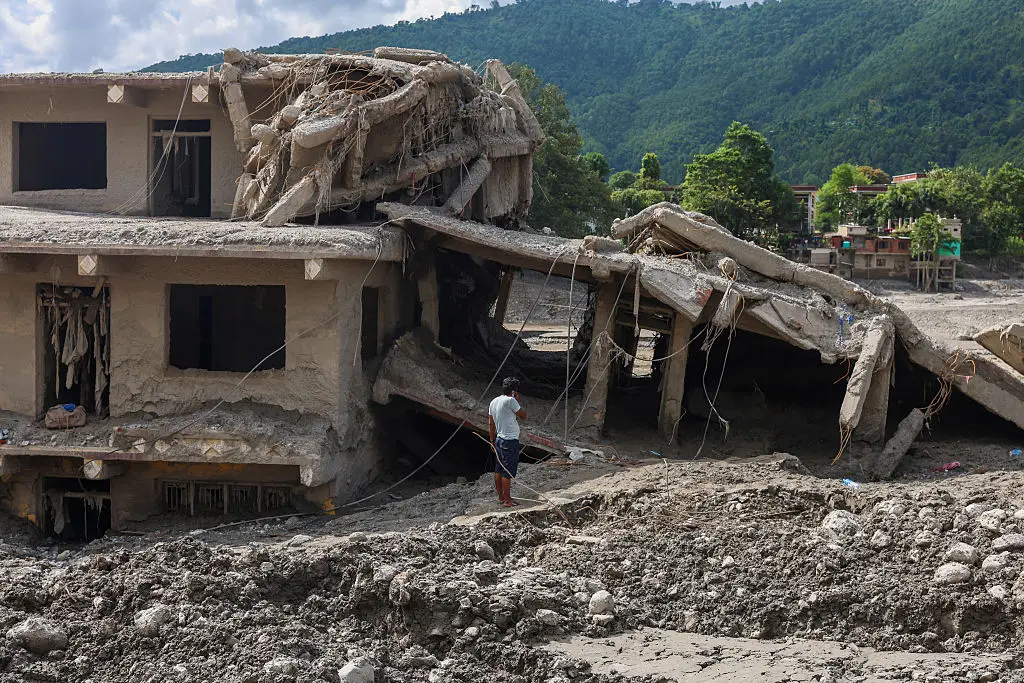
The floods were triggered by a huge glacial collapse high in the Himalayas, which caused a magnitude 5.2 seismic event, while the official death toll has surpassed 1,000 people across the affected region and an additional 4,400 remain missing.
Authorities estimate the recovery effort will require approximately $5 billion, while drone surveillance is monitoring newly formed high-altitude water pools that threaten further flooding.
Meanwhile, a school principal has been praised for his quick thinking that saved 900 students.
Rajendra Dawadi made the bold decision to evacuate Tribhuvan Trishuli Secondary School in Nuwakot on the day the floods hit, after receiving four calls around 9am local time warning him about the pending disaster.
Rajendra ordered buses full of students to turn around to flee the area. As for the kids already at the school, he told them to run to higher ground.
"If we didn't make a quick decision, if it was 10 minutes later, we all - including the students and me - wouldn't be able to speak to you today," he told BBC News.
"A parent came and told me that 'a big flood was coming, I am here to take my daughter, I will take her'," Rajendra continued.
"Parents don't rush without a strong reason, so it was confirmed that I shouldn't waste a second to evacuate the children.
"I decided I shouldn't delay any more. Even if the flood was not coming, it was just a matter of a single day's classes."
The Red Cross - the global humanitarian network that helps people affected by wars, natural disasters, and health crises - estimates 90,000 people have been impacted by the floods.
To donate to The British Red Cross, which helps those affected by natural disasters, you can visit its website.
 Joe Yates