Eerie theory involving coconut crabs resurfaces as search for Amelia Earhart's missing plane intensifies

A team of researchers has begun a new search for Amelia Earhart’s missing plane on a remote Pacific island, and they will spend their nights on a boat to avoid its giant coconut crabs.
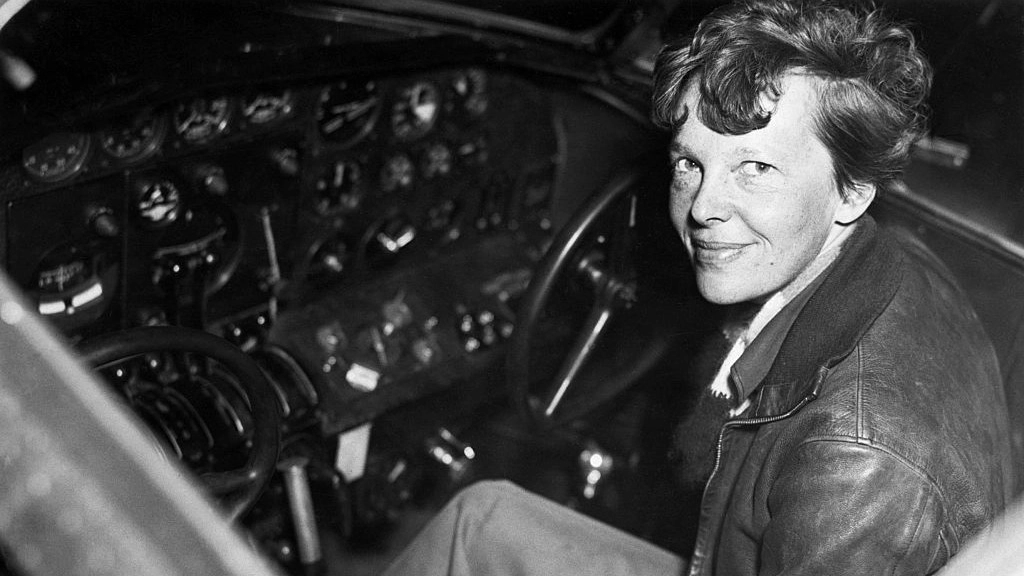
Earhart, the first woman to make a solo flight across the Atlantic, vanished with navigator Fred Noonan on July 2, 1937.
Her Lockheed 10E Electra ran low on fuel and disappeared over the Pacific as the pair attempted to fly around the world.
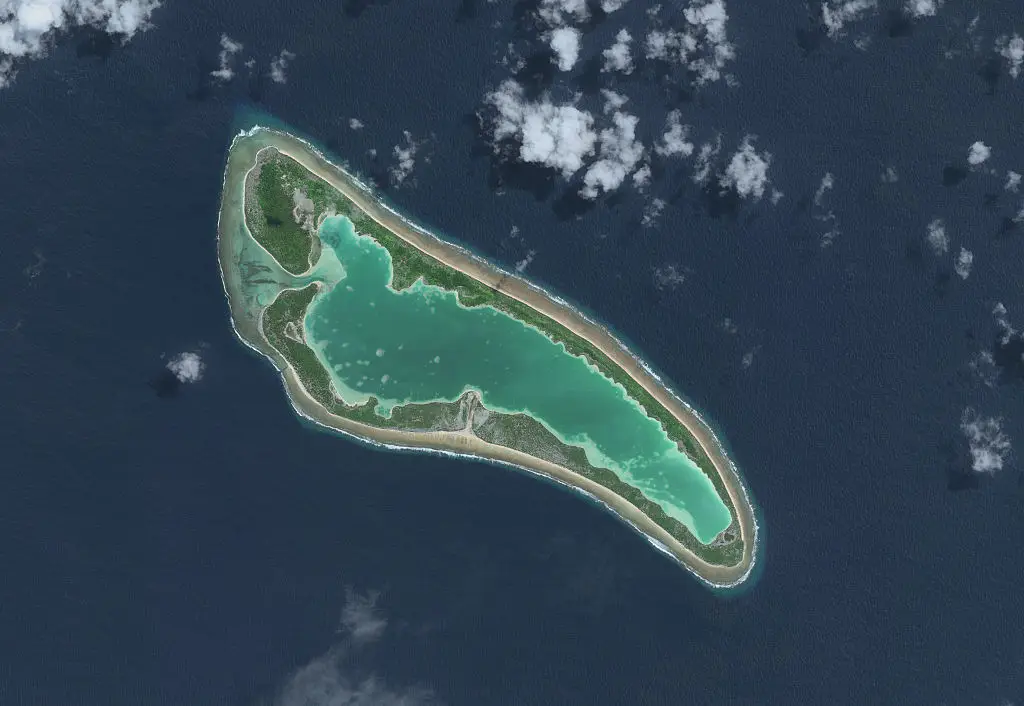
Earhart's disappearance has sparked decades of search missions, research and conspiracy theories. The Purdue University team, from Indiana, arrived at Nikumaroro Island in the South Pacific on Monday.
Advert
The island is overrun with coconut crabs measuring three feet wide and weighing 9lbs.
The search has brought back a theory about what happened to Earhart: that she crashed or landed on the island, which is part of the Republic of Kiribati, and was eaten by the crabs after being wounded.
Was Amelia Earhart eaten by crabs?
According to NASA, British colonists found a woman’s shoe, airplane parts and a box containing a sextant, a navigational tool, in the late 1930s, while later explorations turned up eaten animal bones and evidence of campfires.
The theory that she was eaten by the giant crabs has a history.
British settlers found 13 bones, including a skull, on the island in 1940 and said coconut crabs had scattered many of them.
Doctors at the time said the bones belonged to a short European male, though some anthropologists disagreed.
To test the idea, the International Group for Historic Aircraft Recovery (TIGHAR) gave the crabs a pig carcass. They swarmed it, stripped most of the flesh and moved some bones as far as 60 feet away.
“This tells us crabs drag bones,” TIGHAR’s Tom King told National Geographic.
The bones have since been tested. National Geographic archaeologist Fredrik Hiebert’s team may have found fragments of the 1940 skull in a museum in Tarawa, Kiribati, and forensic anthropologists said it belonged to an adult female. Hiebert told Radio Kiribati in 2021 that DNA results showed the bones belonged to a young Polynesian woman who lived in Kiribati 1,000 years ago, as reported by Radio New Zealand.
What are researchers looking for on Nikumaroro Island?
The expedition is focused on a single target.
Satellite imagery shows a peculiar object that could be the plane, and photos of it have been captured dating back to 1937, the year Earhart vanished.
It is believed to be only 10 feet from the shore of the lagoon, and around five feet below the surface. Other explorers who have searched the lagoon say what appears in the satellite images is a red herring.

Ric Gillespie, executive director of the International Group for Historic Aircraft Recovery, searched the spot in 2001 and 2007 and told NBC News in 2025: 'We’ve looked there in that spot, and there’s nothing there.'
Expedition leader Rick Pettigrew, executive director of the Archaeological Legacy Institute, said in a Monday statement that it was ‘incredibly rewarding’ to be so close to completing the inspection of the Taraia Object.
It has been seven years since the last authorized expedition at Nikumaroro and more than 15 years since anyone was on the Taraia Peninsula.

How are researchers searching for Amelia Earhart’s plane?
The team is currently transporting equipment, clearing jungle vegetation and setting up at the island’s central lagoon.
They will start at the southwestern Taraia Peninsula, surveying its edge for artifacts at the surface and taking a boat to lay out transect lines, which are measuring tapes that help mark the search area, in the surrounding water.
An underwater metal detector known as a magnetometer will check for metal, while sonar will send pulses of sound into the water to find the object under the seafloor, as anything in the way bounces a reading back.
A hydroprobe and induction dredge will then help determine the object’s depth and direction and remove sediment so it can be inspected visually.
Topics: Conspiracy Theories, World News
 Thomas Bamford