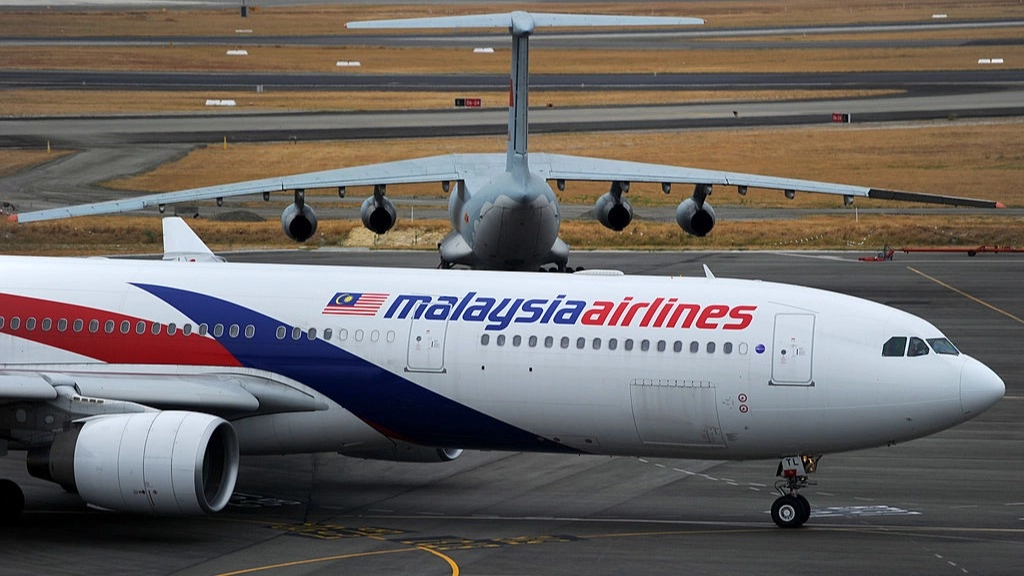
Three most plausible MH370 theories as government resumes search for missing plane 11 years after disappearance

On a morning in March 2014, a Beijing-bound flight took off from Kuala Lumpur International Airport with 227 passengers and 12 crew members on board. But barely an hour into its journey, it began to deviate from its path.
After taking a sharp westward turn, Malaysia Airlines flight MH370 was then seen heading out over the Andaman Sea on military radar. Then, it left tracking range and disappeared.
11 years after this tragedy, often called the greatest mystery in modern aviation, families and investigators still have no idea where the Boeing 777-200ER plane was going, where it went, or what went wrong.
Yesterday, December 3, the Malaysian government announced that the search for the missing plane and the 239 people on board will resume, with the high-tech search efforts contracted to Ocean Infinity, a US robotics company.
Advert
With this new development, three plausible theories about what happened during the deadliest-ever case of an aircraft vanishing have resurfaced.
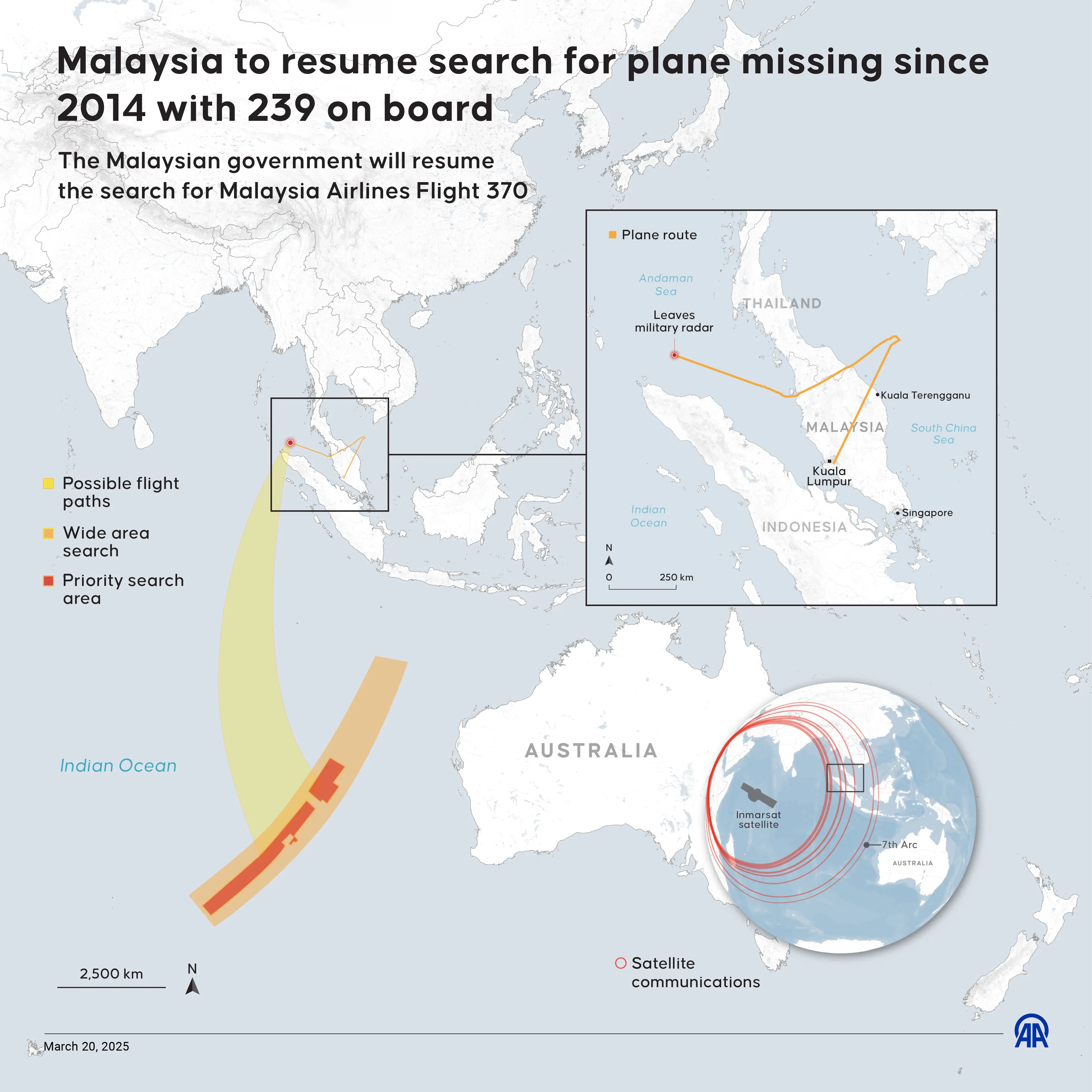
Unlike previous search efforts in 2014 and 2018, which had to find a plane-sized needle in the haystack of the Indian Ocean, this new search will narrow its focus using new theories based on more accurate modelling and new tech - including underwater naval drones.
Ocean Infinity has said that its search parameters had narrowed due to improvements in its analytical models, with autonomous underwater vehicles (AUV) searching a remote portion of the southern Indian Ocean for signs of the plane.
A statement from the company confirmed that officials had allowed them to 'recommence seabed search operations for a total of 55 days', with teams scouring the bottom of the ocean 'intermittently'.
Aviation sleuths and aircraft crash investigators believe they have shortened the list of likely causes for MH370's disappearance to three 'plausible' theories, which could finally be confirmed if more wreckage from the Malaysia Airlines flight is found.
Theory 1 - Ghost flight
While the thought of a 'ghost flight' might sound more like a mystery for Scooby Doo and the gang, investigators consider it the most likely cause for the lack of communications from the flight as it changed direction and headed over the Indian Ocean.
The last air traffic control heard from the flight's cockpit was 38 minutes after takeoff, when co-pilot Fariq Abdul Hamid radioed to say: "All right, good night."
Sleuths have argued that a sudden and catastrophic event inside the plane could have caused the crew to become unresponsive, such as sudden cabin depressurization, leaving the flight to follow an autopilot path over the vast ocean.
This 'ghost flight' theory has been supported by the only other source of information about the flight's journey, brief satellite 'handshakes' that continued for five and a half hours after it left military radars.
Under this theory, the Malaysia Airlines flight would have continued on this automatic pathing until it ran out of fuel and crashed into the water below.
This is further supported by the fact that it flew in a straight line over the ocean for several hours without a human altering its course.
Theory 2 - MH370 was deliberately flown off course
Another plausible reason that the plane made a sharp left turn shortly into its journey to China is that the pilot, co-pilot, or some other passenger, took over the cockpit and forced it into a deadly diversion.
This is supported by its initial sharp about-turn, which is more likely to indicate a human action than some mechanical failure, as MH370 kept flying for several more hours after this moment.
Another chilling piece of evidence was found on pilot Captain Zaharie Ahmad Shah's computer, where data showed that he had simulated flying a plane into the Indian Ocean.
However, investigators do not consider this to be proof that the captain deliberately flew the plane off course.
Theory 3 - Massive mechanical failure eventually takes out the crew
Similar to the 'ghost flight' theory, some accident investigators believe that an escalating catastrophe could be responsible for the plane's disappearance.
Some sort of electronics failure or another fault could have caused the crew to turn the flight back, which is supported by their initial sharp turn to the west from their original northeasterly direction.
This would have followed acceptable emergency return routes for a flight leaving Kuala Lumpur International Airport.
However, this does not explain why the flight appears to follow a fixed path for several hours after this sharp turn.
Some sleuths have argued this could also be due to the fault, with a cascading series of failures eventually incapacitating the crew and passengers, leaving it to fly listlessly until it ran out of fuel.
Topics: MH370, Conspiracy Theories, Plane
 William Morgan