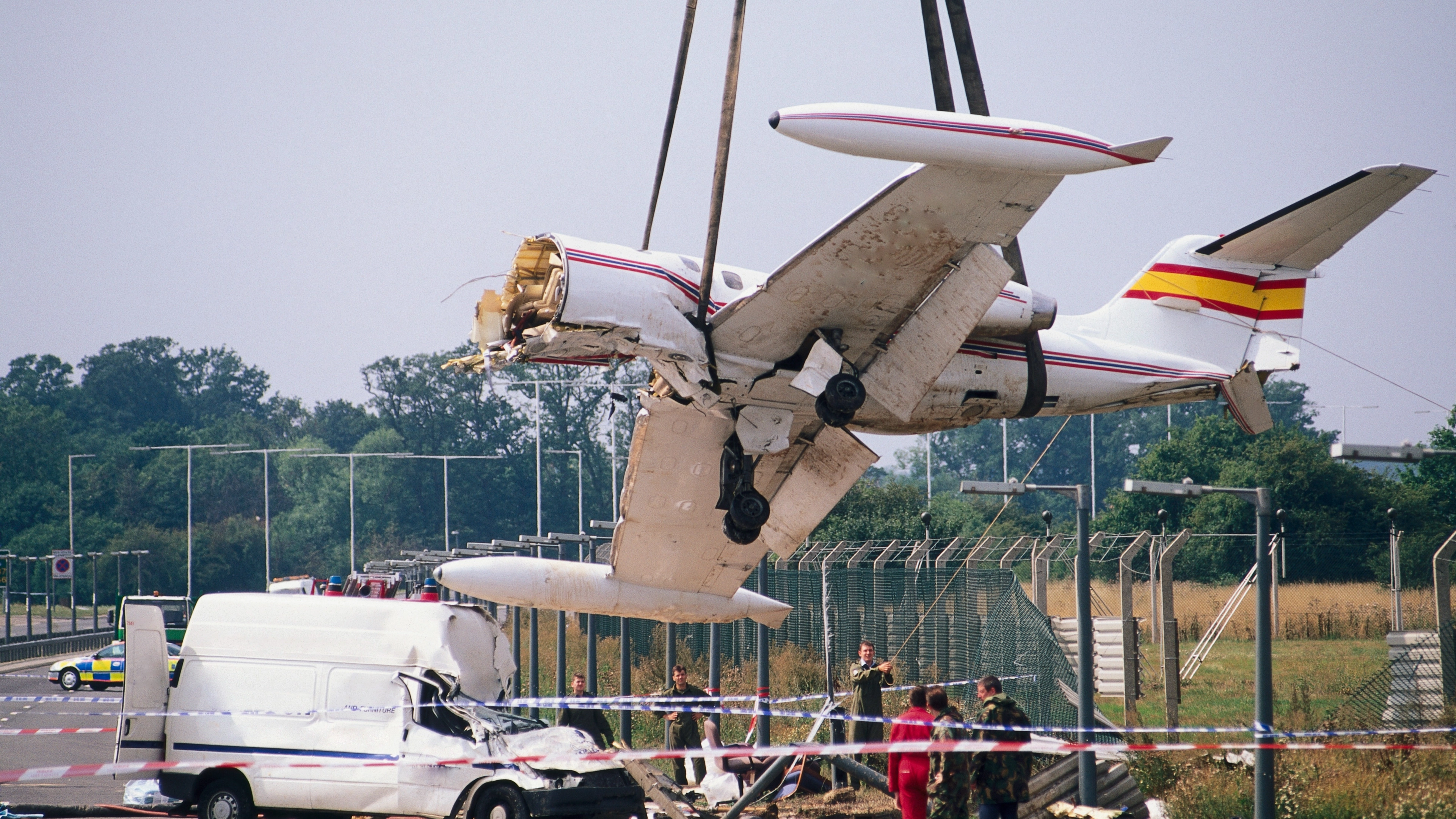
Seven new details emerge in tragic Florida Learjet crash that killed nine

As the investigation into what caused the deadly plane crash in Florida over the weekend continues, new findings are giving experts a clearer idea about what might have happened.
The Learjet 60 was en route to the Bahamas from Austin, Texas, but during the planned trip, the jet came down in Palm Beach County, leaving a large crater in the ground.
Tragically, everyone onboard - pilot Jeff Gregory, 55, co-pilot Nathalia Filgueiras, 20, entrepreneur Adam Robinson, 45, his wife Helen Sharp, 40, their toddlers, Emma and Charlie, their nanny, Anita Maria Cetina, and another couple, Rachael Reed and Charmi Fehr - lost their lives.
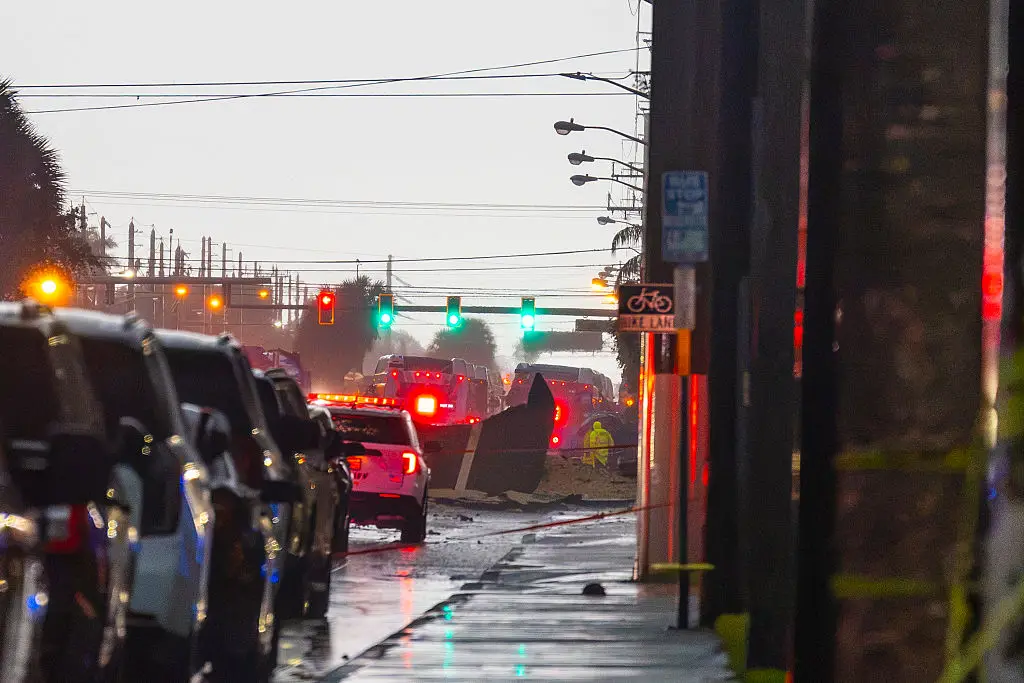
As of now, federal authorities are investigating the crash and the subsequent debris field stretching half a mile.
Advert
Although we're still waiting on the results of the National Transportation Safety Board's (NTSB) investigation, experts are able to speculate about the plane's final moments based on what's been found so far.
Part of the jet was found miles away
Officials with the National Transportation Safety Board say severe weather played a ‘significant factor’ in the crash, but also that part of the jet appeared to have broken off before impact.
The NTSB confirmed that the majority of the Learjet's left elevator - a control surface on the tail - was found in three pieces.
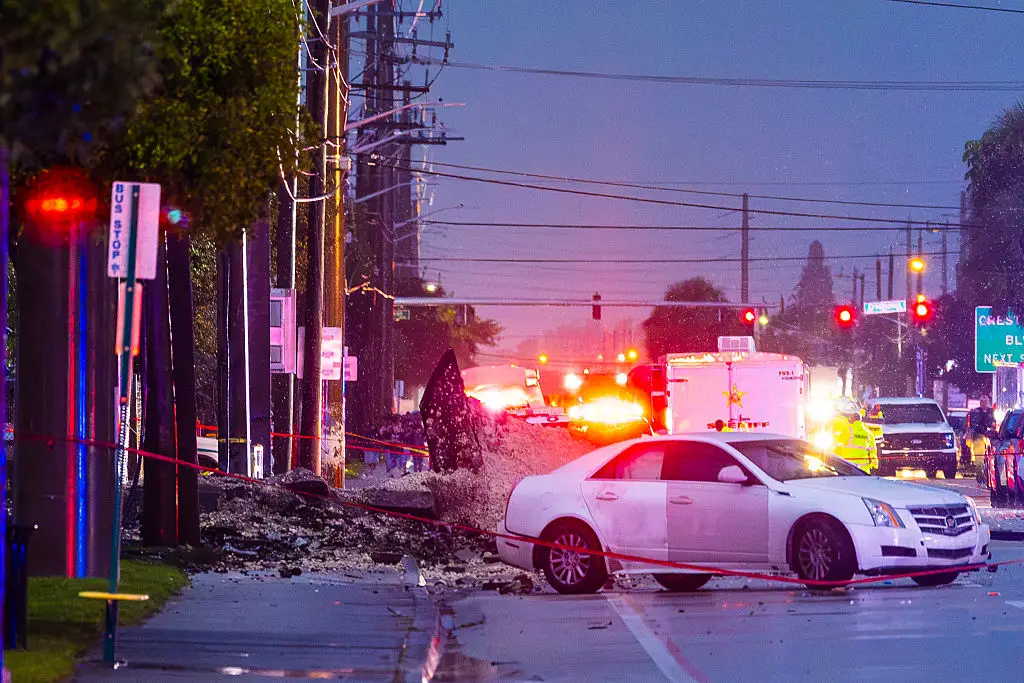
Board member Tom Chapman said in a briefing that the parts were 'quite some distance away' from the crash site, leading investigators to determine they fell off before impact.
"Knowing that it was lost is a very important piece of evidence in terms of pointing us towards other things to investigate," he said.
Another component of the jet may have been missing
According to freeze frames from videos, it appears that the entire horizontal stabilizer was missing from the Learjet’s tail before impact, Law&Crime reports.
However, this hasn't been officially confirmed.
The horizontal stabilizer provides pitch stability.
Two competing theories as to when the left elevator broke off
Experts are split on when part of the plane's tail broke off.
Aviation Safety expert Jeff Guzzetti told the AP that the pieces of the elevator breaking off were likely to be a byproduct of the nosedive, but not the cause.
He said that if they had broken off at altitude, they'd be much further away from the crash site.
Former NTSB member John Goglia has a different theory, pointing to the fact that flight tracking data appeared to show the aircraft leveling off for a few seconds at around 8,000ft (2,438 meters) before it began to nosedive to the ground.
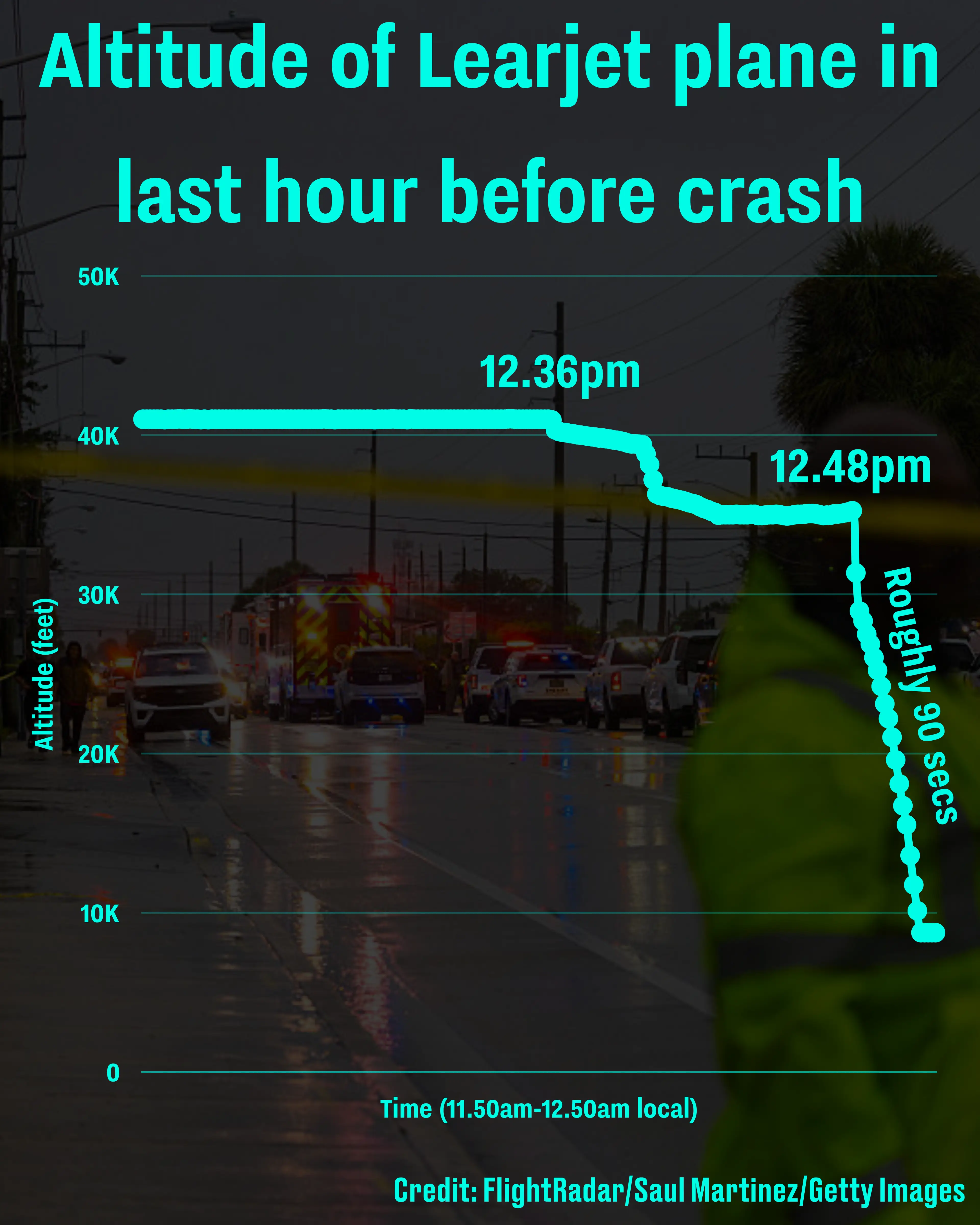
The expert told The Guardian it could be possible that tail pieces came off when the captain of the plane attempted to pull up sharply in an attempt to level out.
“He apparently leveled off for brief moments at 8,000ft and to accomplish that he likely overstressed the tail and the horizontal stabilizer separated from the airplane,” Goglia said.
The jet could have been put under extreme conditions
Retired former Northwest Airlines pilot Captain David Funk spoke with Law&Crime Network to reveal his thoughts on the matter.
To him, the elevator - which he says is positioned at the top of the tail - requires extreme pressure to break it off.
He said a plane would have to be 'overstressed and it takes a lot of force to pull an elevator off the airplane'.
Pointing to tracking information which showed the jet 'gained 15,000, maybe 20,000ft in less than 20 minutes' due to a developing storm in the area, he said when the jet climbed to the upper altitude levels above 30,000 feet, 'severe turbulence and rapidly developing clear icing is a possibility'.
He said the model in question would be able to withstand only certain speeds, between its maximum operating speed and stall speed.
"If either one of those are exceeded, the airplane either goes into Mach tuck where the nose tucks down because of the severe drag that's caused by exceeding its maximum Mach number or it stalls."
He said this would 'cause the nose to drop down' and the plane could struggle to maintain its altitude.
The crews' working conditions will be investigated
In light of the crash, Captain Funk says investigators will examine whether the pilots had been fatigued, overworked or if this was less of a human error and more that the jet was at fault.
He said: "We have our knowns and we have our unknowns. We can figure out what the crew's training records were. We can figure out what they've been doing for the last two weeks. Were they overly fatigued? Have they had long day after long day with short nights between them?"
He added of the jet that 'the maintenance records' will come to light which will show if there were known 'structural issues with the tail and there been any repairs, any cracking, any airworthiness directives' and more.
He asked whether this could have been a case of the pilots being caught in an 'unsurvivable' storm, or something more.
 Britt Jones