How filming the solar eclipse might have damaged your phone

The solar eclipse may have been and gone, but the impact it may have had on your cellphone will remain...
People across the globe eagerly awaited for the total eclipse, which happens once in a generation.
More than 90 percent of the Sun was obscured by the Moon, the most it has been blocked since the total eclipse in 1999.
Amateur astronomers were scrambling to get their hands on special eclipse viewing glasses (since you cannot look directly at it) but there were alternatives people could have used – one involving a cardboard box.
Advert
Others may have viewed the rare phenomena through the phone camera, which some experts advised against. Doing this may not have damaged your eyes, but it's likely to have damaged your cell.
Addressing the matter, Jez Samuel, mobiles expert at Uswitch.com, told Daily Mail: "Your phone screen is safe to look at throughout Wednesday's eclipse – it's the camera lens that needs protecting."
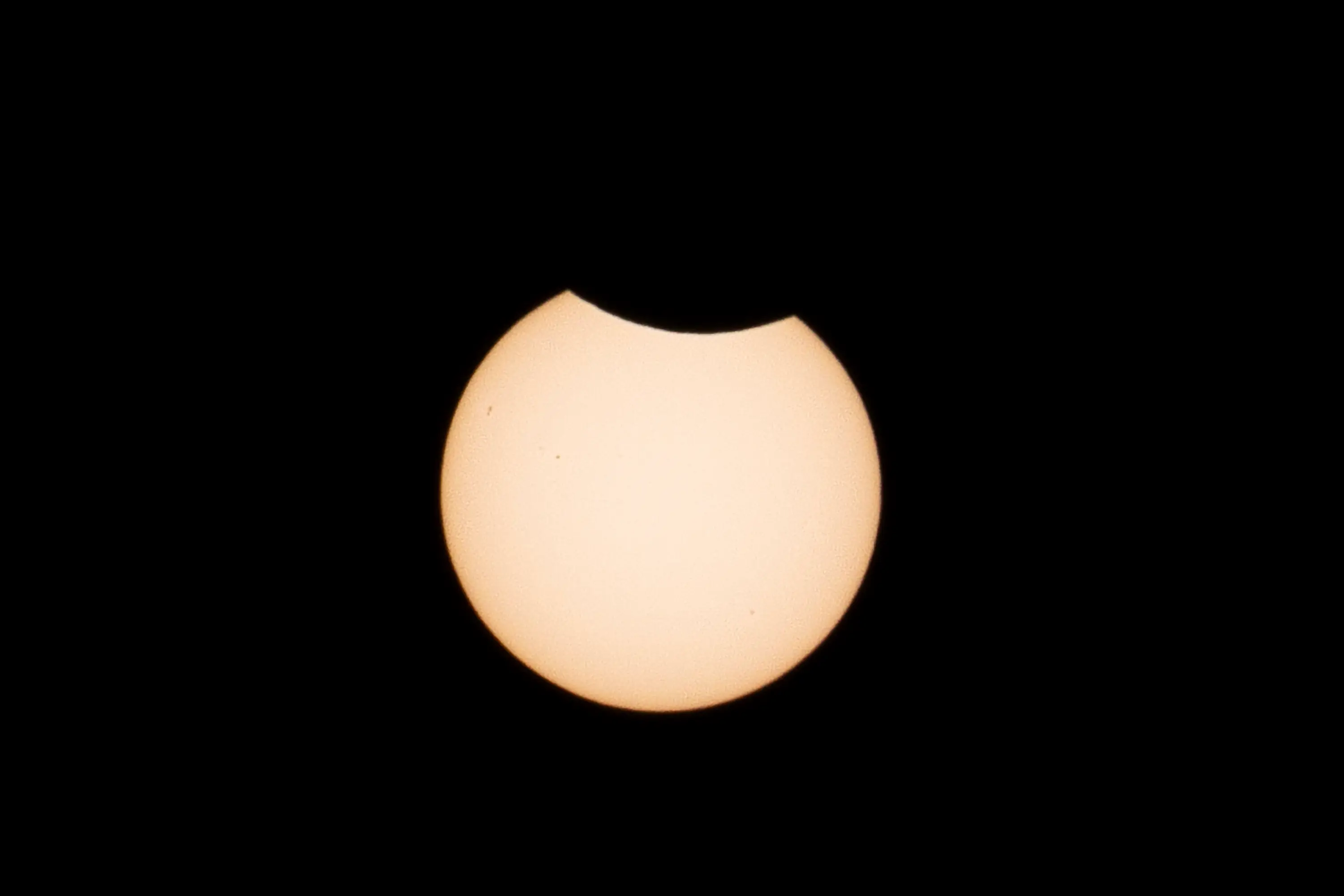
"Point an unfiltered lens at the sun, and you risk burning out the sensor, just as looking with the naked eye risks your vision," he went on.
"A phone camera lens focuses sunlight into an intense point on the sensor behind it, and enough unfiltered exposure will kill pixels permanently.
"From then on, every shot carries the same dark marks."
Samuel added that the cost to repair this can range from £49 ($66) for a camera glass replacement to over £250 ($337) for a full module swap, depending on the type of tech.
NASA has echoed similar sentiments in the past after somebody on Twitter asked whether pointing their phone's camera at a solar eclipse would 'fry the sensor' or not.
"I cannot for the life of me find a definitive answer to whether or not pointing a smartphone at the solar eclipse will fry the sensor," they wrote.
"Tempted to just take a phone I don't need and point it at the sun for 5 minutes to find out the real answer myself. In the name of science."
NASA replied to the 2024 tweet: "We asked our @NASAHQPhoto team, and the answer is yes, the phone sensor could be damaged just like any other image sensor if it’s pointed directly at the Sun.
"This is especially true if you’re using any sort of magnifying lens attachment on the phone. You would need to utilize the proper filters just like on any other camera."
The space agency added: "The best practice would be to hold a pair of eclipse glasses in front of your phone’s lenses when photographing the Sun at any point other than totality."
People who saw today's eclipse called it 'surreal'.
Abdul Othman, 28, who only found out about the solar eclipse event at the National Space Centre in Leicester, UK, a few hours before it began, told PA: "It’s a once in a lifetime opportunity. You hear about it all the time in your life, and then to see it with your own eyes and actually see the moon go across the sky and turning the sun into just a little crescent, it’s kind of surreal.
"And then when you see the sky getting darker, that’s also quite amazing to see."
Othman said he has never seen anything 'on this scale' before, adding: "I can understand why people are into it now, how people make so many sacrifices just to see (it) once in a lifetime."
12-year-old Benjamin Firmager-Lee also shared his thoughts. He said: "It’s like a once in a lifetime thing to see, so it was quite exciting to see how it changed over time.
"It’s really quite rare so it’s quite cool to see. Looking through all the telescopes was really interesting to see how it changed position over time."
Topics: Technology, Space, News, Phones
 Niamh Shackleton