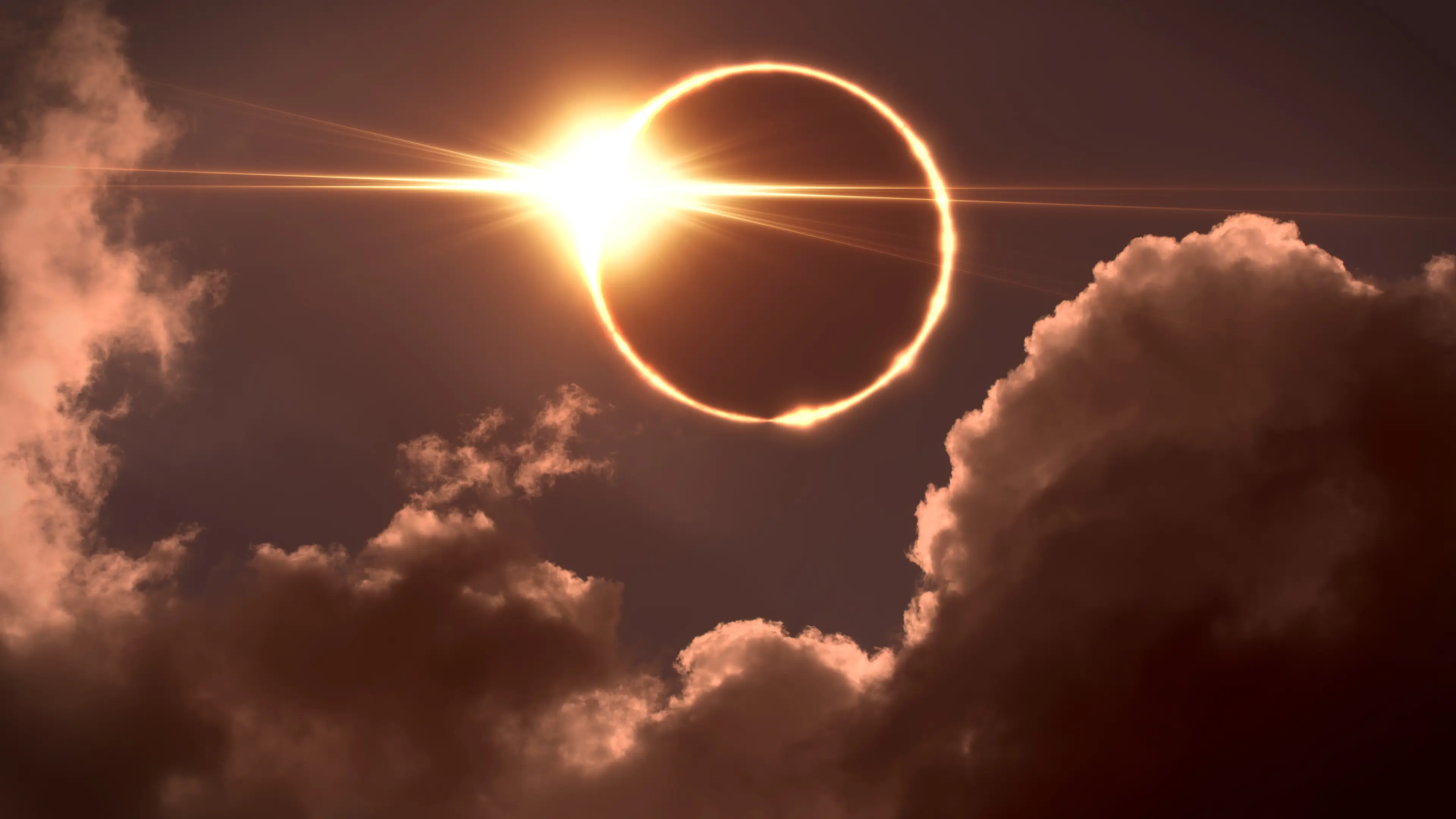
What happens during a 90% solar eclipse as millions prepare to watch

The UK is expected to see a 90 percent partial eclipse tonight, but what can you actually expect to see? Behind your protective glasses or pinhole projector of course.
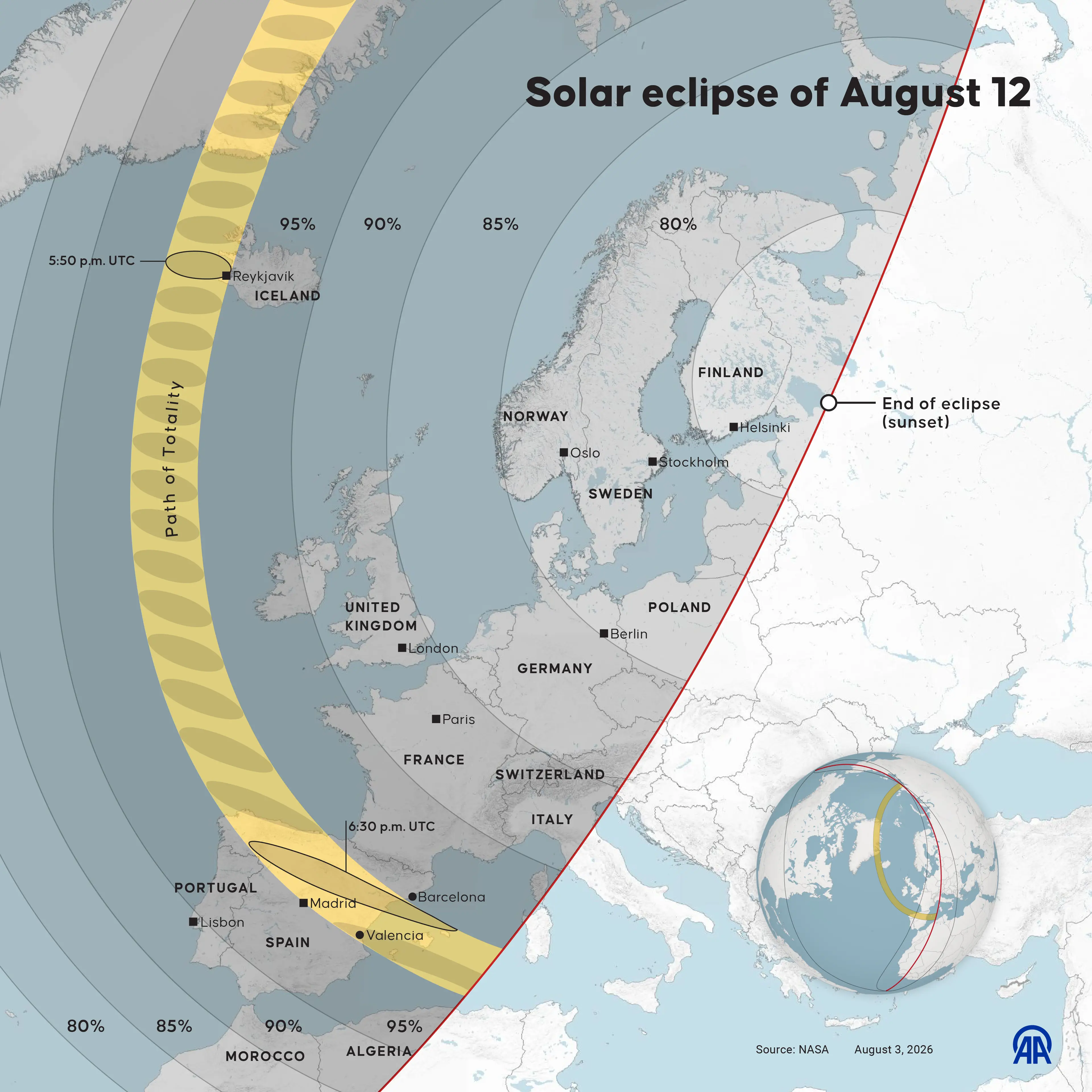
Tonight (August 12), the solar eclipse is on its way, set to take place at around 1.50pm EDT in the US and 7pm BST in the UK.
Now, if you're lucky to be located in areas of Iceland, Spain and various other countries, you can expect a 100 percent solar eclipse.
However, for those in the UK, you're set to view a 90 percent partial eclipse.
Advert
But what can you actually expect as the Moon moves to cover the Sun from the Earth if you're located in the UK?
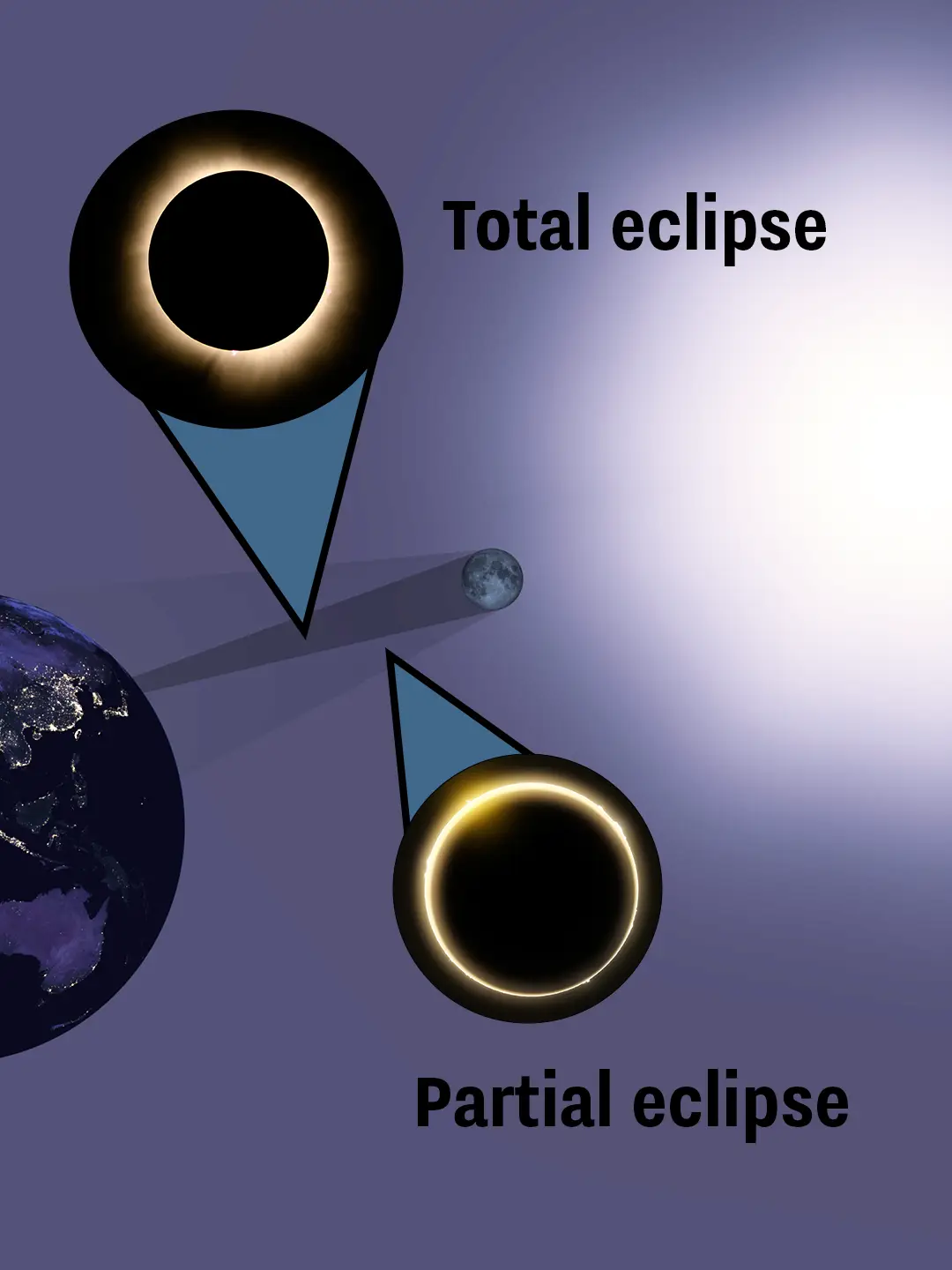
What can the UK expect from a 90 percent partial solar eclipse?
Sorry to burst your bubble slightly, but professor of astrophysical sciences at Princeton, Dr Edwin Turner, said in Scientific American article, that if you're seeing a 90 percent solar eclipse opposed to a 100 percent?
Well, apparently, 'you will not see anything particularly spectacular'.
He continued: "A reasonable person might conclude that an 80 percent eclipse is 80 percent as interesting/spectacular as a 100 percent eclipse. That is completely wrong.
"As one illustration, it gets about 10,000 times darker when the moon covers the last one percent of the sun's surface! Moreover, most of the effects mentioned above occur only during or just before/after totality and not at all outside the path of totality.
"A total solar eclipse is also nothing like and enormously more spectacular than a total lunar eclipse. I have traveled far across the world to see the former and sometimes not even bothered to step outside my house to see the latter."
However, thankfully, not completely s**ting in everyone's cornflakes, he did note: "If you’re not in totality, and it’s a nice day, it’s certainly worth getting some glasses and getting a peek. But don’t mistake it for the actual thing."
And if you want a breakdown of what you can expect to see at different timeframes of the eclipse, look no further.
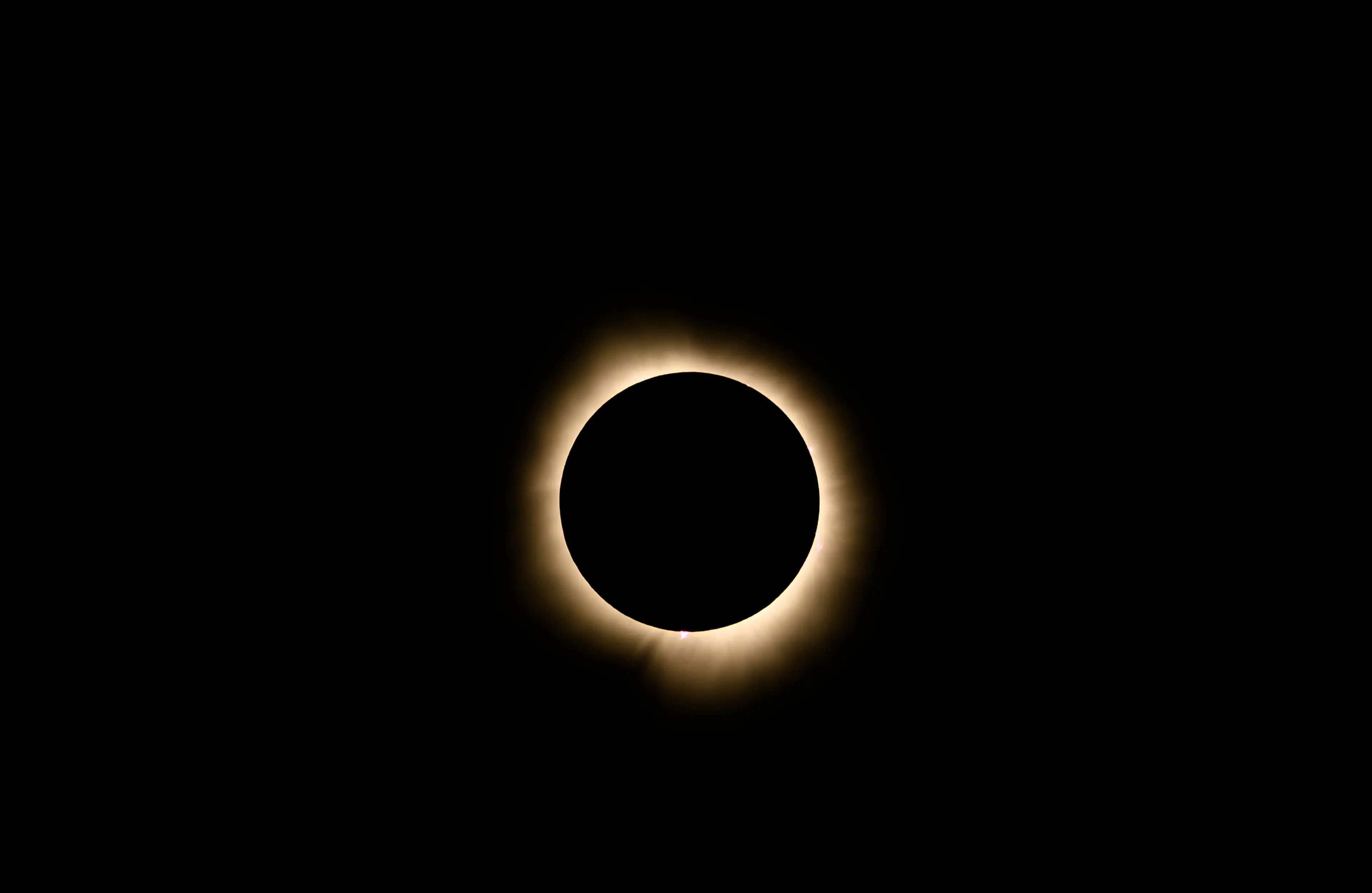
What can you expect to see at each stage of the 90 percent solar eclipse?
NASA breaks down that during the 'partial phases of the eclipse,' if you 'create or use a pinhole projector' you'll be able to see images of the crescent Sun.
"If you are near any trees with leaves, look at the shadows cast by the leaves for small solar crescents. You can also use solar viewing glasses or other solar filters to view the Sun directly," it adds.
About 15 minutes before it reaches near-totality, it urges to 'watch for the ambient light to change and grow dimmer'.
"The change will become more pronounced in the last 15 minutes before totality. The light may look eerie or strange. Even if it’s cloudy and you can’t see the Sun, the skies will still grow darker," it notes.
Around 10 minutes before, you should be able to see nature reacting to the change, NASA reveals.
Birds and insects may start behaving differently and emit different sounds too.
Shadows around you may become sharper as well.
And if you're wondering how to make a pinhole projector?
How to make a pinhole projector for a solar eclipse
You don't need fancy, expensive equipment to safely view a solar eclipse, as a pinhole projector can be very easily made at home if you follow these simple steps.
According to NASA, all you'll need is:
- 2 pieces of white card stock
- Aluminium foil
- Tape
- Pin, paper clip, or a pencil
Step one: Start making your pinhole camera
Cut a one-inch to two-inch square or rectangular hole in the middle of one of the pieces of card stock.
Step two: Tape on the foil
Tape a piece of aluminum foil over the hole.
Step three: Poke a hole
Flip over your paper and use your pin, paper clip, or pencil to poke a small hole in the aluminum foil.
Step four: Try it out
Place your second piece of card stock on the ground and hold the piece with aluminum foil above it (foil facing up). Stand with the Sun behind you and view the projected image on the card stock below.
The farther away you hold your camera, the bigger your projected image will be.
However, it's important to remember to never look directly at The Sun without equipment that's specifically designed for looking at The Sun.
Sunglasses, binoculars, and telescopes do not count as proper protection.
Topics: Science, Space, World News, UK News
 Poppy Bilderbeck