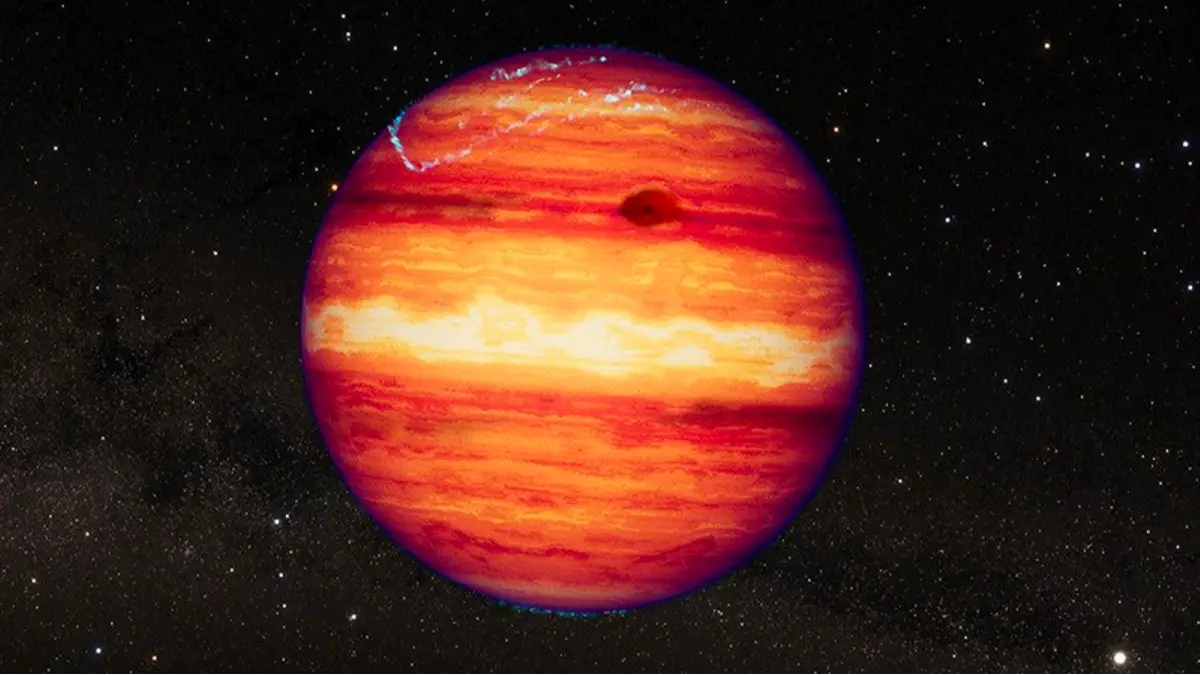
Scientists discover new details about mysterious planet floating through atmosphere

Experts have revealed details of an untethered planet roaming out Solar System, claiming its fluctuating brightness is down to infrared radiation.
A free-floating planetary-mass object, known in scientific circles as SIMP 0136, was previously monitored by ground-based observatories and NASA’s Hubble and Spitzer space telescopes.
Now, however, it’s being more closely looked at through the James Webb Space Telescope - and specialists have made some stark discoveries.
It’s understood that the three-dimensional complexity is thought to have formed due to a ‘complex combination of atmospheric factors’ and that its mass is around 13 times heavier than that of our Solar System’s largest planet, Jupiter (1.899 x 1027 kg).
Advert
SIMP 0136 has been described as the ‘ideal target for exo-meteorology’ because of its brightness and its isolation.
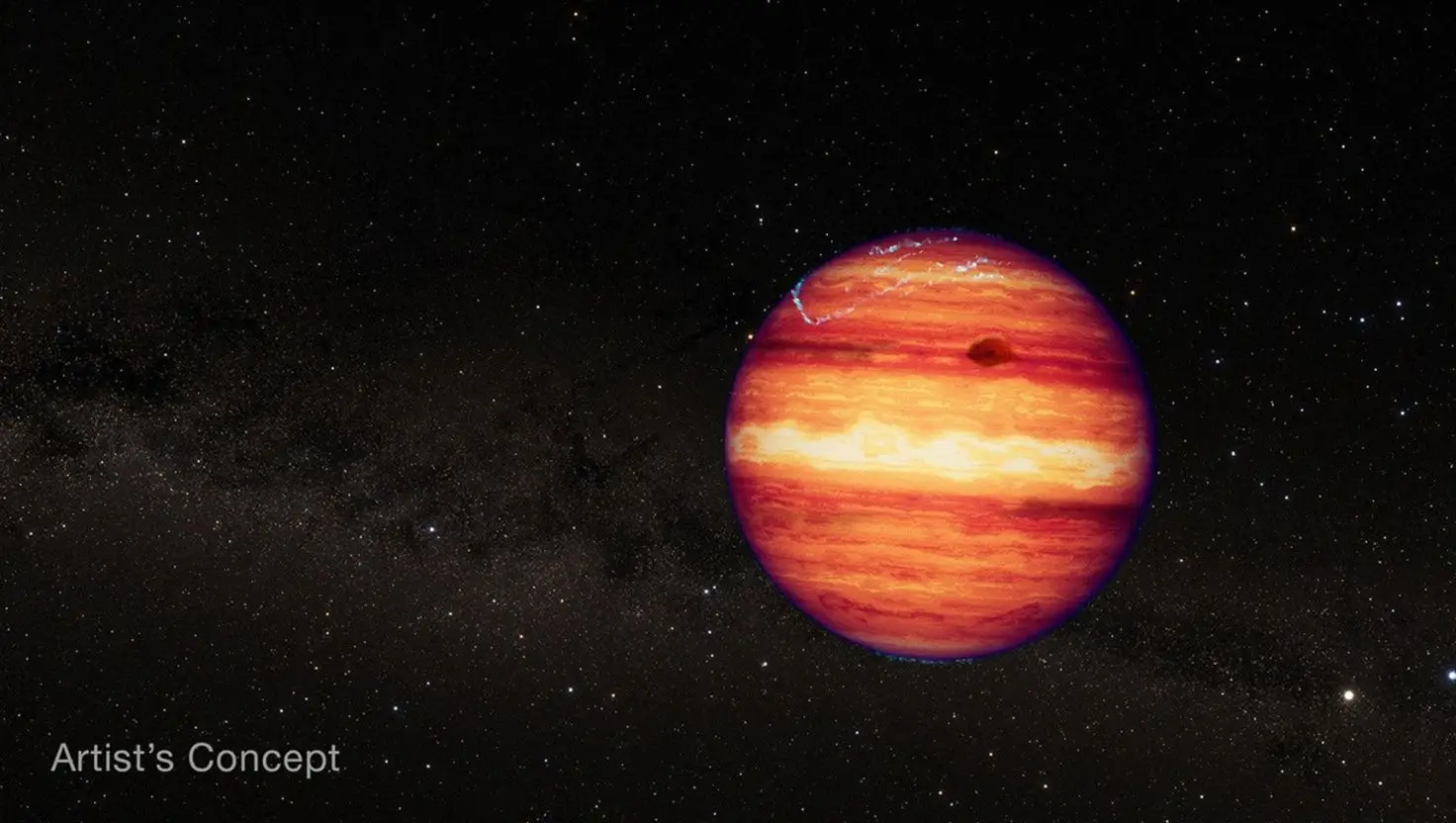
Due to the lone figure it cuts and the fact it doesn’t orbit a star, it can be observed with little to no light contamination or variability caused by a host star, according to NASA.
The planet, currently located 20 light-years away from Earth in the Milky Way, also has a 2.4-hour rotation period, meaning the Webb Telescope has been able to easily capture images for scientists to analyze.
Allison McCarthy, a doctoral student at Boston University and lead author on a study published today in The Astrophysical Journal Letters, has opened up about studying SIMP 0136.
“We already knew that it varies in brightness, and we were confident that there are patchy cloud layers that rotate in and out of view and evolve over time,” she said of previous research.
“We also thought there could be temperature variations, chemical reactions, and possibly some effects of auroral activity affecting the brightness, but we weren’t sure.”
To understand the untethered object further, the team relied on the Webb Telescope’s Near-Infrared Spectrograph (NIRSpec) and Mid-Infrared Instrument (MIRI) to measure minute changes in brightness over a broad range of wavelengths’.
“To see the full spectrum of this object change over the course of minutes was incredible,” said principal investigator Johanna Vos, from Trinity College Dublin.
“Until now, we only had a little slice of the near-infrared spectrum from Hubble, and a few brightness measurements from Spitzer.”
In published findings, scientists discovered that some wavelengths of recorded infrared light came from patchy clouds made of iron particles.
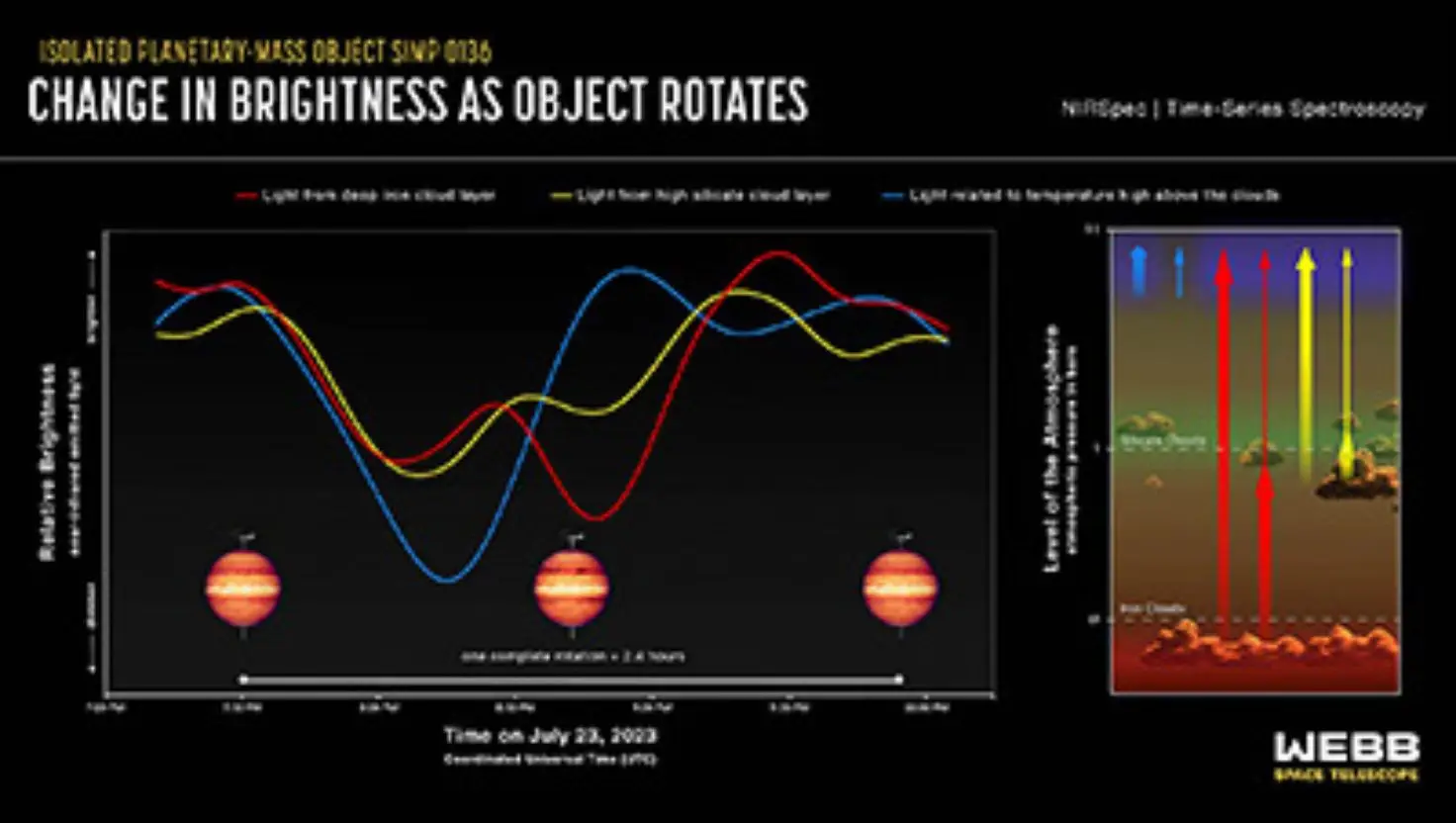
Other wavelengths came from clouds thought to be made of tiny grains of silicate minerals and more from wavelengths originating in ‘bright hot spots’ far above the clouds.
It’s understood SIMP 0136’s brightness is caused by differences in infrared radiation. As the planetary mass rotates, the light level fluctuates and varies from place to place.
Explaining these peculiar findings, McCarthy stated: “Different wavelengths provide information about different depths in the atmosphere.
“We started to realize that the wavelengths that had the most similar light-curve shapes also probed the same depths, which reinforced this idea that they must be caused by the same mechanism.”
According to researchers, these ‘exciting’ results show that molecules such as methane and carbon dioxide can change from place to place over time.
However, Vos added: “We haven’t really figured out the chemistry part of the puzzle yet.
“If we are looking at an exoplanet and can get only one measurement, we need to consider that it might not be representative of the entire planet.”
Topics: NASA, Science, Space, World News
 Ella Scott