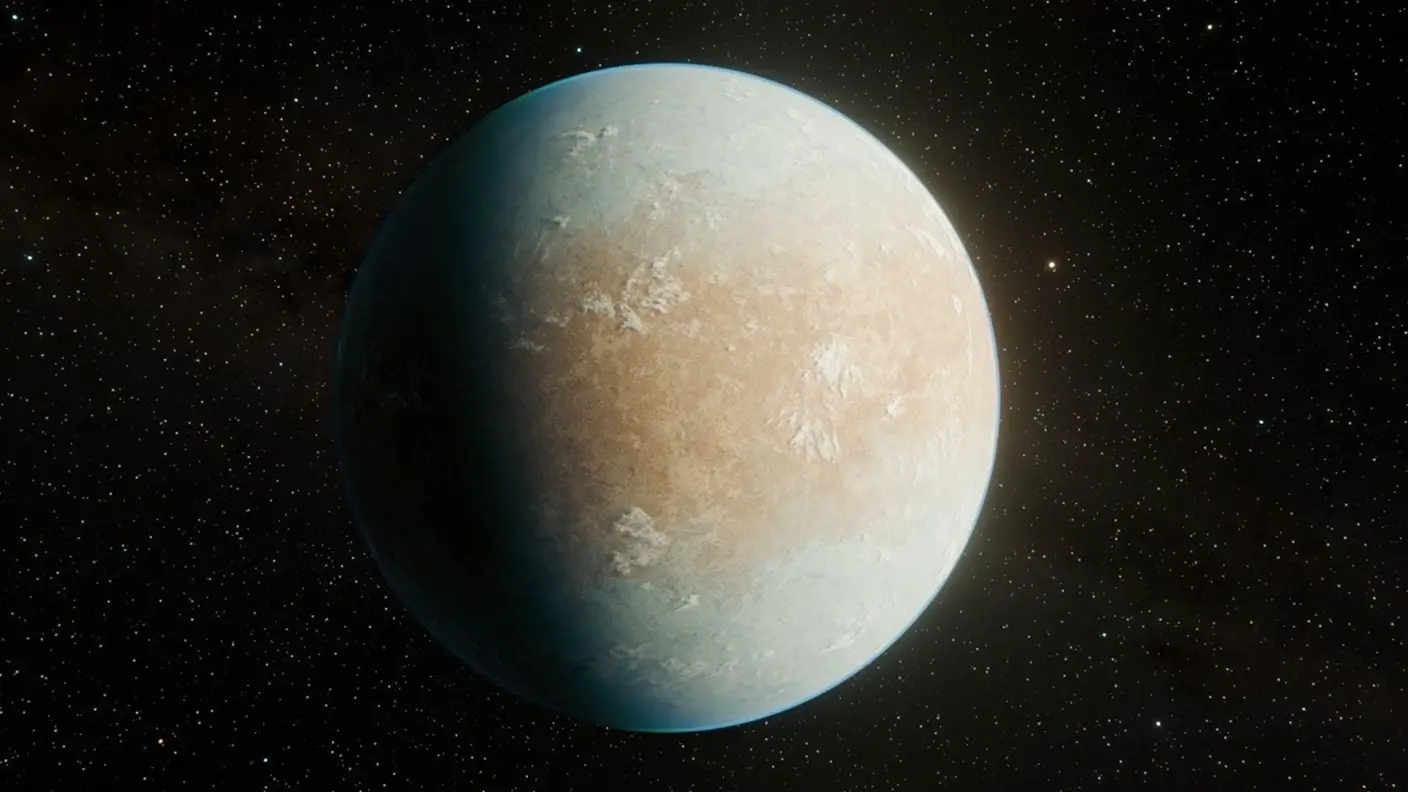
NASA discovers potentially habitable planet 'remarkably similar to Earth'

An international group of scientists have found a planet that they believe may be able to hold life that is very similar to Earth.
Now, before you get way too ahead of yourself, no, NASA or any other scientists is confirming that we have finally found life on another planet. However, finding planets that appear similar to Earth is always interesting and worth investigating.
This new potentially habitable planet is about 146 light-years away and has some conditions similar to that of Mars. The team of researchers and scientists, from Australia, UK, US and Denmark identified the planet by analyzing data captured in 2017 by the now retired NASA Kepler space telescope.
The team believe the planet, named HD 137010 b, has ‘about a 50 percent chance of residing in the habitable zone’ of the star it orbits. This means it resides in the small area for planets orbiting a sun that mean the planet is not too hot or too cold.
Advert
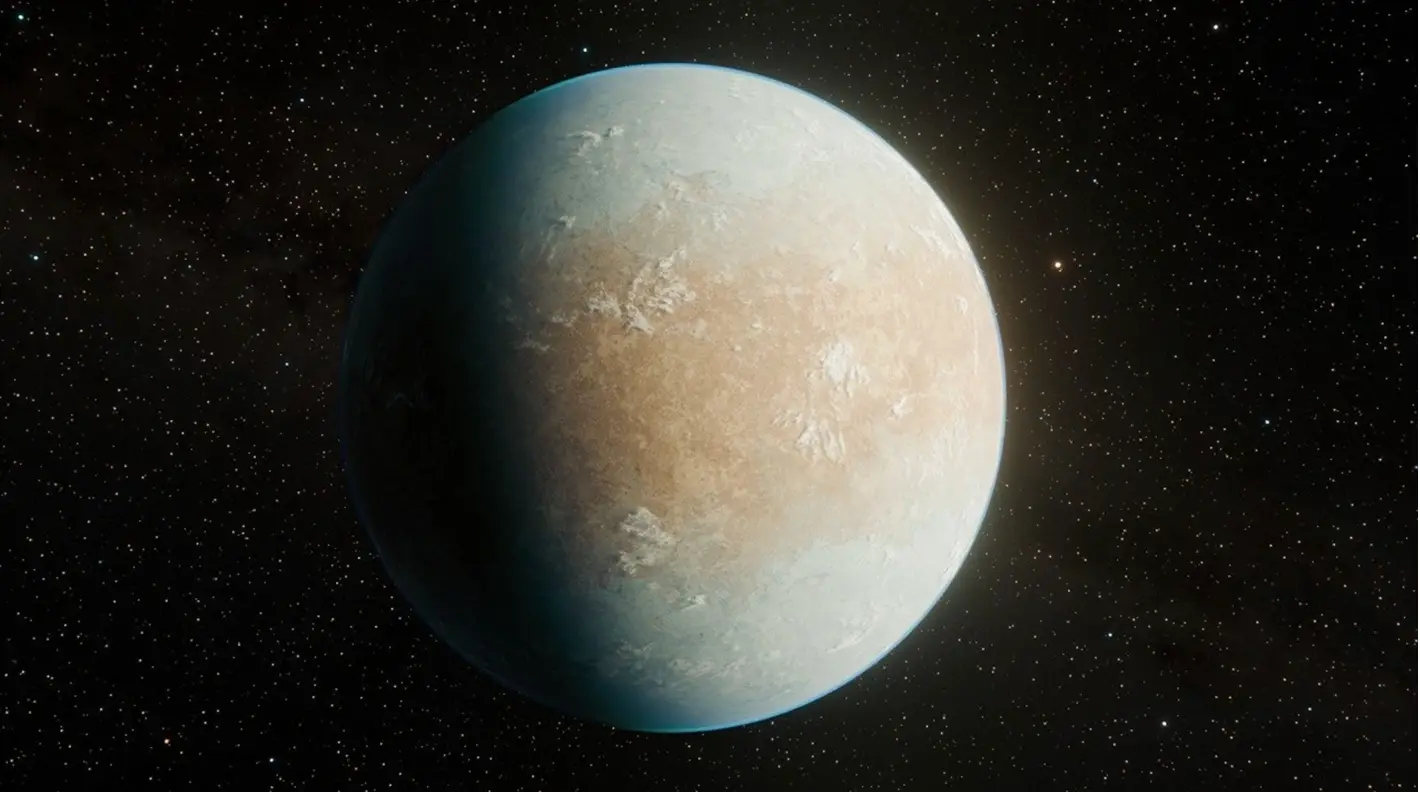
This is particularly interesting, as it could mean that it could hold liquid water, something currently believed to be essential for life to exist.
A researcher at the University of Southern Queensland in Australia and co author of the research, Dr Chelsea Huang. has said that the planet even has an orbit of about 355 days.
According to a Guardian report, Huang added: “What’s very exciting about this particular Earth-sized planet is that its star is only [about] 150 light-years away from our solar system.
“The next best planet around a sun-like star, in a habitable zone, [Kepler-186f] is about four times farther away and 20 times fainter.”
But don’t pack your bags just yet, because the temperatures on the surface of the planet are hardly hospitable as they are estimated to sit at a cool –70C. (-94 Fahrenheit). In addition to this, the star that HD137010 b orbits is cooler and dimmer than our sun it means the planet’s surface temperature is more similar to Mars than Earths.
Astrophysicist at Swinburne University, Dr Sara Webb, who was not part of the study, said the find was ‘very exciting’ but that more data was needed to classify HD137010 b as an exoplanet. She said it could be ‘something called a super snowball. Essentially, a big, icy world that potentially has a lot of water, but a lot of it’s frozen’.
She also added though in the grand scheme of our galaxy the planet is close, it would still take us tens of thousands ‘if not hundreds of thousands of years’ to get there, travelling at current speeds.
 Gerrard Kaonga