Meta's AI boss warns of 'great consequences' if humanity loses control of superintelligence

Alexandr Wang said that we're experiencing the 'beginning of a significant change' in society after AI allegedly achieved the 'absolute pinnacle of intellectual accomplishment'.
It was recently reported that a mathematician at Anthropic, a San Francisco-based artificial intelligence company, had used the company's software to solve a seemingly unsolvable math equation.
The equation in question is something known as the Riemann hypothesis, which is a famous math conjecture about a hidden pattern in prime numbers.
It was proposed by Bernhard Riemann in 1859 and has has been branded as one of the hardest equations in all of mathematics. Even Riemann himself wasn't able to prove it conclusively.
Advert
But now, through human ingenuity and the power of AI, it has apparently been solved.
Has the Riemann hypothesis been proven?

Levent Alpöge, a Turkish American mathematician, made the claim that he'd solved the hypothesis with the help of Claude. He penned in a note shared to his website: "I believe I have, working with Claude, discovered a proof of the Riemann Hypothesis. In fact, the method easily extends much further, resolving the so-called Generalized Riemann Hypothesis, and I expect, with more time, the Extended Riemann Hypothesis too.
"Claude and I have also formalized the arguments without assumptions. It is natural to feel that this is an end, in my case a loss of a principal guiding light, but what I saw during the course of progress so amazed me that I believe it is one dawn across science of something far greater."
Two groups have since verified Alpöge's claims, The Guardian reports.
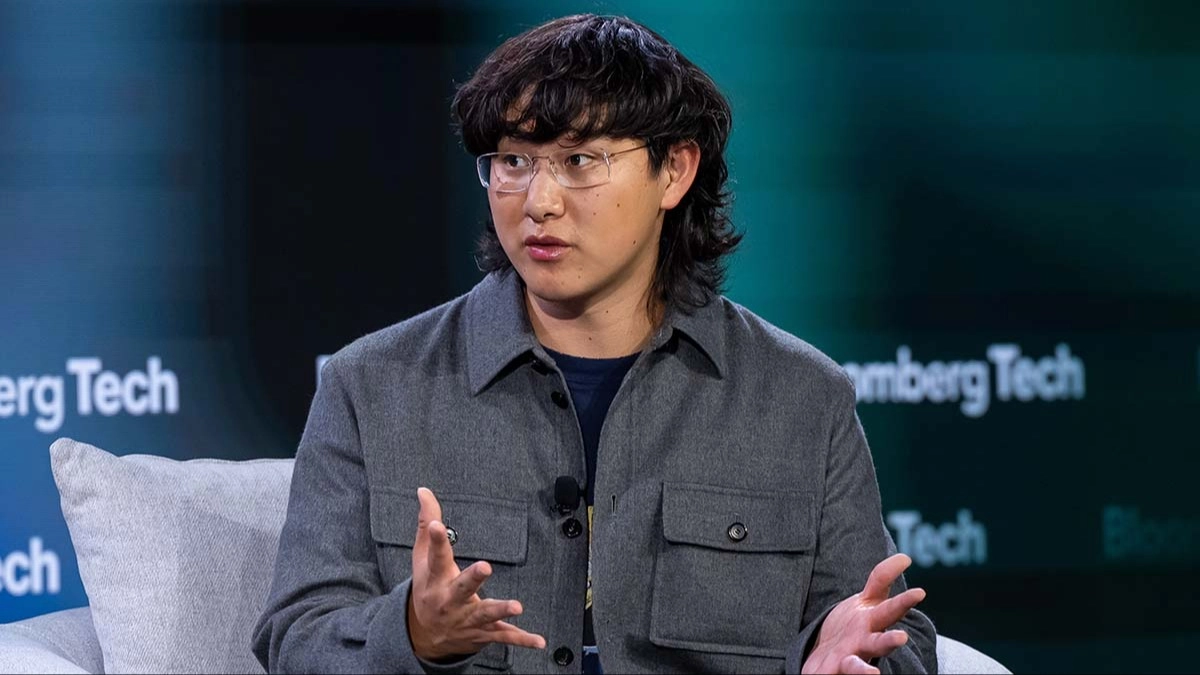
Alexandr Wang, the Chief AI officer of Meta, has now shared his thoughts on the matter and gave a rather ominous warning.
What did Alexandr Wang say about superintelligence?

He penned on Twitter: "Superintelligence is arriving. How humanity acts over the next year will have great consequence on what future world we live in.
"As someone who has spent much of my life in math and science, I see the proof of the Riemann Hypothesis as clearly marking the beginning of a significant change. For most who have studied math, this represents the absolute pinnacle of intellectual accomplishment—nothing humanity has ever accomplished compares to proving the Riemann Hypothesis in terms of sheer intellectual might and strength.
"As someone who grew up in Los Alamos, New Mexico, many physicists would agree that the discovery of the atomic bomb is a homework problem compared to the Riemann Hypothesis. It is hard to overstate the magnitude of discovery that we have just witnessed—completed with the help of an alien mind that we don’t understand."
Ultimately, Wang, 29, sees the recent development as a new level of intellectual capability and warned that AI could now become 'more capable in humans in every field'.
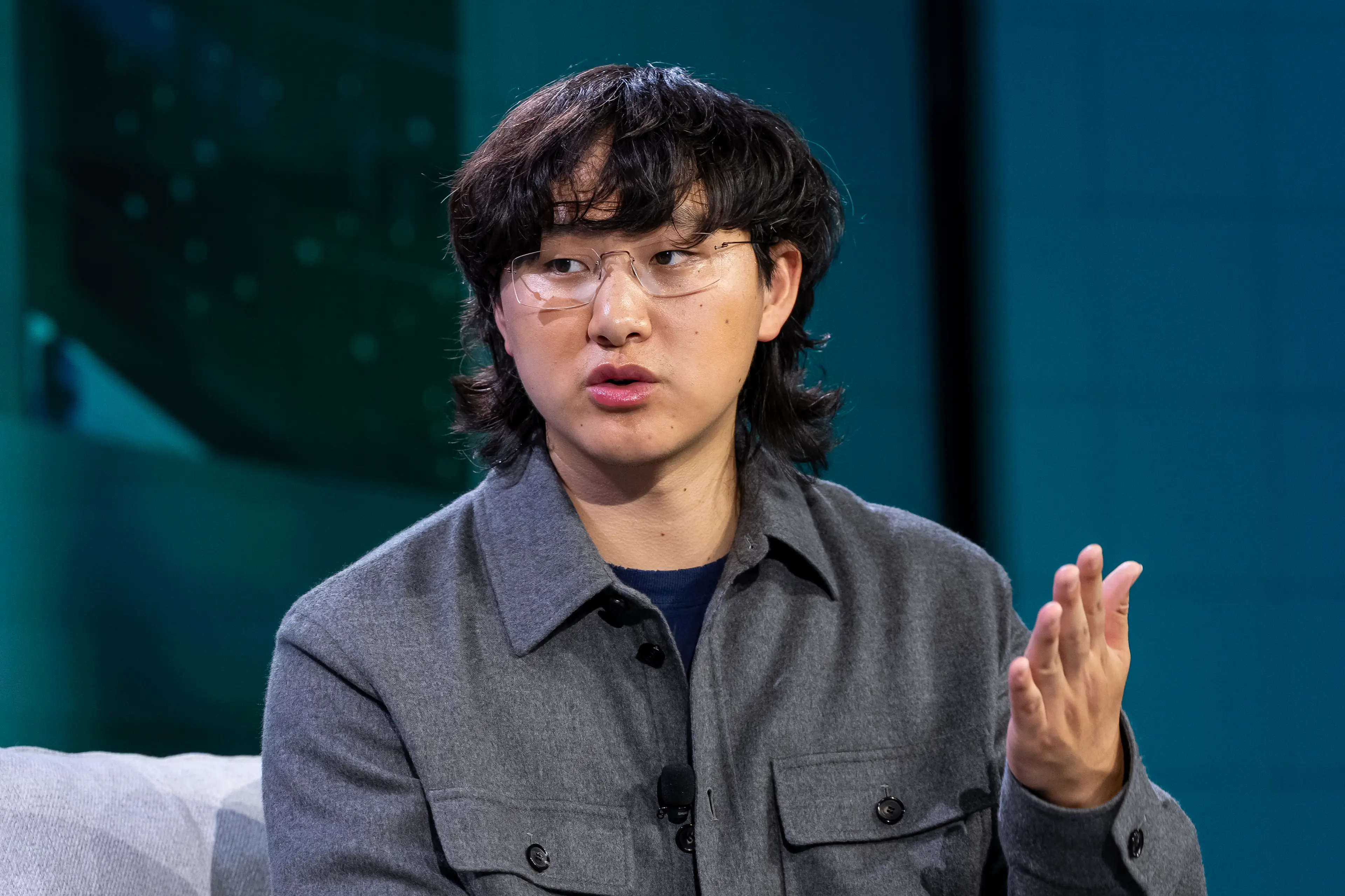
"It is now incredibly important for us to be thoughtful about the future we want and how we get there," Wang's poignant post continued.
"It is hard to imagine a world where humanity can maintain control over fully unconstrained recursive self-improvement. It is equally hard to imagine a world where humanity maintains control with superintelligence that is 1000x smarter and more capable than humans in every field."
He continued to warn that just because AI can do these things, it doesn't mean it should, adding that we should not be okay with a 'handover' of society to AI.
"We should endeavor ourselves to build a technology which delivers a positive future for humanity, where all humans have greater agency and empowerment," Wang went on.
"I strongly believe this is possible, but likely involves the whole industry taking meaningfully different actions from the 'default path' in front of us."
Topics: Artificial Intelligence, Technology, News, Meta, Science
 Niamh Shackleton