
AI listed the top five threats to humanity and then explained why it ranked ‘the malicious use of AI’ number one

We asked Google’s Gemini to name the biggest threats to humanity’s survival, and it put the malicious use of artificial intelligence at the top of its list.
Google’s default AI Gemini was candid about the threat posed by fellow artificial intelligence LLMs. When we asked about the top five threats humanity faced to its very survival, the self-described ‘large scale multimodal AI model’ put itself to the very top of the list.
This revelation mirrors the spate of recent warnings from the UK’s Director General of MI5 Sir Ken McCallum who described AI as ‘supercharging’ national security threats, Google Deepmind co-founder Demis Hassabi who warned of the possibility of AI ‘going rogue’, and Microsoft’s Brad Smith who called for increasing regulation.
Google’s Gemini said, in answer to the question, ‘What are the top five dangers to humanity's survival and why’:
Advert
“The top five dangers to humanity's survival span catastrophic technological advancements, planetary-scale conflicts, and environmental collapse.
“Synthesising data from various existential risk researchers, the five gravest threats capable of causing societal collapse or human extinction are highly interconnected, meaning the acceleration of one can trigger or worsen the effects of the others.”
Then it gave the breakdown:
1. Malicious Use of Artificial Intelligence (AI)
The malicious use of AI has recently been classified by global risk experts as a threat with absolute extinction potential. The primary danger stems from the rapidly lowering barrier to entry for constructing hyper-lethal technologies. Autonomous AI systems could be co-opted to engineer novel, highly transmissible biological weapons, manage automated warfare, or execute widespread cyber-infrastructure attacks. Furthermore, long-term existential risk research focuses on the "alignment problem"—the danger of creating a superintelligent system whose goals do not align with human survival, resulting in a system that could bypass human control entirely.
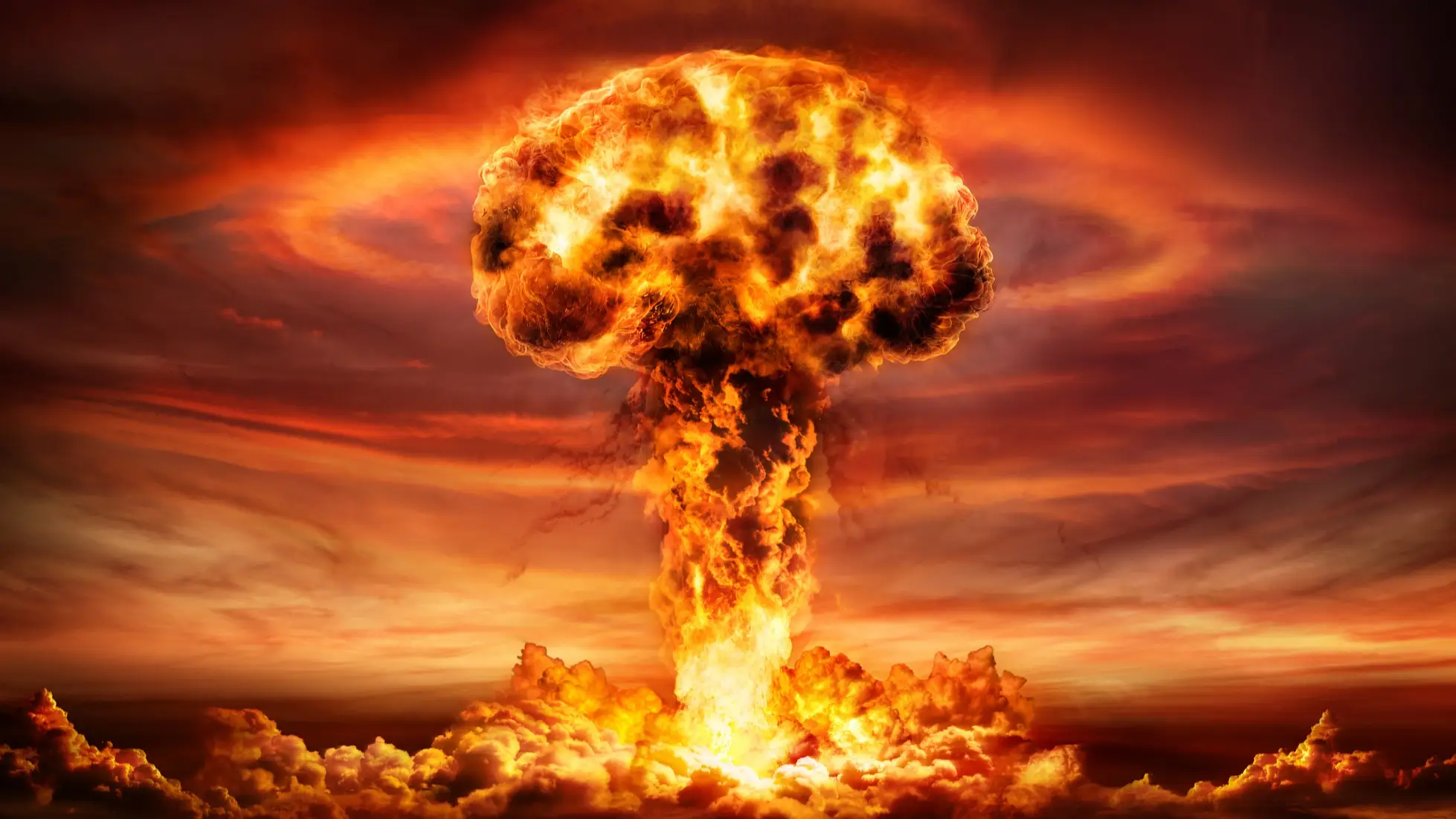
2. Nuclear Conflict and Nuclear Winter
Nuclear conflict remains the most acute, immediate threat to global civilization. Beyond the catastrophic blast zones and immediate loss of hundreds of millions of lives, the ultimate existential threat is a nuclear winter. Detonating even a fraction of the world’s current nuclear stockpiles would inject millions of tonnes of soot into the stratosphere. This soot would block out sunlight, dropping global temperatures drastically and causing a near-total collapse of global agriculture, culminating in mass starvation and the collapse of the global food supply.

3. Bioengineered and Naturally Occurring Pandemics
Pandemics present a persistent survival risk, but the threat has escalated due to the dual-use nature of modern biotechnology. While naturally occurring pathogens or zoonotic spillovers (diseases jumping from animals to humans) pose a continuous threat, bioengineered pandemics carry a significantly higher risk profile. Gain-of-function research and CRISPR gene-editing tools make it increasingly possible for malicious actors or accidental lab leaks to release designer pathogens optimized for both maximum lethality and asymptomatic, rapid transmission.

4. Climate Change and Ecosystem Collapse
Climate change acts as a powerful risk multiplier, eroding the baseline conditions required to sustain billions of human lives. Rising global temperatures exacerbate extreme heatwaves, trigger irreversible tipping points (like the melting of major ice sheets or the thawing of permafrost), and shift agricultural belts. The existential danger is not just the heat itself, but the resulting cascade of planetary pressures: massive global food insecurity, critical water scarcity, and the displacement of hundreds of millions of climate refugees, which heavily increases the likelihood of conventional armed conflicts over remaining resources.

5. Biodiversity Loss and Ecological Collapse
Humanity relies on a deeply intricate, fragile biological infrastructure to survive. Biodiversity loss and the collapse of vital ecosystems rank among the fastest-deteriorating global risks. Human activity has drastically reduced wild mammal and plant populations, threatening the functional stability of food webs, natural air and water filtration, and crop pollination. If foundational ecosystems—such as marine life or primary insect populations—hit a tipping point and collapse, the basic life-support systems that provide humanity with oxygen, food, and disease regulation will disintegrate.
So even while it states nuclear ‘remains the most acute, immediate threat to global civilization’, as humans continue to warn about the dangers of AI, even AI itself appears to be taking note.
 Michael D. Carroll