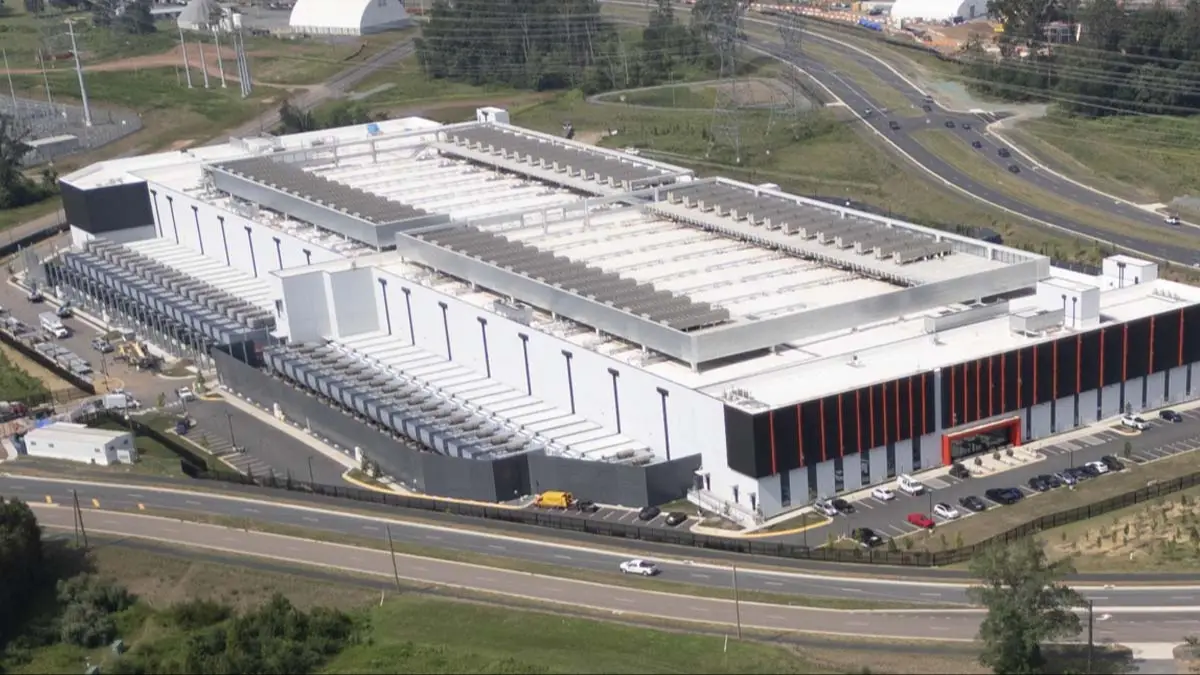
Scientists discover impact of data centers creating 'heat islands' warming the Earth by 16 degrees

The global expansion of data centers used to power artificial intelligence (AI) across the globe is creating 'heat islands', according to a recent study.
There's no doubt that AI is here to stay with many companies working to implement it, but it seems as though that may be coming at the cost of the environment.
Discussion surrounding climate change is certainly a divisive one, with the Trump administration taking a different stance on the environment compared to past governments.
Data centers powering AI may just be contributing towards the crisis, as the expansion is creating 'heat islands' warming Earth by up to 16 degrees Fahrenheit.
Advert
The revelation was made by researchers at the University of Cambridge and could well affect more than 340 million people across the globe.
Andrea Marinoni, associate professor at the British university, explained to CNN how much research needs to be done to understand the 'big gaps' when it comes to how these date centers are impacting the planet.

However, these initial results are certainly concerning considering the expected rise of AI.
The team of experts over at the University of Cambridge analysed temperature date over a period of 20 years in locations where these AI data centers have popped up in recent times.
Scientists focused on some 6,000 data centers found away from dense urban areas due to the surface temperatures being unlikely to be impacted by factors like manufacturing.
To ensure accurate results, the researchers discounted external factors such as global warming changes and the impact seasonal changes could have on findings.
They found on average that surface temperatures increased by a noticeable 3.6 degrees after the centres had opened, and in some cases, an eye-watering 16.4 degrees Fahrenheit was recorded.

Deborah Andrews, emeritus professor of design for sustainability at London South Bank University, spoke to CNN after the remarkable findings were made public.
She tried to down play concerns by saying this is a first-of-a-kind study which will certainly need more validation.
Andrews added to the outlet: "The ‘rush for AI-gold’ appears to be overriding good practice and systemic thinking and is developing far more rapidly than any broader, more sustainable systems."
Meanwhile, fellow expert Ralph Hintemann, expressed doubt at the results, describing the particular higher figures as 'interesting' and 'very high'.
In their findings, the researchers involved in the study discussed a number of options for AI to reduce its carbon footprint, including the creation of 'carbon-aware' software.
Topics: Artificial Intelligence, Environment, Climate Change, News
 Callum Jones