November 13, 2026 was once predicted to be ‘Doomsday’ by scientists

Doomsday could be upon us sooner than we might have anticipated, according to scientists from several decades ago.
For as long as humans have tried to make sense of the world around them, there have been predictions about how it could all come to an end.
From ancient prophecies and religious revelations, to modern-day fears over nuclear war, climate change and artificial intelligence, the idea of 'Doomsday' has remained a fascination for generations.
While some predictions have been dismissed as little more than speculation, others have been based on scientific calculations and attempts to understand the threats facing humanity.
Advert
And one particularly chilling prediction dates back decades, when scientists attempted to calculate just how long humanity could continue before reaching a catastrophic tipping point.
Their work ultimately produced a specific date for when they believed the world could face a devastating future - a date that, as the years have passed, has crept ever closer.
And now, the date is far closer than you might expect.
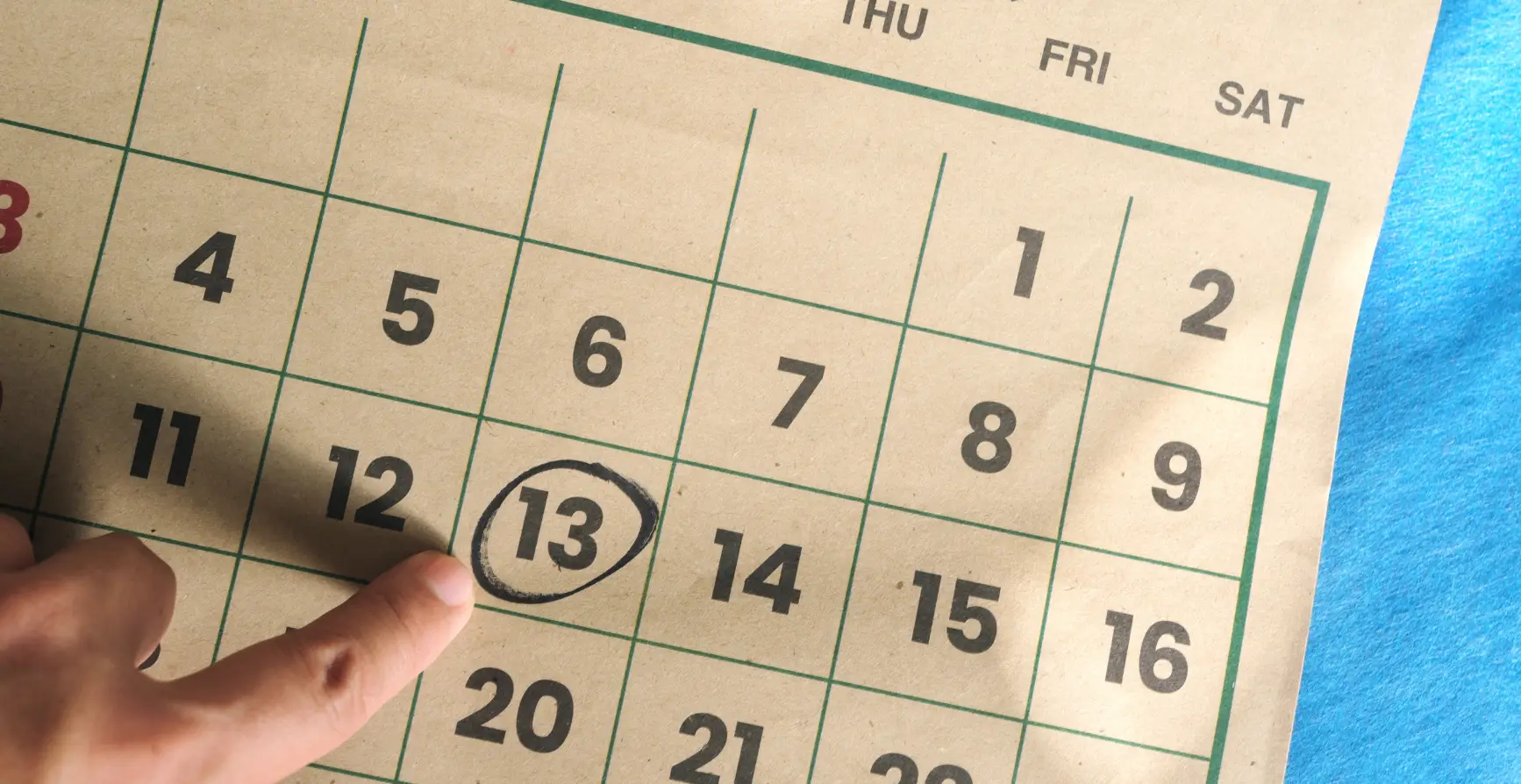
A scientific paper titled 'Doomsday: Friday, 13 November, A.D. 2026', led by physicist Heinz von Foerster, suggested that we could be just weeks away from the end of the world.
He and his fellow researchers set out to examine how the world’s population had changed over time and whether those patterns could be used to predict what might happen in the future.
Their calculations drew on population estimates stretching from around the time of Jesus through to 1958, when the number of people on Earth appeared to be rising at an increasingly rapid, exponential rate.
Speaking with Time Magazine, Foerster said: "For obvious reasons t0 shall be called 'doomsday', since it is on that date that N (the number of ‘elements,’ or people) goes to infinity, and the clever population annihilates itself. Our great-great-grandchildren will not starve. They will be squeezed to death."
However, it was later discovered that the researchers likely chose the date as a joke, as it was Foerster’s birthday.
And of course, we can only hope that November 13 comes and goes, with the world carrying on as normal.
Interestingly despite his predictions, the global birth rate is slightly less than half the 1960 rate.
Indeed the prediction went off track decades ago, as the global population growth rate began slowing, particularly from the 1960s onward.
By around 1993 the actual population had begun falling behind the paper's projected trajectory.
Topics: Doomsday Clock, Science, World News, Environment
 Mia Williams