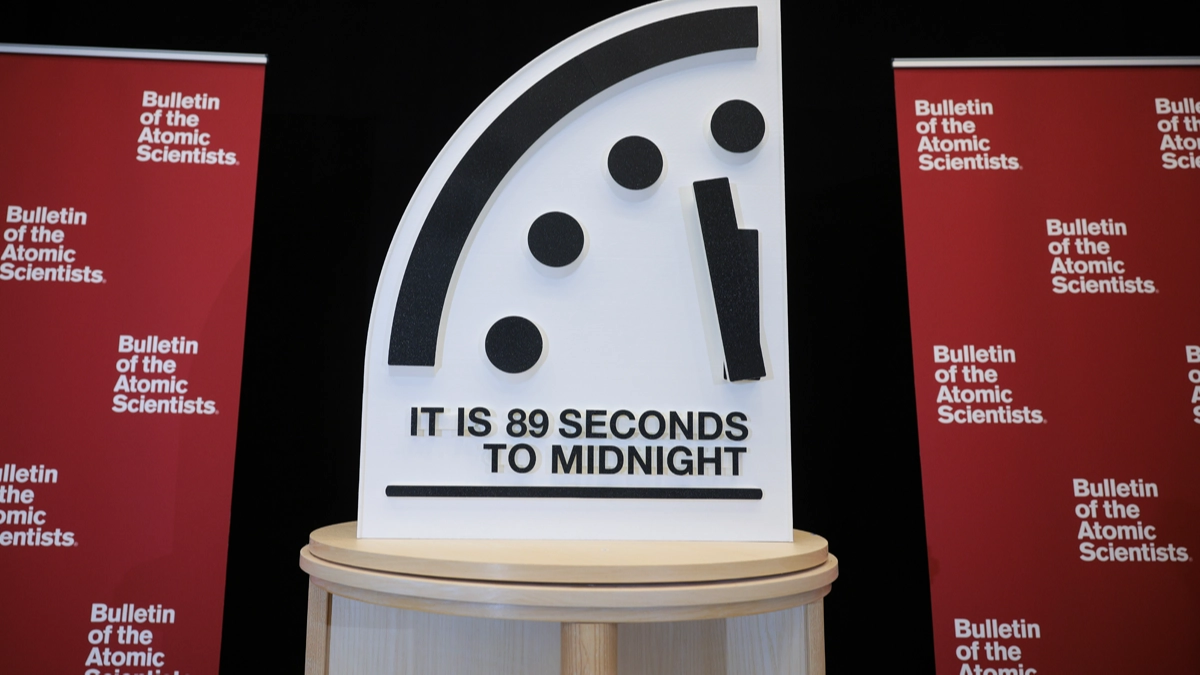
Doomsday Clock set to be updated tomorrow as leading experts reveal what they think will happen

We find out how close we are to the 'end of civilization' tomorrow (January 27) when the Doomsday Clock updates.
Since 1947, the symbolic timepiece has been alerting us to how near a man-made catastrophic global disaster might be.
It was created by the Bulletin of the Atomic Scientists, a nonprofit group originally founded in the wake of World War II by scientists from the Manhattan Project, the team that developed the first atomic bombs.
These scientists wanted a way to communicate the urgency of worldwide risks to policymakers and the public in a simple, visual way.
Advert
Each January, the Bulletin’s Science and Security Board - made up of experts in nuclear risk, climate science, biology, and technology - decides whether to move the clock closer to or further from midnight.
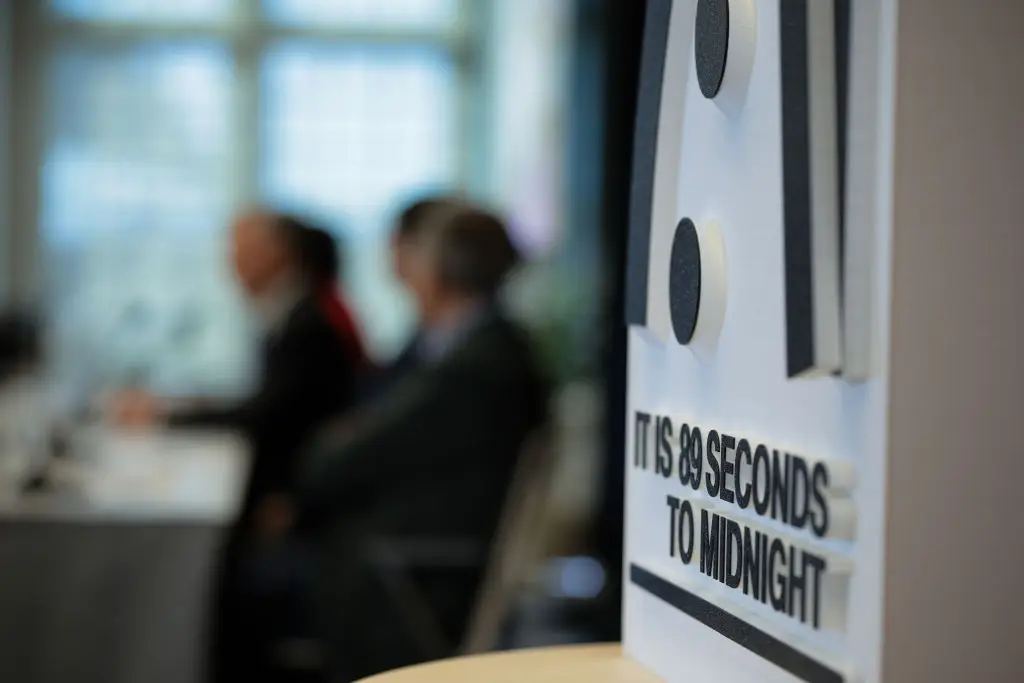
The closer the clock’s hands are to midnight, the closer experts believe the world is to disaster.
Midnight represents a global catastrophe such as nuclear war, runaway climate change or other existential threats.
Last year, the Doomsday Clock moved forward from 90 seconds to midnight, to 89 seconds - the closest it has ever been.
This was down to factors including nuclear weapons threats, climate crisis, artificial intelligence, bio-threats and conflicts in Ukraine and the Middle East.
But what could be the case this year?
What do the experts say about the 2026 Doomsday Clock update?
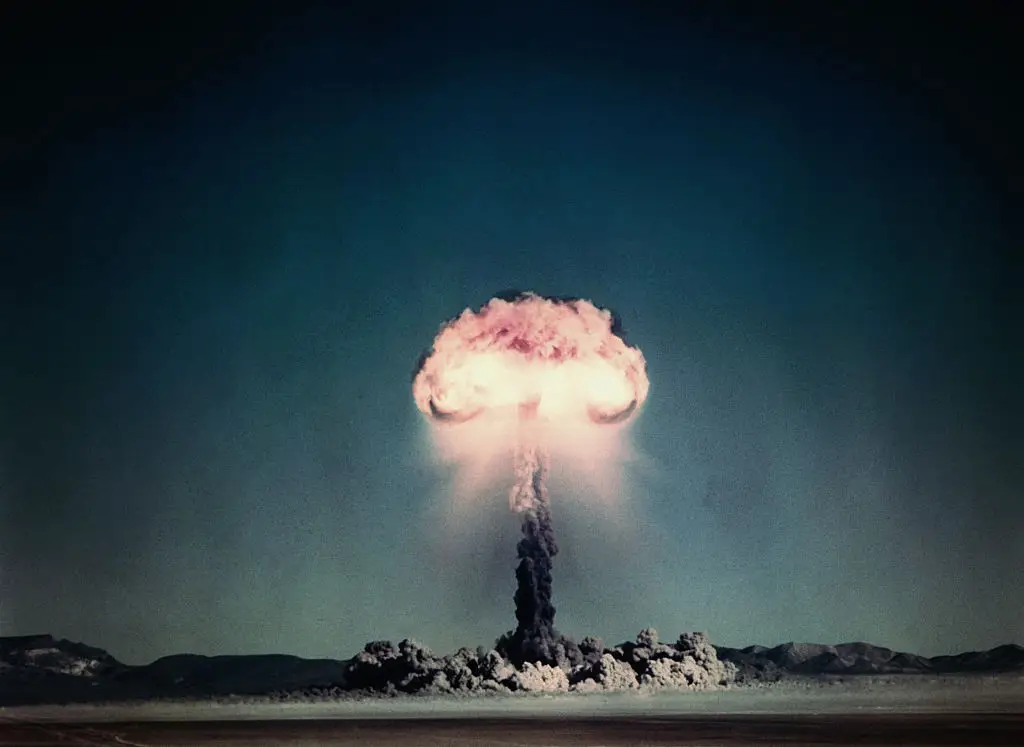
It appears experts believe the Doomsday Clock will move forward tomorrow. Not exactly cheery news, is it?
Alicia Sanders-Zakre, head of policy at the International Campaign to Abolish Nuclear Weapons, told the Daily Mail the clock could be nudged along 'by at least one second'.
"Our biggest concern is the existential threat posed by the more than 12,000 nuclear weapons in the world today," she said, adding: "While the risk of nuclear use has been an existential threat for 80 years, it has increased in the last year, due to skyrocketing investments in nuclear arms, increasingly threatening nuclear rhetoric and actions and the increasing application of artificial intelligence in militaries."
Meanwhile, Hamza Chaudhry, AI and national security lead at the Future of Life Institute, told the publication he expects the clock to move between five and ten seconds forward.
This is because, next month, the New START Treaty - which caps the size of countries’ strategic nuclear weapons stockpiles - is set to expire, with no clear plan or replacement agreement ready to take its place.
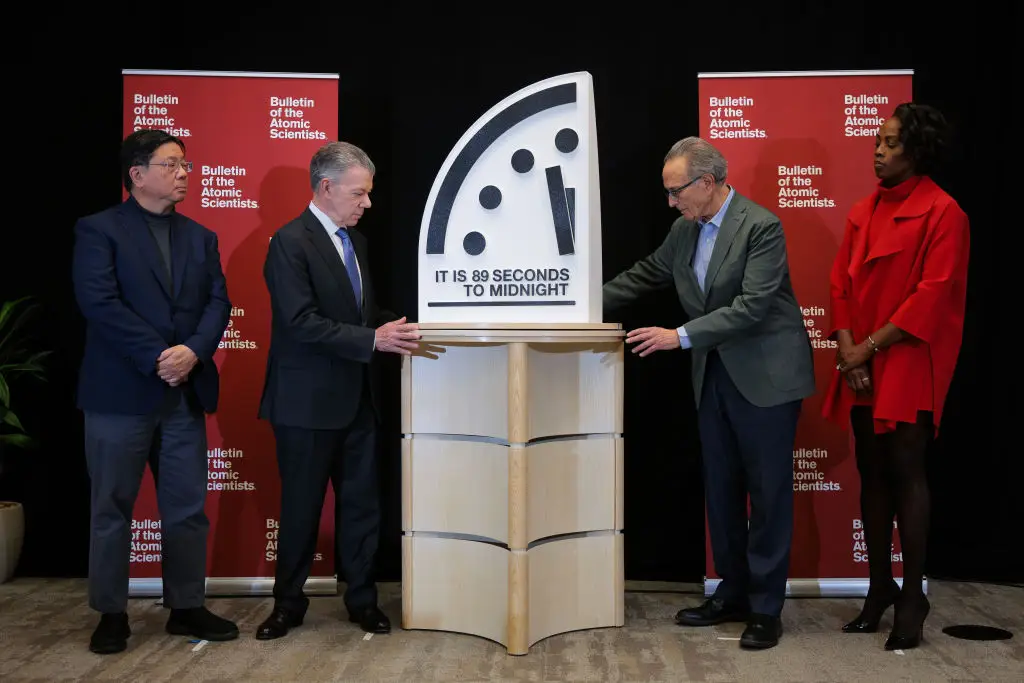
"For the first time since the early Cold War, there will be no bilateral arms control treaty limiting US-Russian strategic arsenals," Chaudhry said.
"While President Trump has expressed interest in talks, as of today, there's been no concrete progress. This represents a fundamental breakdown in the nuclear arms control architecture."
Other concerns include 'fractured' co-operation around Ukraine, as well as China quickly expanding its nuclear weaponry.
"China is on a trajectory to match US and Russian ICBM numbers by the end of the decade," he added. "China's arsenal growth creates pressure on US planning, which creates pressure on Russian planning, in cascading spirals, and there's no trilateral arms control framework."
What time does the Doomsday Clock update?
The Doomsday Clock, located in the Keller Center, Chicago, updates on Tuesday (January 27) at 10am EST (3pm GMT).
The Bulletin of the Atomic Scientists will announce the updated time during a live-streamed news conference via their YouTube channel here.
Topics: Doomsday Clock, Climate Change, Artificial Intelligence, Science, World News
 Ellie Kemp