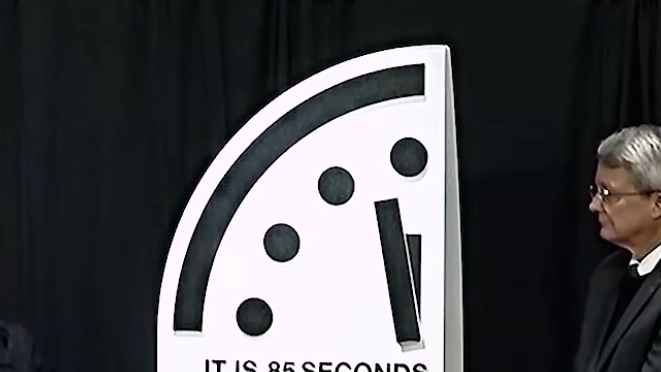
Doomsday clock moves closer to disaster than ever before as it updates for 2026

The Doomsday Clock has revealed its updated time as determined by the Bulletin of Atomic Scientists.
Since 1947, when it was created as a reaction to the Nuclear War, the Doomsday Clock has metaphorically calculated how close humanity is to self-destruction.
Last year, the clock was set at 89 seconds (1 minute and 29 seconds) to midnight - the closest it had ever been to striking disaster.
Today (January 27), the organization behind the development of the world's first atomic bomb in 1945 shared its latest feelings on the status of the world in the form of an updated clock - as if the world wasn't worrying enough, given the ongoing wars in Ukraine and Gaza, climate change concerns, and a whole host of other issues we can barely scrape the surface of right now.
What exactly is the Doomsday Clock?
The Doomsday Clock is a design that warns the public about how close we are to destroying our world.
Advert
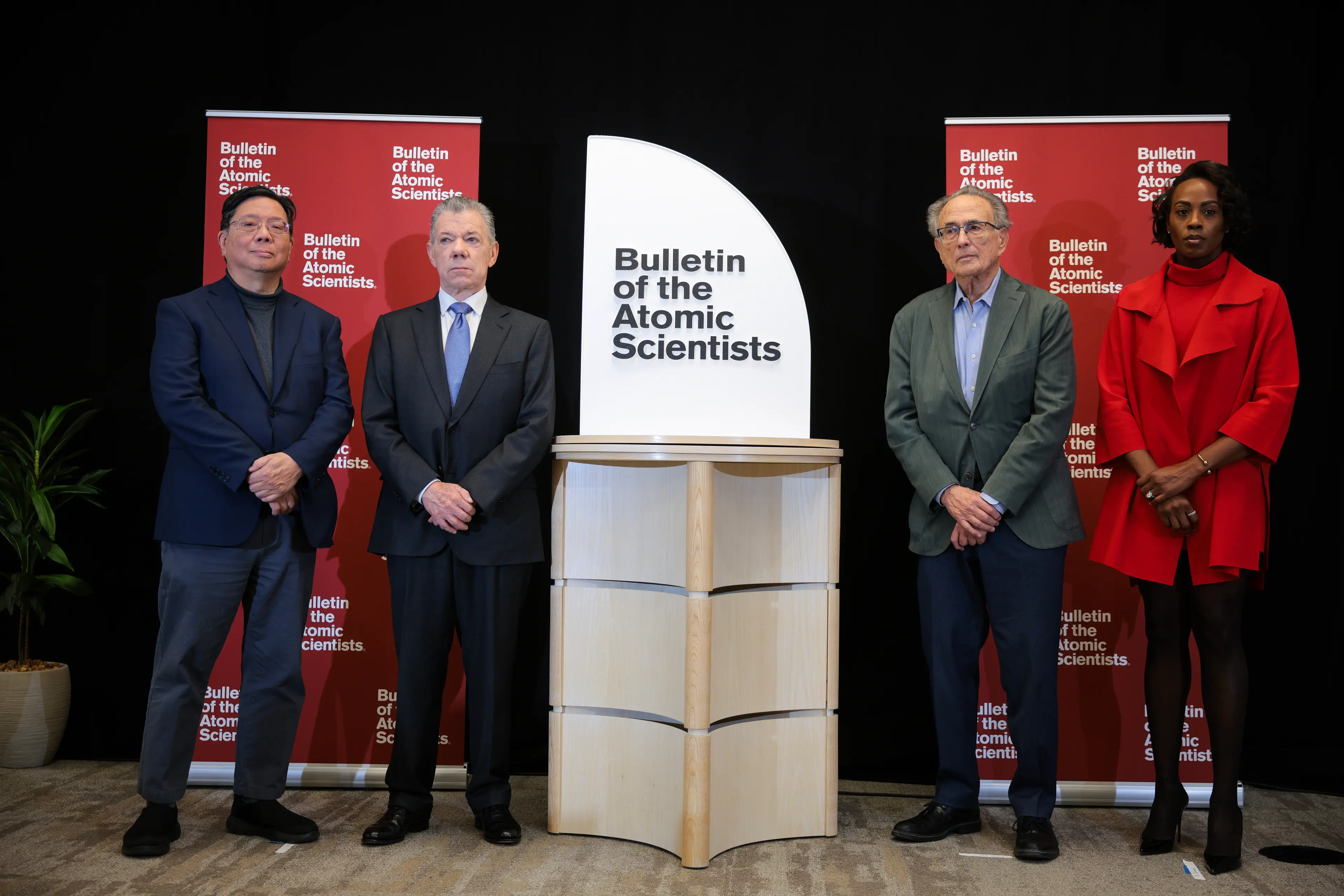
US scientists involved in the Manhattan Project and the first nuclear weapons - including the great German physicist Albert Einstein - founded the clock to represent the dangers to the planet. They focus on three main things: nuclear risk, climate change and disruptive technologies.
Annually, the minute hand has been moved closer or further away from midnight, depending on that year's events and problems. The closer the metaphorical time is to midnight, the nearer we are to total destruction and the further away, the more we've been doing to save the world.
It's currently reviewed every year by the Science and Security Board.
What time has the clock been set to?
Today (January 27), the Bulletin's Science and Security board gathered in Washington, DC, to confer over whether the hands need to be moved, and ultimately set the clock at 85 seconds to midnight - four seconds closer than last year.
The meeting involved several experts in nuclear technology, climate science and other fields sitting down to discuss how close a global catastrophe is. Members included the director of global risk at the Federation of American Scientists, Jon Wolfsthal, and a retired US Air Force major general.
In a press release, the Bulletin of Atomic Scientists explained that the new time was chosen following consideration of the ongoing conflicts in Ukraine and the Middle East - which are nuclear-armed states - as well as the expiry of the last arms control agreement between Russia and the US.
Other factors in setting the clock at 85 seconds to midnight include modernisation of arsenals in nuclear-armed states, advances in artificial intelligence, which potentially exacerbate the risk of conflict, and the 'failure' of countries across the globe to do more to tackle climate change.
Previous movements of the clock include the height of the Cold War in 1953, when it was 120 seconds (2 minutes) to midnight, and during the pandemic, when it was moved to 100 seconds to midnight.
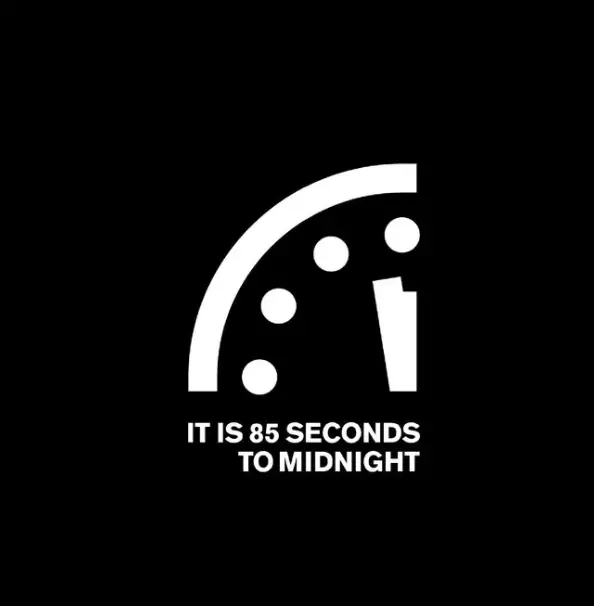
What does moving the clock mean?
The closer the clock gets to midnight, the more likely we are to experience man-made destruction. Thankfully, the world will not explode or suddenly end if it strikes midnight - but it symbolizes the point of no return for our planet.
Melissa Parke, ICAN’s Executive Director, explained: “The Doomsday Clock is not a prediction, it’s a warning.
"Nuclear weapons, wars from Ukraine to Gaza, the climate crisis and runaway technologies are all part of the problem – but they are all created by humanity.
"That means we can also change course. The Treaty on the Prohibition of Nuclear Weapons (TPNW) is a clear path to turn back the hands of the clock.”
Topics: News, Doomsday Clock, Climate Change
 The UNILAD Team