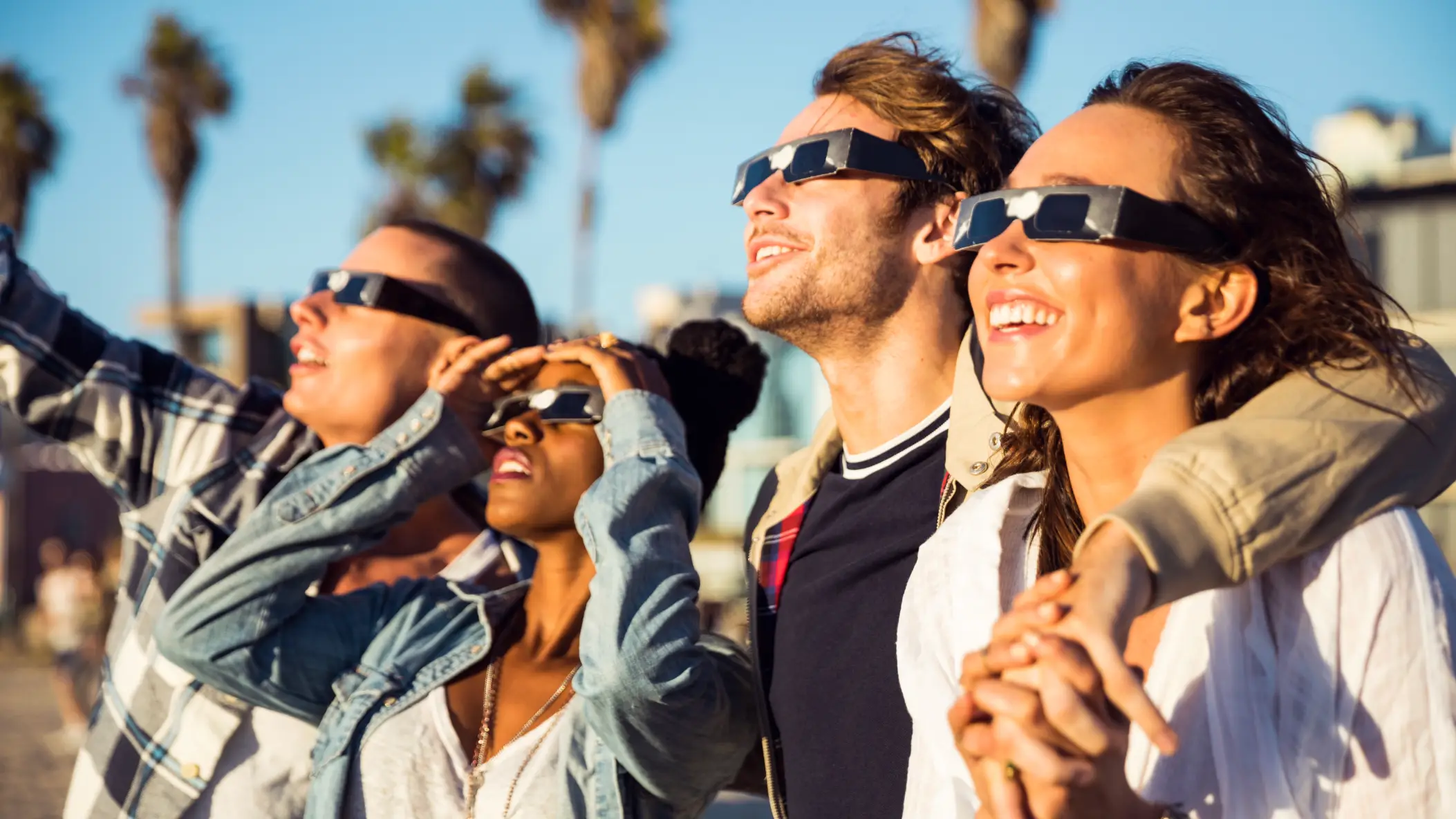
Warning signs to look out for if you stared directly at the solar eclipse

Experts are warning that anybody who looked directly at yesterday's eclipse without proper protection could have put their eyesight at serious risk.
The eclipse drew crowds across Europe who will have used specialist glasses alongside homemade safe viewing methods to watch in awe as the sun went dark.
Glasses meeting the ISO 12312-2 standard are designed specifically for watching the eclipse, while ordinary sunglasses do not offer sufficient protection.
Looking directly at the Sun without the appropriate eyewear can damage the retina, which is the light-sensitive tissue at the back of the eye.
Advert
Alex Ionides, a consultant ophthalmic surgeon at Moorfields Eye Hospital in the UK told The Independent: "When you look directly at the sun, the bright light and ultraviolet radiation can damage retinal cells."
This warning comes after Google searches for 'sore eyes' reportedly rose by 650 percent today compared over the same period the previous day.
One of the big parts of the problem is that the damage can happen surprisingly quickly.
After the 1999 total eclipse in the UK, the Royal College of Ophthalmologists recorded around 70 cases of people developing vision problems after watching it.
Around 40 percent of those people had looked at the eclipse for less than one minute.
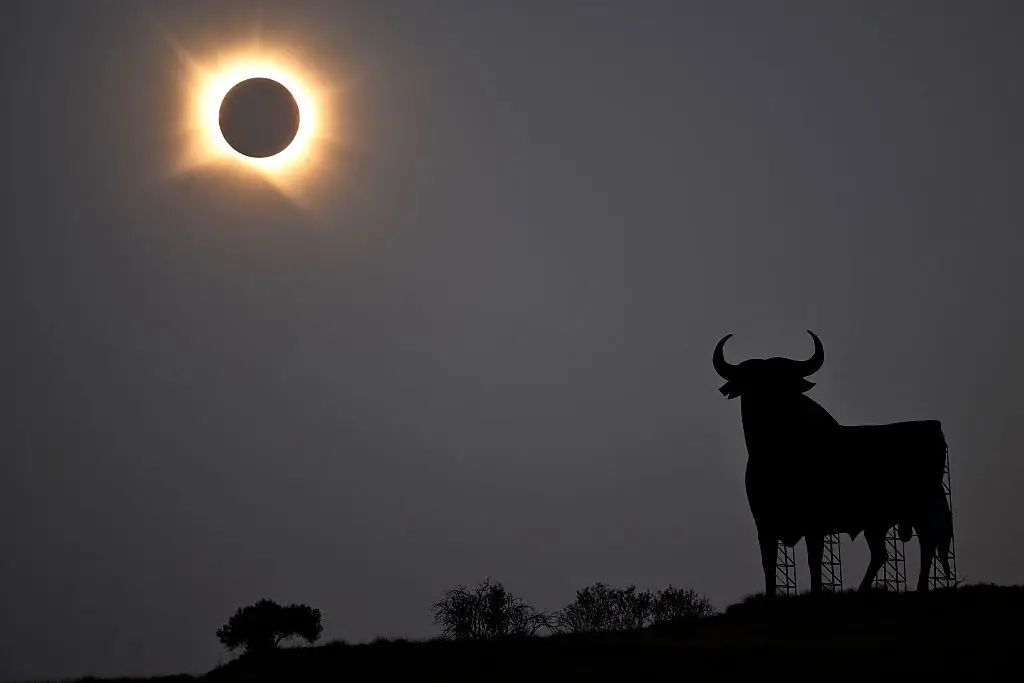
What are the symptoms of solar retinopathy?
Possible symptoms include blurred or distorted vision, difficulty reading, reduced ability to distinguish colors and a dark spot appearing in the center of someone's vision.
Ionides said some people's eyesight may recover over time, but permanent vision loss is also possible.
Anyone who notices a sudden change in their vision after looking at the Sun should seek urgent medical attention.
Eye pain, redness, irritation, blurred or distorted vision and newly appearing dark spots are among the symptoms that should be taken seriously.
One of the most important things to know about solar retinopathy is that the damage can initially be painless.
Emil Kurniawan, a consultant ophthalmologist at OCL Vision, said: "Looking directly at the sun, even for just a few seconds, can burn the retina at the back of the eye, even if only a sliver of the sun is visible during a partial eclipse."
He explained that solar retinopathy can go unnoticed because people may not realize their retina has been damaged until hours or even days afterward.
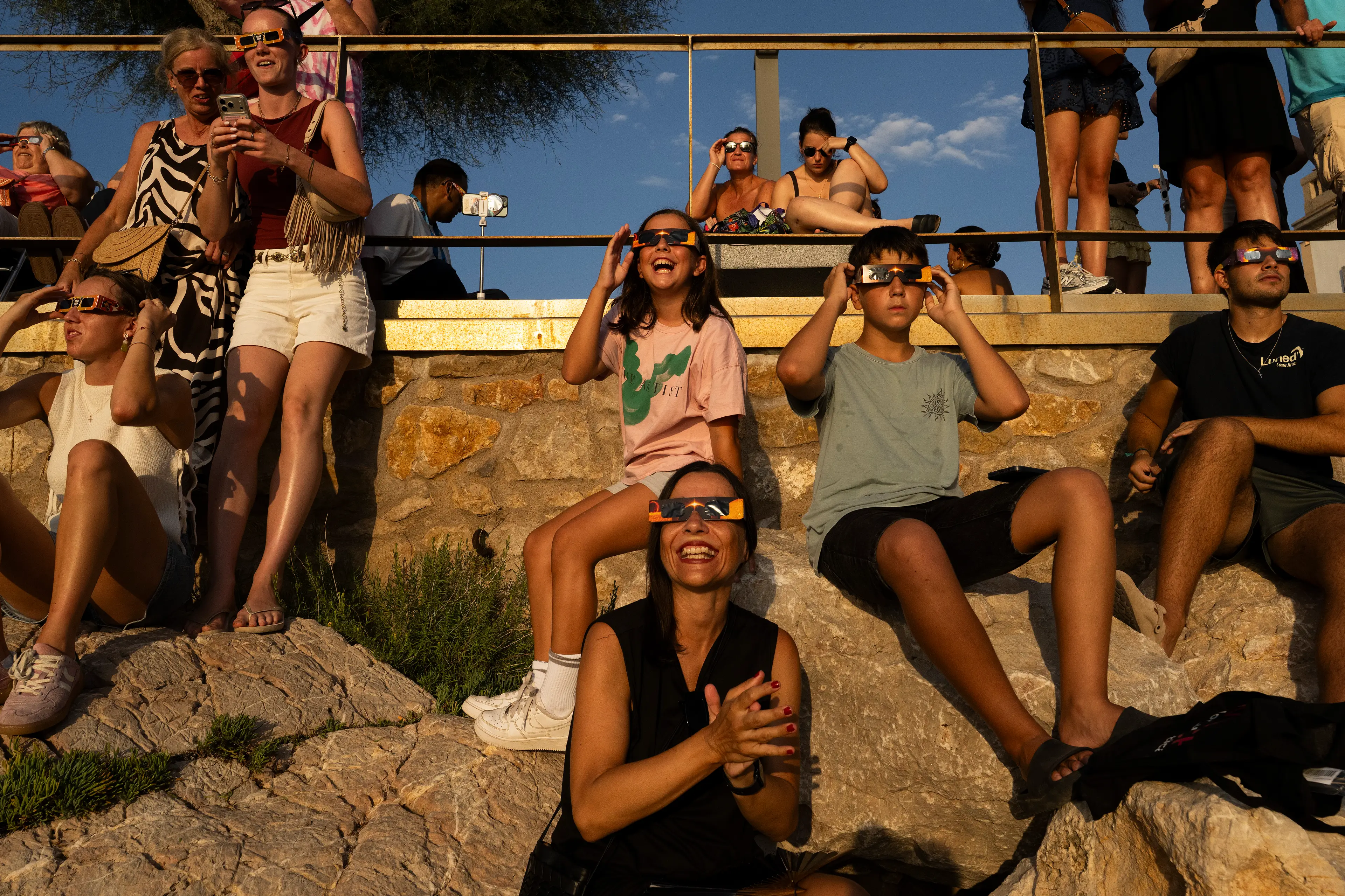
Why is looking at the Sun during an eclipse dangerous?
The eclipse does not make the Sun's rays inherently more powerful.
Instead, the danger comes from the way the event changes how people react to sunlight.
On an ordinary day, the brightness of the Sun generally causes people to blink, squint or look away.
During a partial eclipse, the Moon blocks enough visible light to make staring toward the Sun seem more comfortable.
Kurniawan said ultraviolet and infrared radiation can still reach the retina despite the reduced brightness.
He added: "Because the retina has no pain receptors, there are no warning signs."
That means someone can spend longer looking at a partially eclipsed Sun than they normally would, without experiencing immediate discomfort to tell them to stop.
The risk is therefore not simply that an eclipse looks different from an ordinary sunny day. It is that the reduced visible light can make direct viewing feel deceptively manageable while the retina remains vulnerable to damage.
 Thomas Bamford