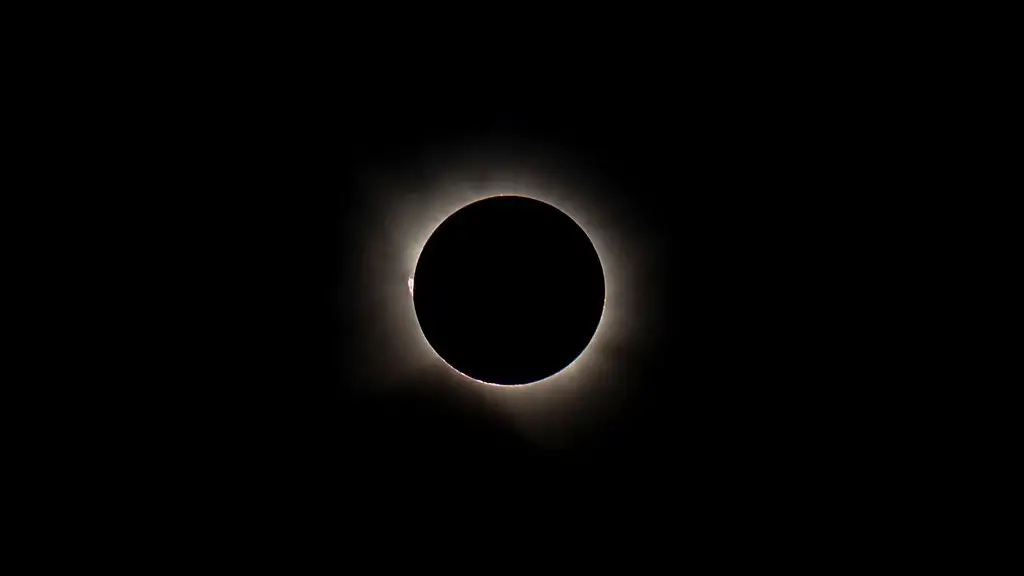
When is the next total solar eclipse after August 12, 2026

With the total solar eclipse of August 12, 2026, officially in the history books, eclipse chasers and stargazers are already looking ahead to the next time the moon will completely block out the sun.
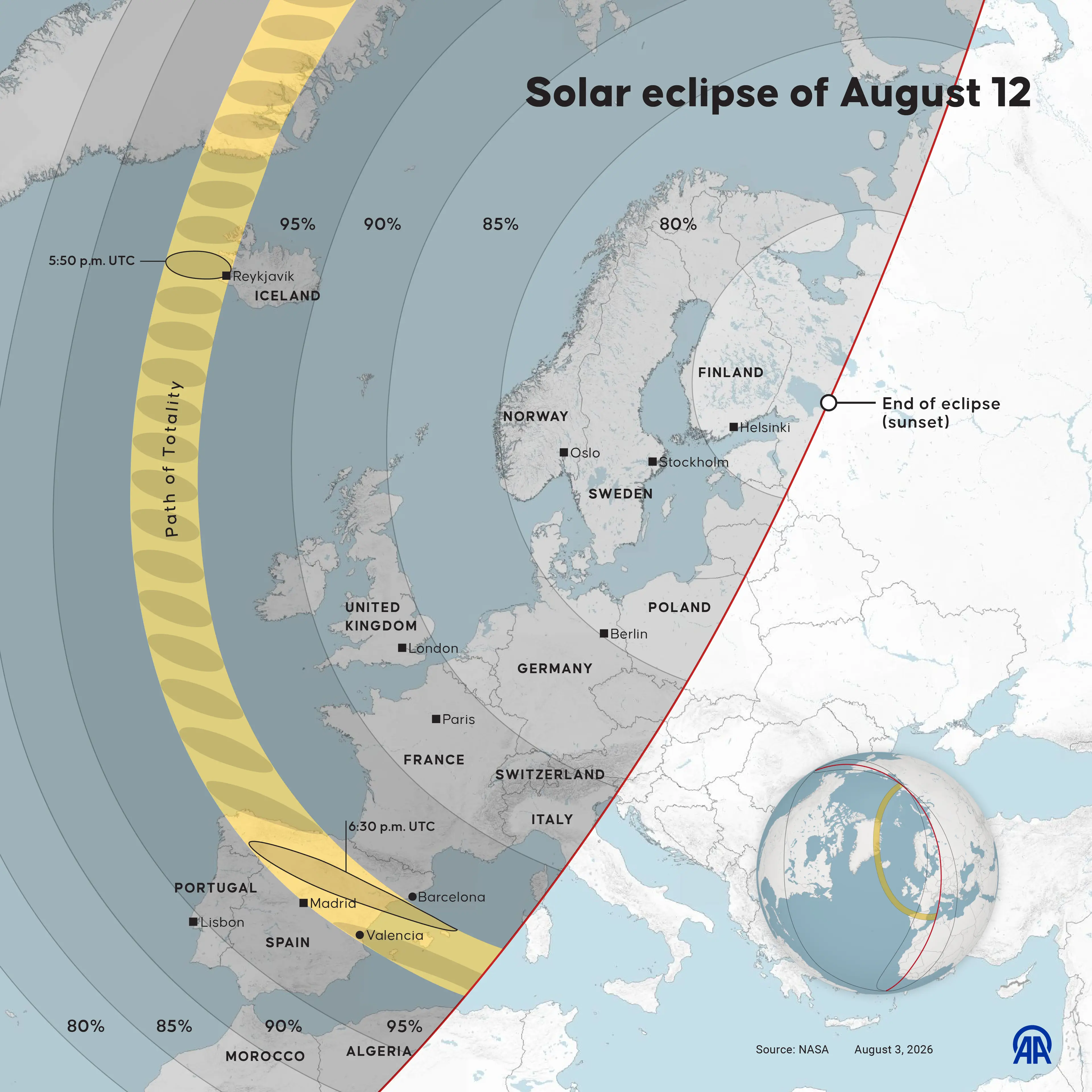
While Wednesday's event brought spectacular totality to Iceland, Greenland, and Spain — and a deep partial eclipse to parts of the US and northern Europe — the coming years offer several more opportunities to witness one of nature's most awe-inspiring phenomena.
For those willing to travel internationally, the wait for the next major total solar eclipse won't be long at all. Though it may be enough time to fix your potentially broken cell phone.
Next global total solar eclipses
The global eclipse calendar features three major total solar events over the next four years...
August 2, 2027
The next total solar eclipse will sweep across Southern Europe, North Africa, and the Middle East.
Often dubbed the 'Eclipse of the Century', it will cross southern Spain, Gibraltar, Morocco, Algeria, Tunisia, Libya, and Saudi Arabia. Observers near Luxor, Egypt, will experience an astonishing six minutes and 23 seconds of totality— more than double the duration of the 2026 event.
Advert

July 22, 2028
The path of totality will cross Australia and New Zealand, passing directly over Sydney and giving millions of urban residents a front-row seat to the dark daytime sky.
November 25, 2030
A total solar eclipse will cross southern Africa — including Namibia, Botswana, and South Africa — before stretching across the Indian Ocean toward Australia.
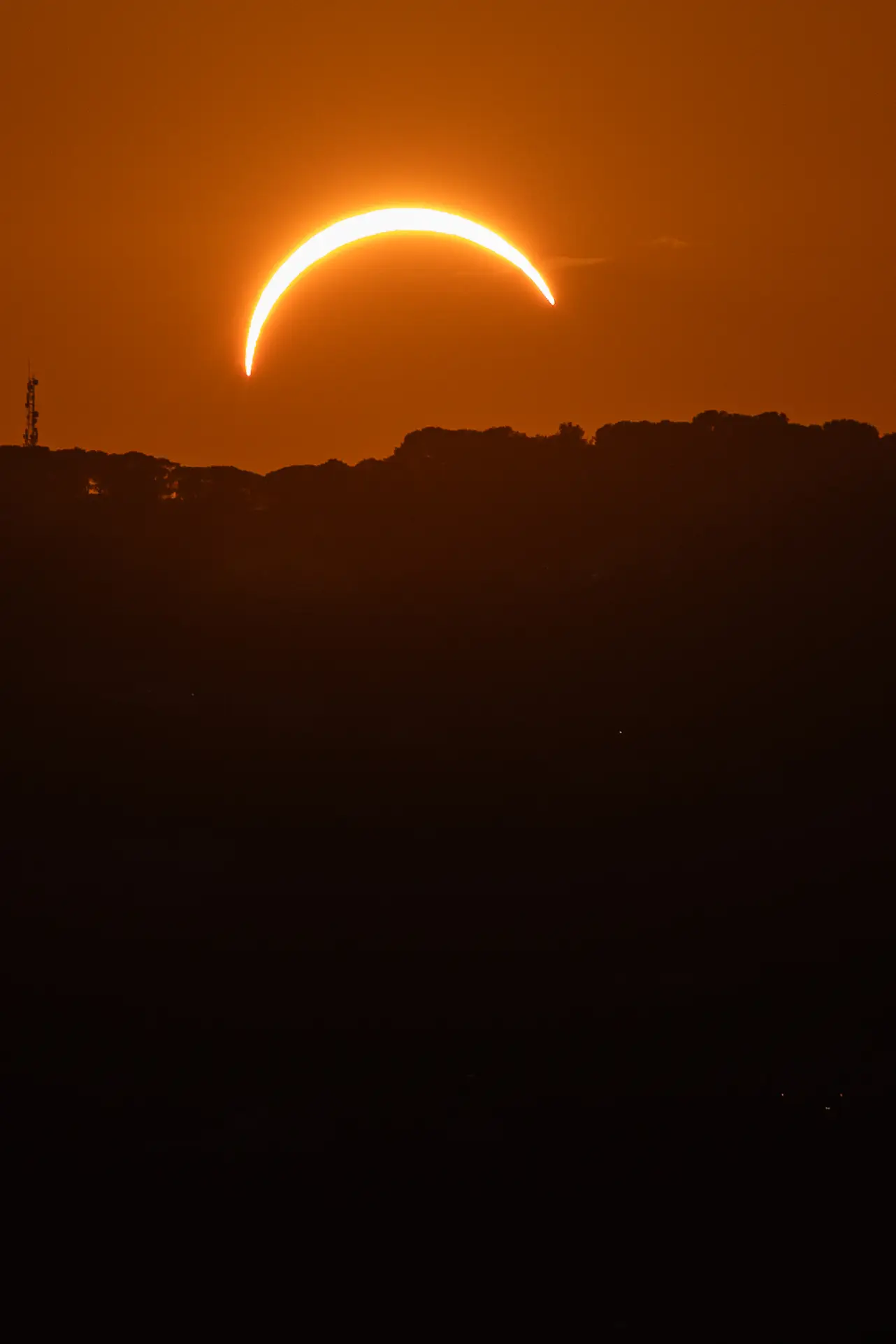
When will the next total solar eclipse hit North America?
While parts of the US and Canada caught a partial eclipse during the August 12 event, those waiting for totality to return to North American soil face a longer wait following the famous 2024 coast-to-coast eclipse.
- March 30, 2033: Alaska and eastern Russia (totality passes over western and northern Alaska)
- August 22, 2044: Northern Canada, Montana, and North Dakota
- August 12, 2045: California, Nevada, Utah, Colorado, Kansas, Oklahoma, Texas, Arkansas, Mississippi, Alabama, and Florida, continuing into the Caribbean and South America
- For Americans wanting to experience totality without leaving the lower 48 states, the August 12, 2045 eclipse will be the next major coast-to-coast spectacle, featuring up to six minutes of totality across the country.
What is a solar eclipse?
A solar eclipse is when the Moon passes in front of the Sun, blocking out its light. There are several reasons why this doesn’t happen very often.
Firstly, the Moon and the Sun need to be on the same side of the Earth. In other words, the Moon needs to be in the daytime sky, i.e. a New Moon.
The Moon’s orbit also doesn’t line up with the Earth’s - it’s tilted by about five degrees. This means that usually the Moon passes over or under rather than in front of the Sun.
In fact, solar eclipses only occur twice a year, about every 173 days, in what are called eclipse seasons. Each eclipse season lasts about 35 days.
Many solar eclipses pass unnoticed.
This is because the Moon only casts a small shadow on the Earth, known as the path of totality.
You need to be directly in the path of totality to see a full eclipse, and nearby to catch a partial eclipse.
 Phoebe Tonks