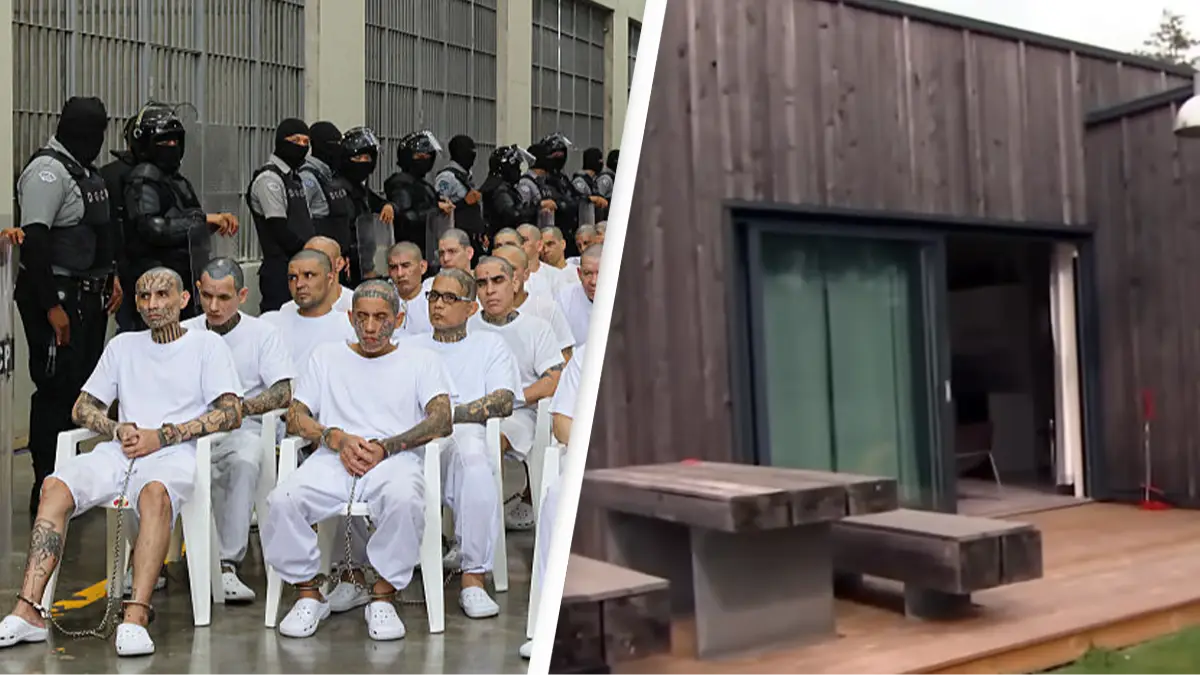
Photos show stark differences between 'world's strictest prison' and 'most humane' with yoga and chalet stays

Two prisons on opposite sides of the globe show just how differently countries can approach crime and punishment.
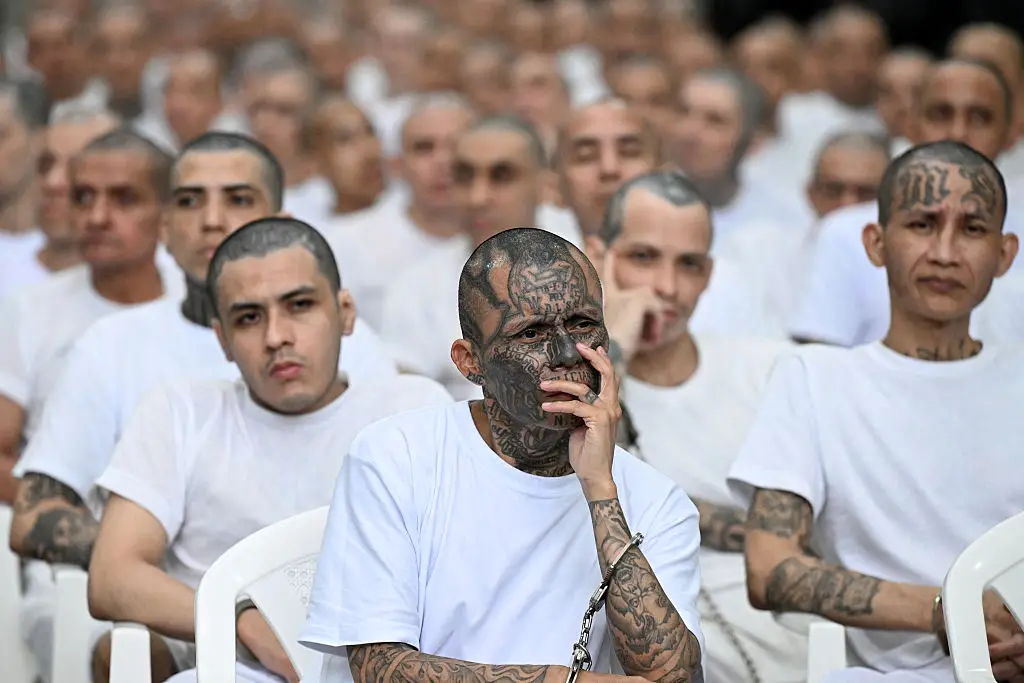
El Salvador's Terrorism Confinement Center, known as Cecot, has been branded one of the toughest prisons on the planet, built to hold alleged gang members under some of the harshest conditions imaginable.
Speaking to the Guardian, Noah Bullock, executive director of human rights organization Cristosal, said the facility is meant for 'permanent exile, permanent punishment'.
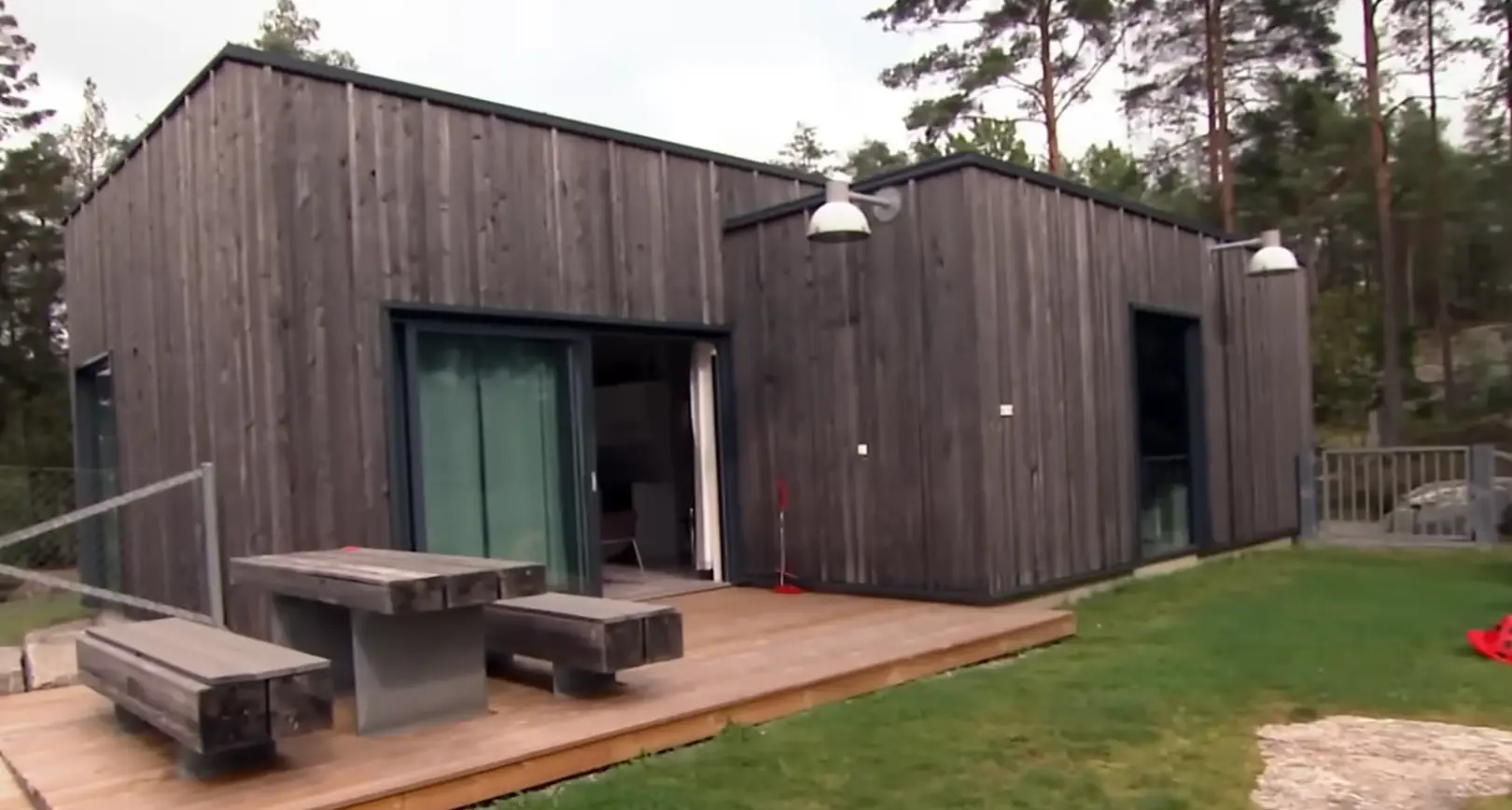
At the other end of the scale sits Halden Prison in Norway, where inmates practice yoga on the lawn, cook in fully equipped kitchenettes, and can even spend overnight visits with their children in on-site family chalets.
Advert
How strict is El Salvador's Cecot prison?
Cecot sits just outside Tecoluca, a rural district south of San Salvador, and was completed in under a year before the first prisoners arrived in February 2023.
President Nayib Bukele has described it as the largest prison in the Americas, with capacity for 40,000 inmates, primarily alleged members of the MS-13 and Barrio 18 gangs.
The facility also holds Venezuelan migrants deported from the US under a deal with the Trump administration.
Almost nothing is known about conditions inside, and only one prisoner is understood to have left Cecot alive - Kilmar Ábrego García, who was wrongly deported from the US before being transferred elsewhere.
Cells reportedly hold up to 80 men at a time, sleeping on metal bunks without mattresses or sheets, sharing a single toilet and water basin.
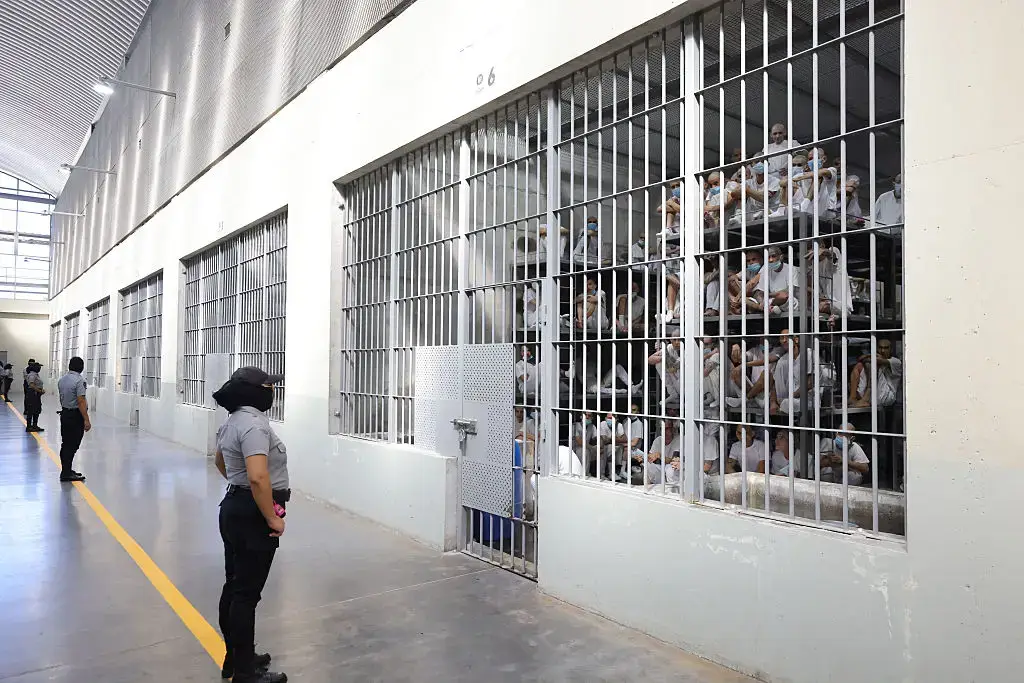
Inmates are allowed just 30 minutes outside their cells each day for exercise, never see natural sunlight, and receive no visitors.
The lights are on permanently, except inside the solitary confinement units.
Meals are basic and repetitive, typically consisting of rice, beans, tortillas, pasta, or hard-boiled eggs, and inmates must eat using their hands because utensils are prohibited to prevent them from being weaponized.
The facility is heavily militarized, watched over by 19 concrete watchtowers, multiple electrified fences, and reinforced concrete walls.
Armed guards patrol the interior corridors constantly.
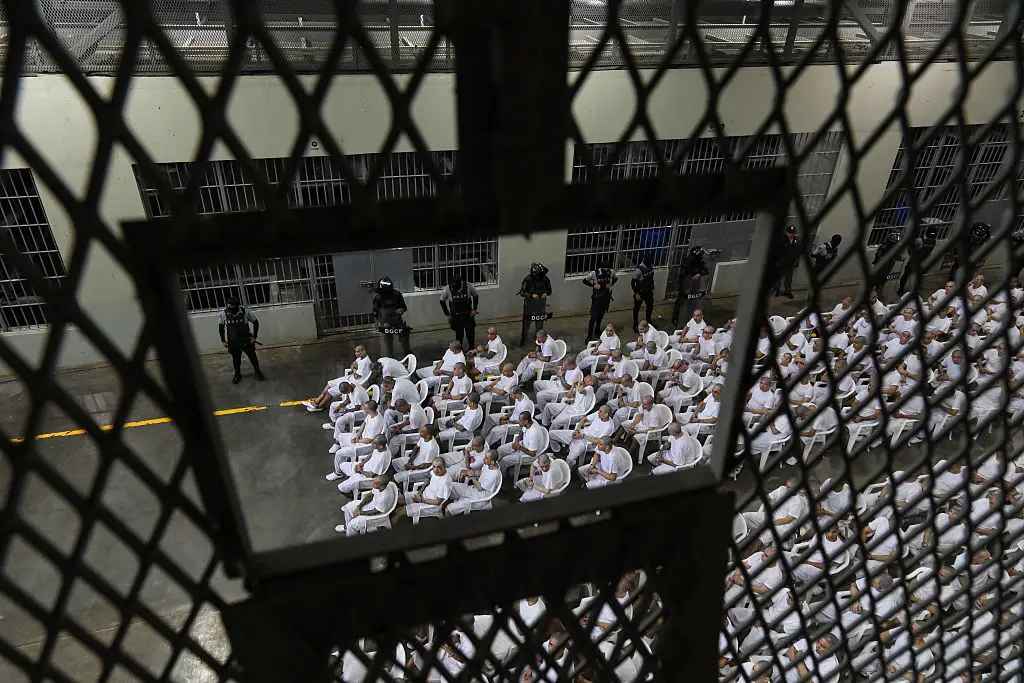
Prison officials operate under a strict philosophy that high-ranking gang figures designated as terrorists will never leave the facility, creating an austere psychological atmosphere that former inmates and human rights groups have described as extreme and unforgiving.
Human Rights Watch's Juan Pappier compared the facility to 'Guantánamo on steroids', telling The Guardian that prisoners exist in 'a space essentially ungoverned by law.'
What makes Halden Prison in Norway so different?
Halden, a maximum-security prison roughly 90 minutes from Oslo, was designed to resemble a university campus rather than a jail, surrounded by woodland and built at an eye-watering cost of $188 million.
Every inmate at Halden has an individual cell complete with an en-suite bathroom, a fridge, a desk and a flat-screen television, with many rooms even having a nice view of a forest.

Inmates are permitted to leave their cells at 7:30am, working in on-site workshops as mechanics, carpenters or graphic designers, and aren't locked back in until 8:30 pm.
But compassion comes at a cost; the BBC reports that each prison place costs around $133,000 dollars a year to keep an inmate.

The Federal Bureau of Prisons (BOP) reports an average annual Cost of Incarceration Fee in the US roughly equates to about $44,090 per inmate (roughly $120.80 per day).
Under a scheme known as 'Daddy In Prison', fathers who pass safeguarding checks can spend nights with their children in a private chalet inside the grounds.
Officers train for two to three years, don't carry weapons, and are encouraged to build relationships with inmates through a model prison governor, Are Hoidal, calls 'dynamic security'.
The approach appears to work; reoffending in Norway sits at around 20 percent after two years. In the United States, roughly 66 percent to 68 percent of released state prisoners are rearrested within three years, and about 77 percent to 82 percent are rearrested over a five-to-ten-year period, according to the Bureau of Justice Statistics.
Topics: El Salvador, World News, Crime
 Thomas Bamford