US airspace reopens after four-hour nationwide ground stop but passengers still face lengthy delays

U.S. airspace has officially reopened following a rare four-hour nationwide ground stop, though tens of thousands of travelers continue to face lengthy delays, missed connections, and rolling cancellations as airlines work through a massive operational backlog.
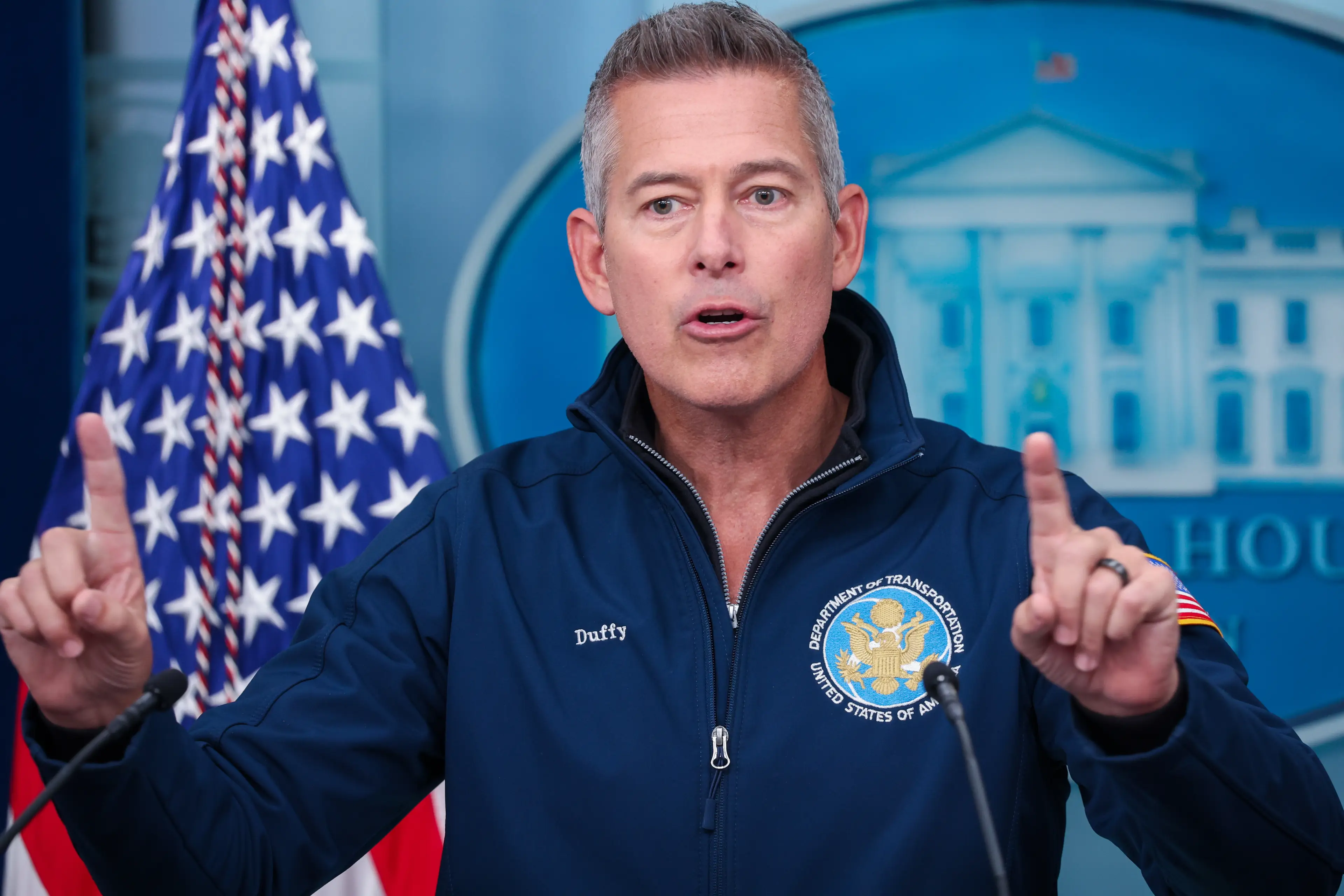
Speaking during a White House news briefing on Friday night alongside Homeland Security Secretary Markwayne Mullin, Transportation Secretary Sean Duffy confirmed that federal technicians restored stability to the nation's air traffic control communications network, allowing the Federal Aviation Administration to lift the freeze at 8:15 p.m. ET.
“At 8:15 tonight, Eastern time, we've opened up the airspace,” Duffy told reporters. “Now does that mean every flight is going to fly right now? It's going to be slow. So if you're watching, you're at an airport, check with your airline. But it's going to take us some time to unwind what's happened this afternoon.”
Over 11,800 Flights Disrupted Nationwide
According to flight-tracking service FlightAware, more than 10,300 flights within, into, or out of the United States have been delayed and nearly 1,500 canceled.
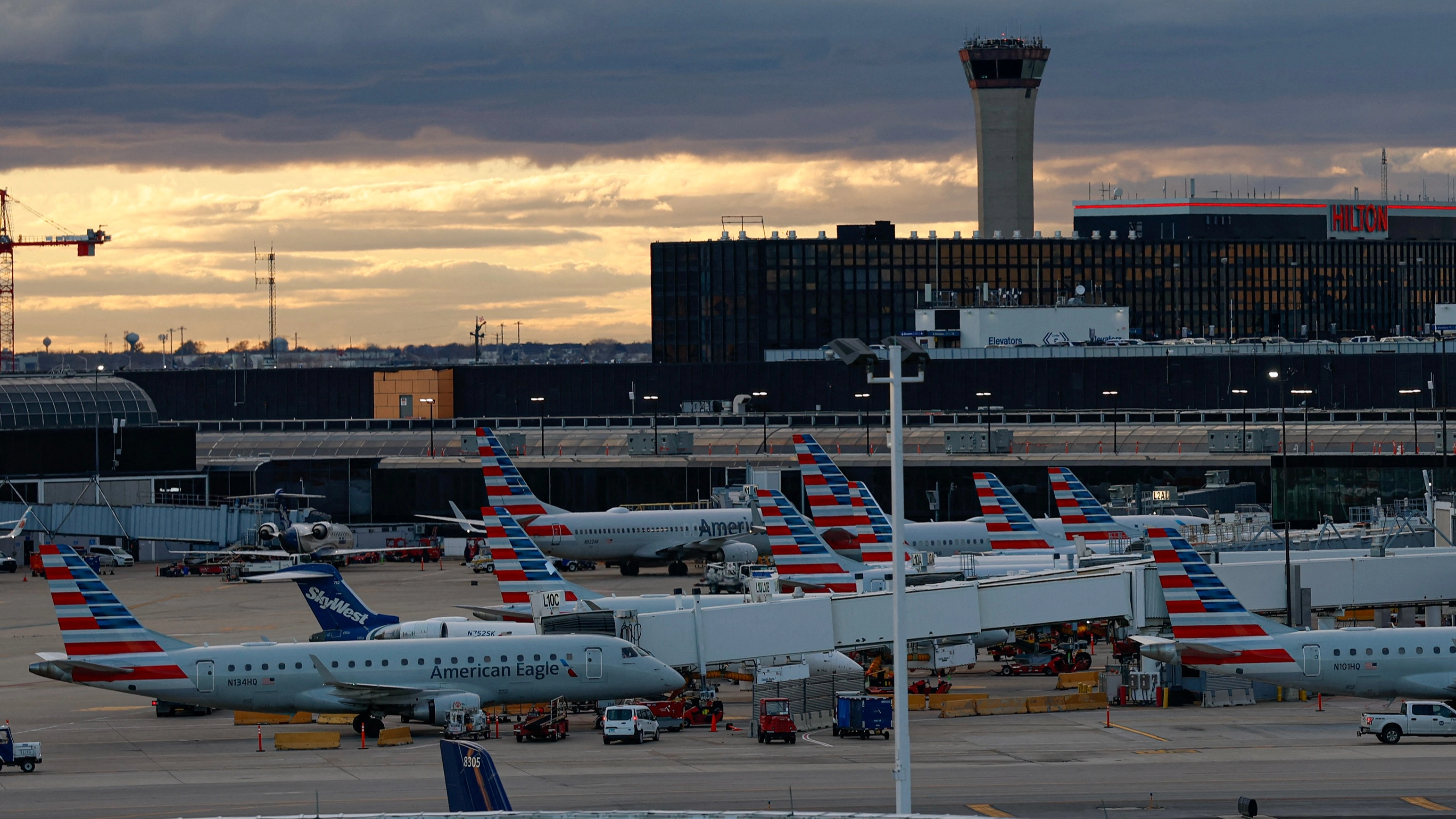
Major hubs including Atlanta's Hartsfield-Jackson, New York's JFK and LaGuardia, and Chicago's O'Hare and Midway experienced severe gridlock, while transatlantic flights departing from the U.K. and Canada were also delayed or canceled.
Advert
Aviation officials warned that knock-on disruptions will stretch well into Saturday as airlines reposition out-of-place aircraft and reset flight crew schedules.
Major carriers—including American Airlines and United Airlines—have issued travel waivers allowing affected passengers to rebook flights without change fees.
‘Legacy Network Problem’ Blamed — Not Cyberattack
The shutdown began just before 4 p.m. ET on Friday after router malfunctions and telecommunications failures knocked out communications across all 22 regional Air Route Traffic Control Centers, which direct high-altitude flights between airports.
Duffy blamed the breakdown on outdated infrastructure being pushed past its limits.
“We use 1980s little copper lines,” Duffy explained. “It's an old system that went down, and went down everywhere. It got overloaded … our fix gives us a pretty good indication that it was a legacy network problem.”
Homeland Security Secretary Markwayne Mullin stressed that federal investigators found no evidence of a cyberattack or security threat.
“There is no indication, we had no reason to believe, that as of right now, that this was a threat to the United States,” Mullin said. “This was a telecommunication outage throughout FAA. Out of an abundance of caution, we have grounded all the flights. And all the flights are accounted for.”
Renewed Push for $30.1B Upgrade
Friday's four-hour freeze—only the second nationwide ground stop of all departing flights since the September 11, 2001, terrorist attacks, following a brief January 2023 computer outage—came just hours after the White House and Department of Transportation urged Congress to approve an additional $30.1 billion to modernize the FAA's aging telecommunications and radar systems.
Duffy warned lawmakers during Friday night's briefing that without emergency funding to replace legacy hardware, travelers risk facing repeat system failures.
 Phoebe Tonks