NASA leaders speak out as Artemis II historic moon mission ends with 'perfect splashdown'

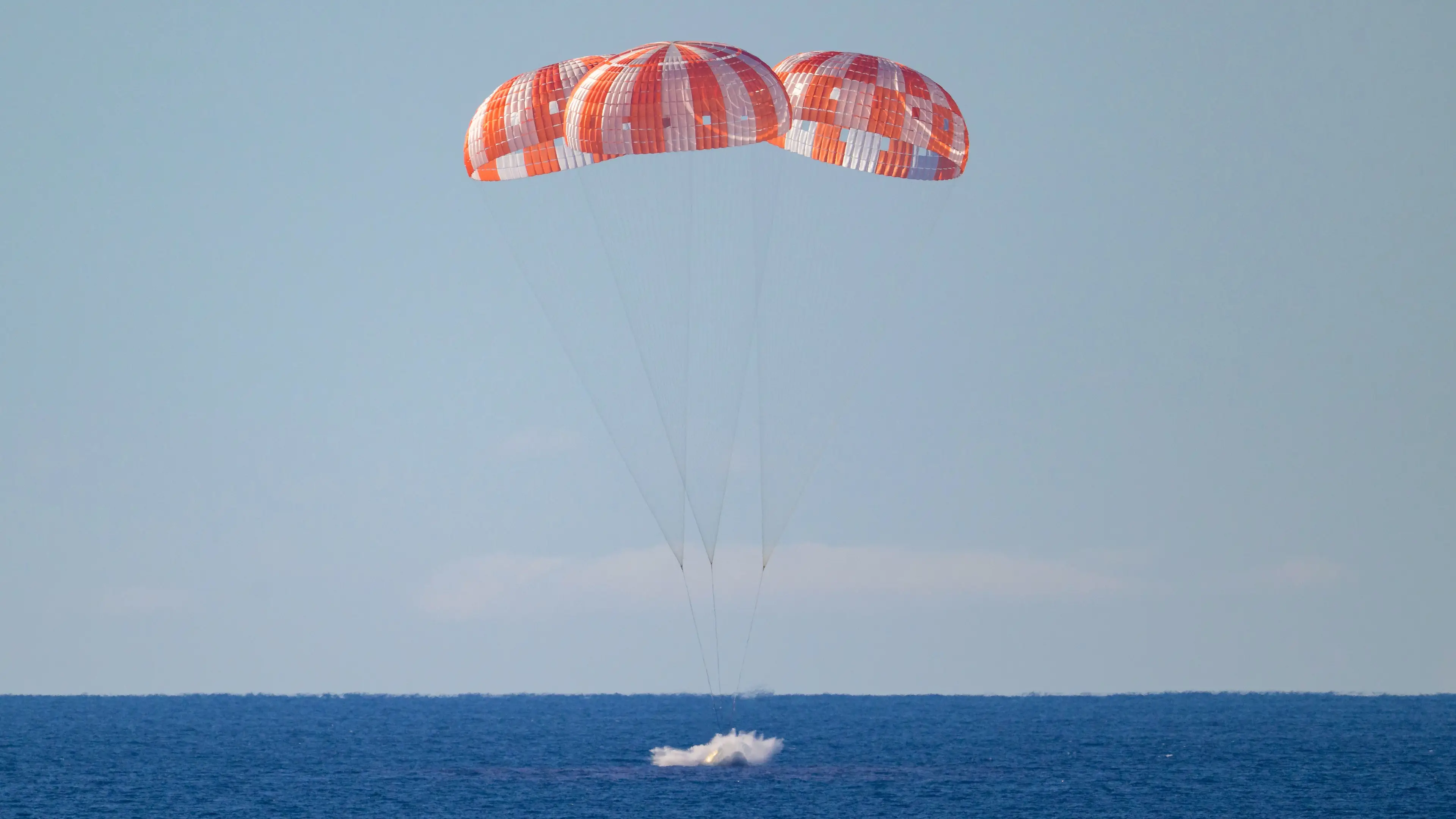
NASA leaders have spoken out after Artemis II successfully splashed down following a historic mission.
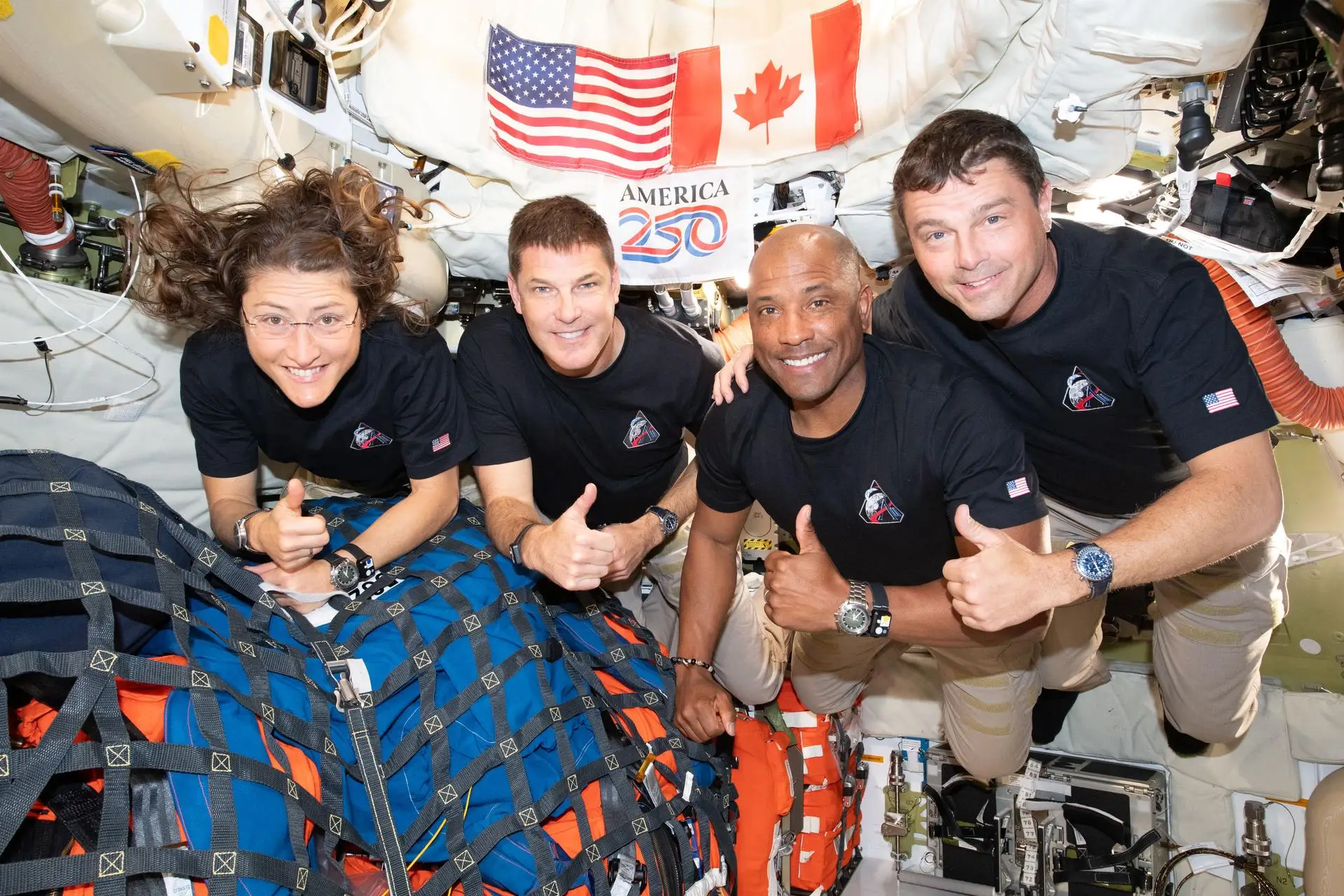
The Artemis team - made up of Reid Wiseman, Victor Glover, Christina Koch and Jeremy Hansen - embarked upon a 10-day mission around the Moon, aiming to go further into space than ever before.
On Friday (10 April) the team successfully splashed down in the Pacific Ocean, before being airlifted by helicopter.
The team are being transported to the coast before returning to NASA's space center in Houston.
Advert
The splashdown has been hailed as flawless, with NASA commentator Rob Navias describing it as 'a perfect bull's eye splashdown for Integrity and its four astronauts'.
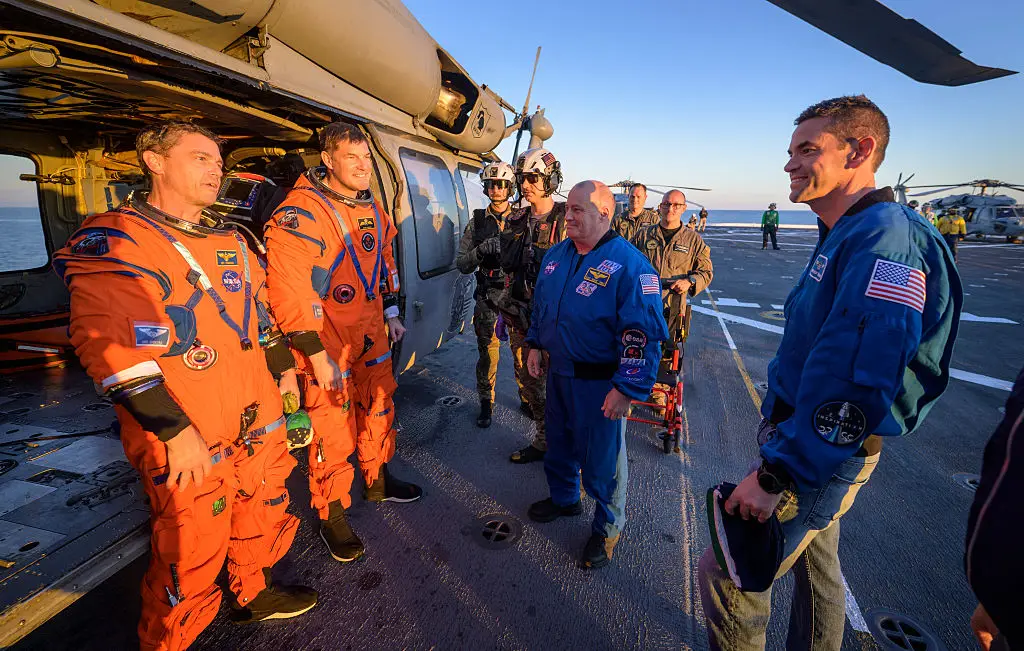
Following their safe return, NASA leaders have been speaking about the tense moments involved in bringing the crew safely home.
At a press conference, Flight Director Rick Henfling said: "We all breathed a sigh of relief once the (capsule's) side hatch opened up.
"The flight crew is happy and healthy and ready to come home to Houston."
Henfling added: "If you didn't have anxiety bringing this spacecraft home, you probably didn't have a pulse."
Meanwhile, Lori Glaze, acting associate administrator, added: "I think they really brought an amazing sense of what we were trying to achieve.
"It was a mission for all of humanity."
Glaze also said her favorite moment was when Christina Koch emerged and the team knew the crew were safe.
"We accomplished what we set out to do," said Shawn Quinn, manager of NASA's Exploration Ground Systems Program.
"It's good to be NASA, and it's good to be an American today."

President Donald Trump also had words of praise for the crew, writing on Truth Social: "Congratulations to the Great and Very Talented Crew of Artemis II.
"The entire trip was spectacular, the landing was perfect and, as President of the United States, I could not be more proud!
"I look forward to seeing you all at the White House soon. We’ll be doing it again and then, next step, Mars!"
Following the successful return of Artemis II, attention has now turned to what's next for lunar exploration.
Under the Artemis programme, the next mission, Artemis III is expected to take place in 2027.
Artemis IV - which aims to land astronauts on the Moon for the first time since 1972 - is pencilled in for 2028, although it's expected this may be delayed.
What happens next after splashdown?
Getting the astronauts out of the Orion
Helping Reid Wiseman, Victor Glover, Christina Koch and Jeremy Hansen safely out of the Orion spacecraft falls to NASA and the Department of War.
Once they land back on Earth, a team of four helicopters will circle the spacecraft - two for rescue, the other two for pictures, according to Florida Today.
One of them will lower a stabilizing collar, which will keep the Orion floating the right way up.
Then, once they’re ready, a basket will be sent down to lift the first astronaut up.
They’ll all be taken to a nearby naval vessel, the USS John P. Murtha, for a medical checkup, and then transported back to Houston.
What effect will 10 days in space have had on the astronauts’ bodies?
Even though the Artemis II crew have spent a relatively short time in space - poor Suni Williams and Butch Wilmore spent 608 days away from Earth over 2024 and 2025, remember - it will still have had an effect on their bodies.
Kevin Fong, founder of the Centre for Altitude, Space and Extreme Environment Medicine at University College London, told the BBC: “In some experiments with rats, they’ve seen up to a third of muscle from particular muscle groups being lost within seven to 10 days of flight – that’s a huge, huge loss.”
To try and combat muscle loss, the Artemis II team have incorporated workouts into their schedule, on something called a flywheel.
Since the Orion capsule is only 316 cubic feet, about the size of a smallish bedroom according to NPR, workout gear needs to be compact. The flywheel is a bit like a multi-purpose rowing machine.
Jeremy Hansen explained before launch: “We can change the dynamics of this device so that we can do weightlifting with it. So we can do squats. We can do dead lifts. We can do curls. We can do high pulls.”
What have other astronauts said about readjusting to life on Earth?
NASA astronaut Jasmin Moghbeli, who returned to Earth in 2024 after 200 days in space, said: “With eyes closed, it was almost impossible to walk in a straight line.”
That’s because the inner-ear balance humans use to orient themselves on Earth is effectively tuned out when they are in space.
ESA astronaut Andreas Mogensen, who was on the same mission, said: “I felt wobbly for the first two days. My neck was very tired from holding up my head.”
While NASA’s Jeanette Epps, who spent 235 days in space and returned in October 2024, said the main thing that took some getting used to was the heaviness of Earth.
She said: “You have to move and exercise every day, regardless of how exhausted you feel.”
Topics: NASA, Space, World News, News, Moon
 Lucy Devine