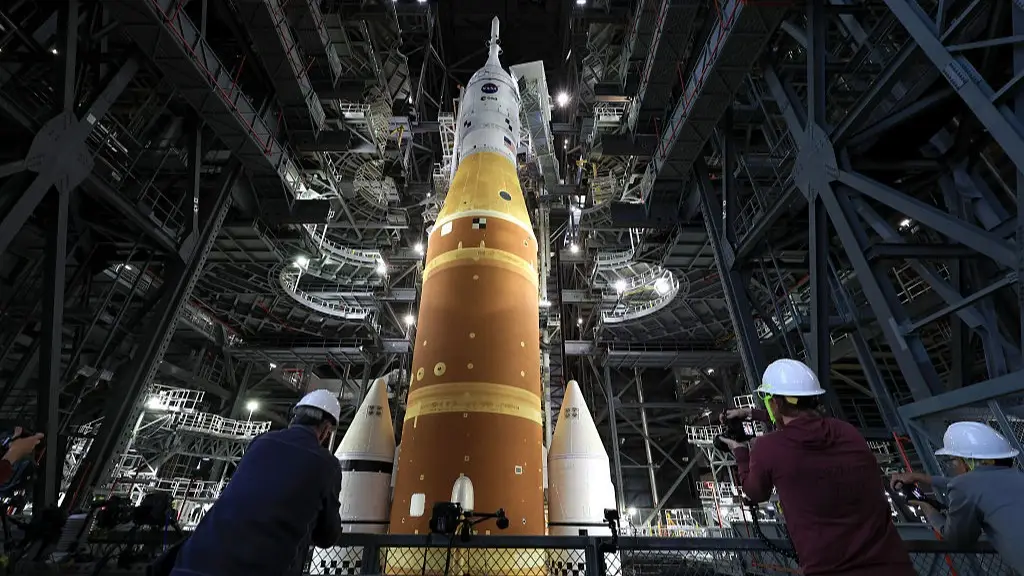
NASA engineer explains what actually happens to poop in space as Artemis II mission around Moon launches next week

It’s the question nobody wants to ask, but everybody wants answered… how do astronauts do their business in space?
The concept of pooping while floating in microgravity sounds like a logistical nightmare, but for the almost 300 astronauts who have lived on the International Space Station for months at a time, it becomes part of their everyday routine, even if only temporarily.
Four astronauts preparing to launch around the Moon on NASA's Artemis II mission will soon share that very same reality.
NASA's Reid Wiseman, Victor Glover, and Christina Koch, as well as Canadian Space Agency astronaut Jeremy Hansen will spend around 10 days in space, flying more than 1.1 million kilometers as they loop around the Moon and back.
Advert
It's the first crewed lunar mission since Apollo 17 in 1972, marking 54 years since humans last traveled beyond low Earth orbit.
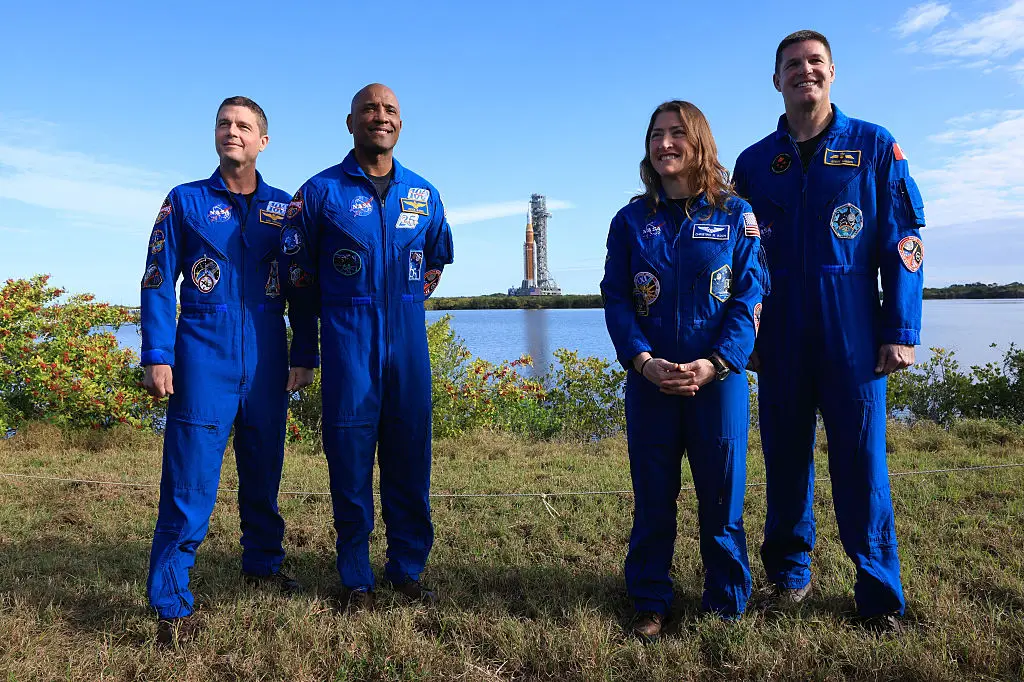
The crew will launch aboard NASA’s towering Space Launch System (SLS) rocket at the Kennedy Space Center, lifting off atop the SLS before the bespoke Orion spacecraft separates from the rocket’s upper stage in Earth orbit and uses its own module engine to propel the crew on a trajectory around the Moon and safely back to Earth.
Orion vehicle manager Branelle Rodriguez has, erm, lifted the (toilet) lid on life aboard the spacecraft, speaking to NASA's Curious Universe podcast back in January.
Co-host Jacob Pinter asked the question that's crossed all our minds at one point or another - How do you use the bathroom in space?
Rodriguez, who has been involved in every stage of the spacecraft’s lifecycle, laughed before responding: "Very carefully."
She continued: "You know, spaceflight and going to the bathroom is probably one of my favorite conversations, I’ll be honest. And it’s a great one to have actually with kids, because you’d be surprised at how brilliant their answers are."
She explained that the toilet on Orion is modeled and designed after the toilets on the ISS station today.
These use a specialized vacuum-based toilet system that uses suction to manage waste. Otherwise, the waste would be floating around the toilet cubicle which... isn't even worth imagining, to be honest.
You can see a video of how toilets on the ISS work below.
"When you get in there, first and foremost, you’re going to find yourself to make sure you get in a good configuration. There’s handrails, there’s tethers, there’s things to secure you, right? Because you’re in microgravity, so you’re constantly moving around and floating," Rodriguez explained of using the bathroom in space.
She then enlightened us as to exactly what happens with 'liquid waste,' which makes for an interesting visual, in my opinion.
"The liquid waste will actually be vented out of the spacecraft, very similar to how Apollo also did it," Rodriguez said.
The idea of pee being vented into deep space while traveling at around 40,000 kilometers an hour is pretty gross. That’s one way to make a splash in the cosmos...
As for 'solid waste', Rodriguez explained these are stored in a container.
"We call it a fecal collection container, and we utilize filters like carbon filters and things to help with odors and whatnot."
The poop is kept on the rocket for the duration of the trip, before being disposed of back on Earth.
Next time you complain about your office bathroom, spare a thought for the Artemis II astronauts instead.
The mission was initially due to launch in late January, but cold weather and high winds in Florida delayed the wet dress rehearsal, pushing it from January 30 to early February.
On February 3, that very dress rehearsal was abandoned due to hydrogen fuel leaks, postponing the launch window from early February to March.
But last week, workers detected another issue with the flow of helium, which needs to be fixed in order for the rocket to launch.
So, NASA has now pushed the mission back once more, until April 2026 at the earliest.
At least that's more time to poop peacefully on Earth, I suppose...
Topics: Moon, NASA, Science, Space, International Space Station, US News, Canada
 Ellie Kemp