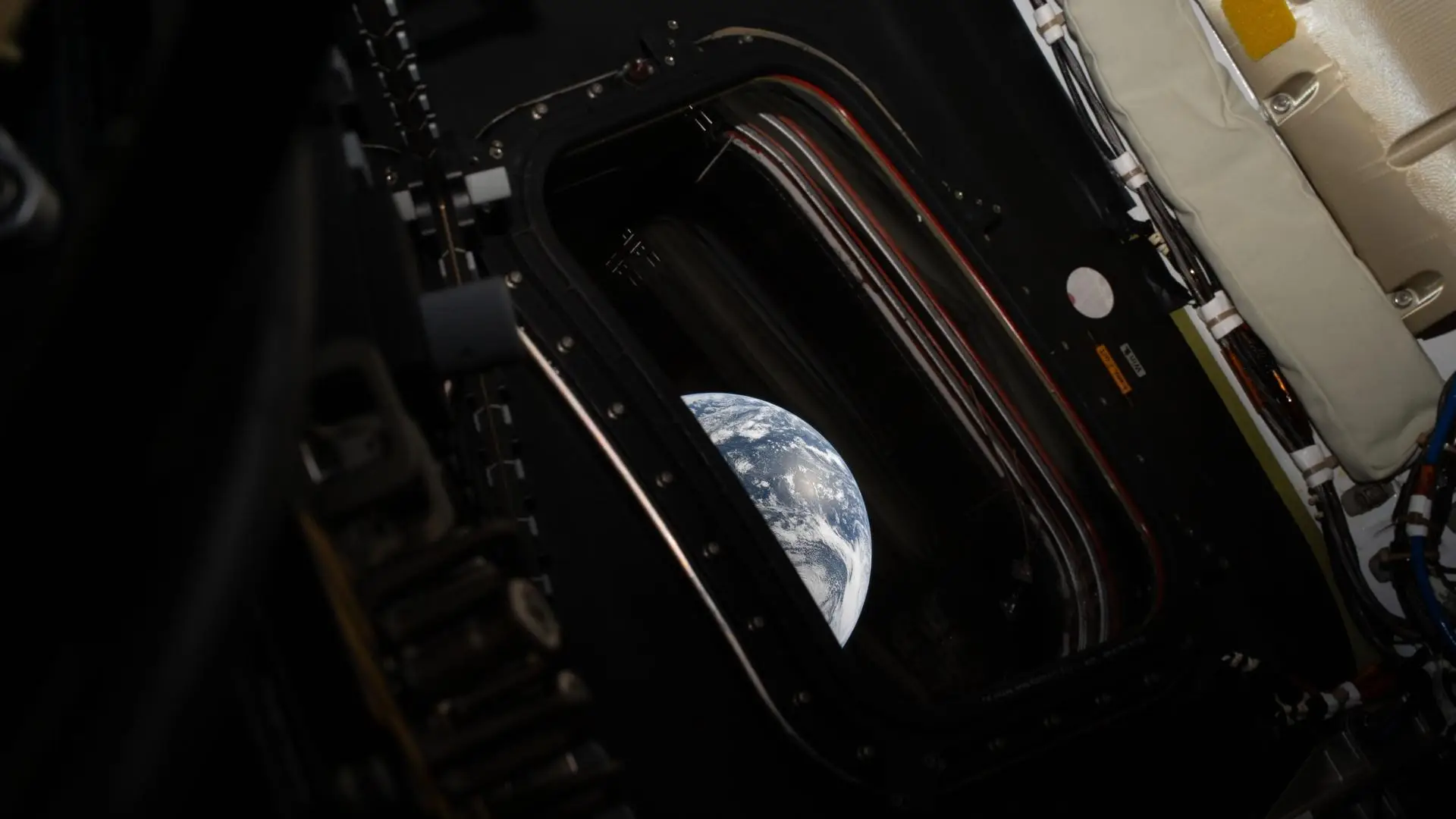
Astronaut shares historic message as Artemis II regains contact with earth after 40-minute blackout

An astronaut aboard Artemis II broke the silence of space with a dramatic message to Earth after reestablishing contact with NASA Mission Control.
Astronauts Reid Wiseman, Victor Glover, Christina Koch and Jeremy Hansen departed from Earth to the Moon on Wednesday (April 1) and are set to return on April 10.
With everything having gone according to plan, the crew on board Orion, NASA’s deep-space crew vehicle designed to carry astronauts beyond low Earth orbit, flew by the far side of the Moon on Tuesday. It was the mission’s closest point to the celestial body before the four astronauts started their journey back to Earth.
However, as the Artemis II mission flew by the Lunar far side the crew on board and experts on Earth entered a period of radio silence that lasted a tense 40 minutes.
Advert
Mission Control waited in silence during the blackout. The silence was finally broken by specialist Christina Koch, whose first four words were: “Houston, Integrity, comm. check.” She then said: “It is so great to hear from Earth again.”
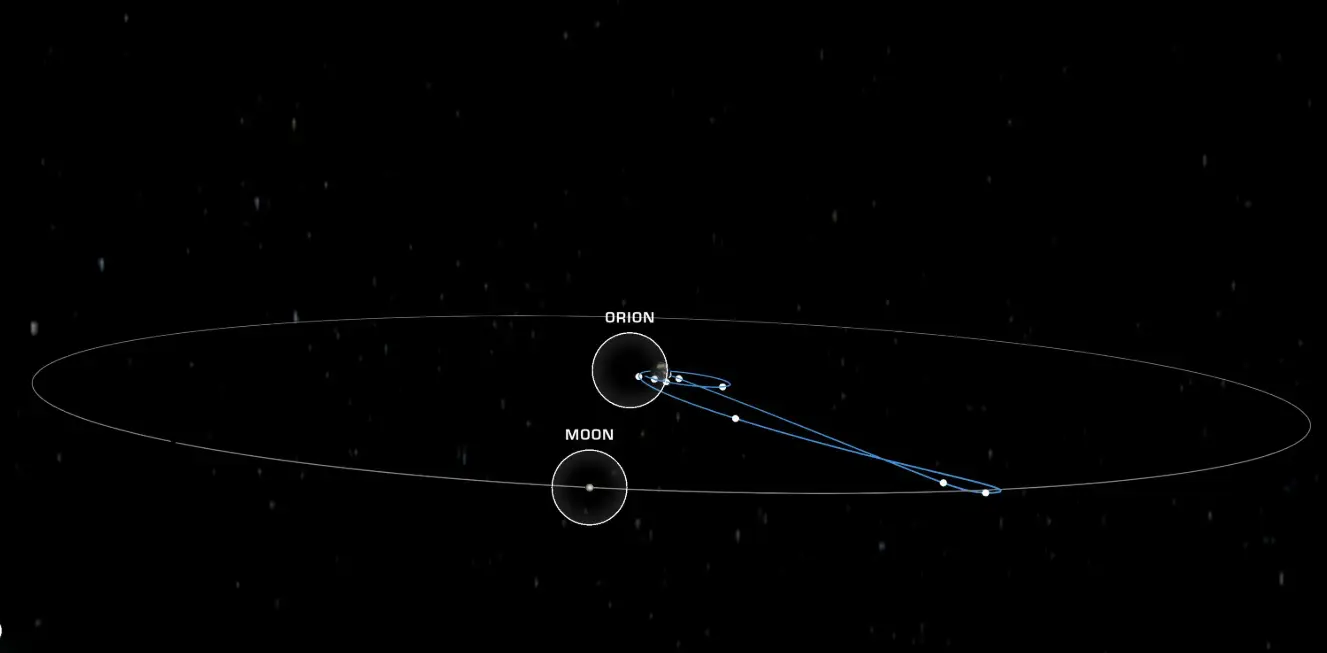
On the far side of the Moon, the capsule couldn’t communicate with the crew on Earth, so the space vehicle had to work on its own. Orion’s computers turned on the engines at the right time and sent the spacecraft on a homebound journey, without any help from people on the ground.
Engineers on Earth watched in relief as their screens showed reassuring data as Koch’s voice was finally heard.
At 1:57pm ET, Orion carried the astronauts 252,757 miles away from Earth, farther than any human had ever travelled before. The four astronauts on Orion became the furthest-flying humans in history, breaking the record set by Apollo 13 in 1970.
The Artemis II mission is the first time humans have traveled to the Moon since the Apollo 17 mission in 1972, the sixth and final Apollo mission to land on the Moon.
Now, all the information Orion saved is being sent back to Earth. Everything it recorded, such as measurements, flight details, and pictures, is being downloaded so scientists can spend the next few days studying it carefully.
Many pictures and videos of the Moon have been published for all of us Earthlings to watch. The pictures are said to be the clearest photos ever taken of the Moon and the Orion crew celebrated the achievement, before going straight back to work.
Wild artefacts which have been brought along for the Artemis II mission
Several historical and unusual mementoes have managed to flag down a ride into space with the Artemis crew, continuing a long tradition stretching back to the 1960s. Here are just a few of the items on board the Orion:
Soil from 10 'Moon Trees'
The previous uncrewed Artemis I mission in 2022 flew several tree seeds out into space, which have since gone on to be planted and grown across 236 locations in the US.
Now, soil samples taken from around the roots of 10 of these 'Moon Trees' are on board the Artemis II, 'representing the full cycle of exploration: launch, flight, growth, and return to space again', NASA explains.
Memory card containing the names of millions of people
The SD card contains a ton of names from those who participated in the space agency's Send Your Name to Space campaign, which aimed to bring the public along for the mission.
According to NASA, the kit also includes 'a variety of flags, patches, and pins to be distributed after the mission to stakeholders and employees who contributed to the flight'.
Fabric from the plane used in the Wright Brothers’ first powered flight
On loan from Smithsonian’s National Air and Space Museum, a one-inch piece of muslin fabric from the historic 1903 flight is flying with the crew to make history once again over 120 years later.
After it touches back down on Earth later this week, the fabric swatch will be returned to the museum, where two other 1903 Wright Flyer swatches also live.
American flag
In true fashion, an American flag is travelling on board the Orion craft. But the 13-by-8-inch American flag is no ordinary flag, as it has a pretty impressive space resume, having previously shot up into space with STS-1 and STS-135, the first and last shuttle missions, as well as NASA’s first crewed test flight of SpaceX’s Crew Dragon spacecraft.
Flag originally bound for the cancelled Apollo 18 mission
Another flag is also strapped in for the Artemis II mission, but this time, it's finally making its long-awaited space debut, having originally been due to fly on NASA's cancelled Apollo 18 mission.
"The flag serves as a powerful emblem of America’s renewed commitment to human exploration of the Moon, while honoring the legacy of the Apollo pioneers who first blazed the trail," NASA explains.
Negative of a photo from the historic Ranger 7 mission
Launched on 28 July 1964, Ranger 7 made history at the time as the first US mission to successfully make contact with the lunar surface, managing to snap a staggering 4,308 high-res images of the Moon.
NASA explained that the 4-by-5-inch negative 'represents a major turning point in the race to the Moon that will be echoed today through the success of Artemis'.
Topics: Space, NASA, Moon, Science, Technology
 Greg Harris