
Everything that went wrong on Artemis II launch as NASA rushed to fix major issues

A few hours before the historic launch of Artemis II, a series of technical glitches threatened to derail the mission before it ever left the ground.
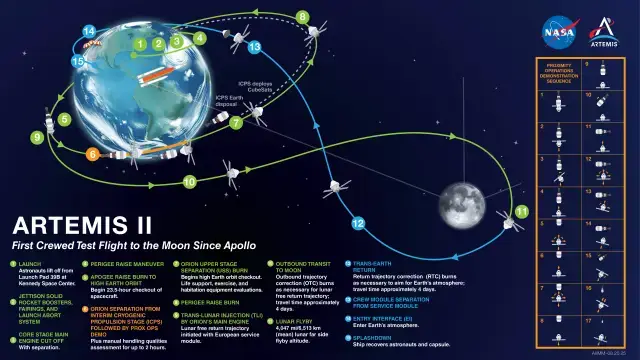
Almost sixty years after Apollo 11 Moon Landing, NASA once again ventured into outer space with the launch of a new crewed lunar mission.
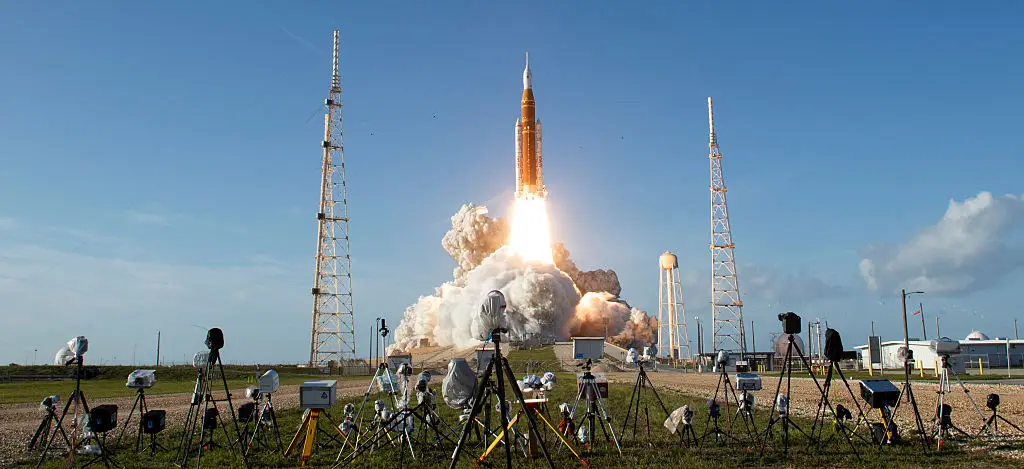
Lifting off from Cape Canaveral at 6:35 p.m. ET, millions around the world watched as three Americans and one Canadian began their journey beyond Earth.
There were several pre-launch issues that had to be rectified.
Flight termination system (FTS) issue
Prior to the launch, an issue was found in the Flight Termination System (FTS). This is an important safety feature as it allows engineers on the ground to send a signal for the rocket to destruct if it changes course during its launch.
Advert
Engineers had to quickly troubleshoot and fix the issue before the launch.
Battery temperature
A battery issue was found in the Launch Abort System, with one of the batteries showing an abnormal temperature reading.
Rather than an actual fault, it was later believed to be the result of a fault sensor, an instrumentation issue, rather than a physical battery failure after engineers worked for around an hour to find out what was wrong.
Major issues were also found post-launch.
Communication glitch
The spacecraft experienced a temporary communications issue with ground control shortly after liftoff, around 50 minutes into the flight.
Contact was restored and the vehicle itself remained unaffected, NASA Administrator Jared Isaacman said during a press conference on Wednesday.
The reason for the glitch is still being investigated as of Thursday.
Toilet malfunction
Even on a routine commercial flight, one thing you never want to hear about is a problem with the toilet.
Once Artemis II had launched, the crew was meant to set up the toilet inside the capsule.
Lunar adventures aren’t immune to toilet issues apparently. The capsule’s toilet system had a jammed fan, preventing normal urine disposal.
“The toilet fan is reported to be jammed,” NASA spokesperson Gary Jordan stated during live mission commentary. “Now the ground teams are coming up with instructions on how to get into the fan and clear that area to revive the toilet for the mission.”
Astronauts had to rely on a backup system until the issue was fixed.
NASA was able to fix the issues in rapid time. “It was a fix to clear the range and work the FTS. That is no longer a constraint,” NASA’s launch commentator, Derrol Nail, explained. “It’s great news. The range is green and we’re continuing with the countdown”.
Artemis II is the second flight and first crewed mission that forms part of NASA’s Moon to Mars initiative which hopes to eventually build a permanent habitable lunar base that could pave the way to human flights to the red planet.
 Greg Harris