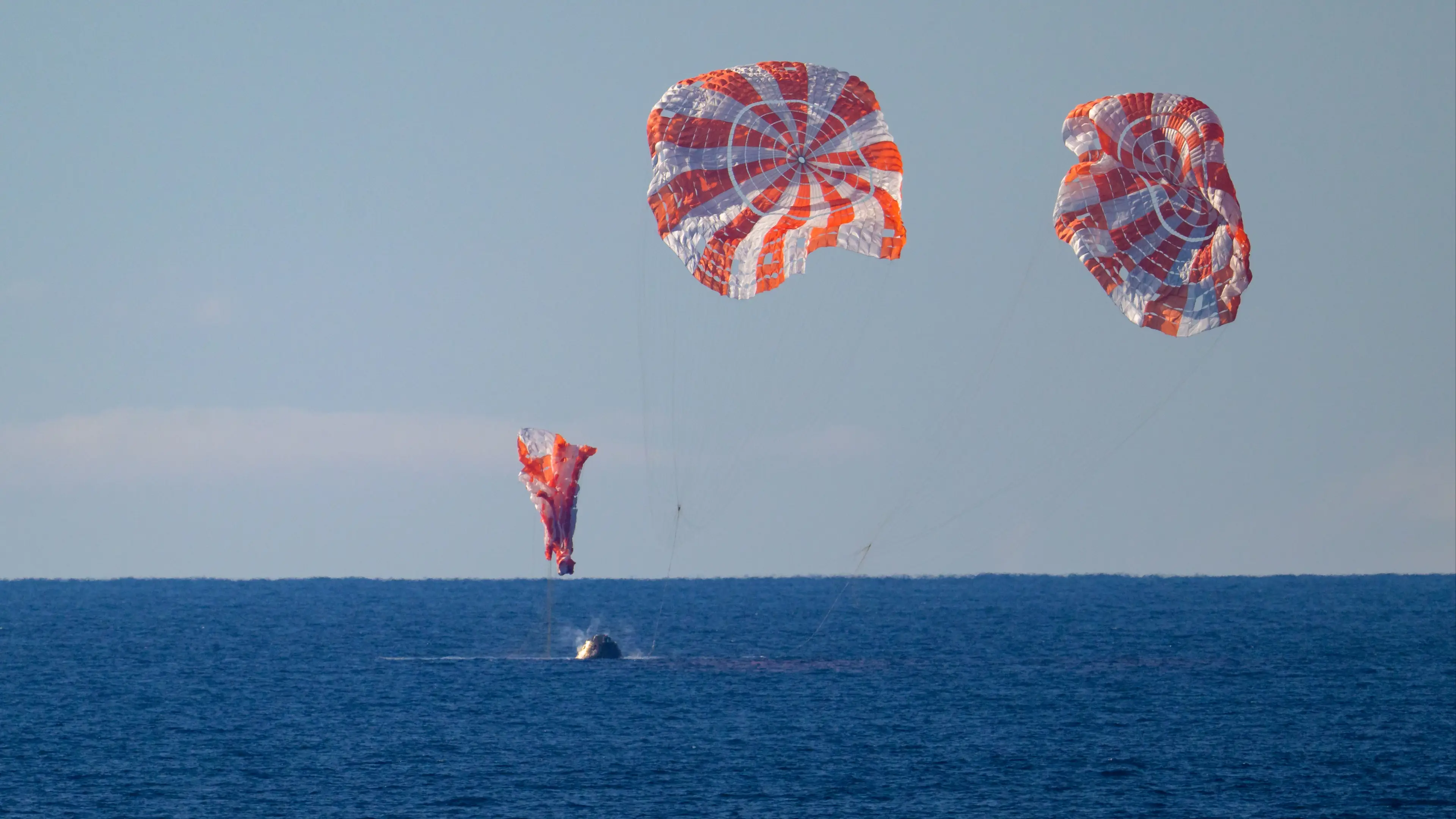
The NASA 'hidden figure' behind Artemis II's exact 'bullseye' splashdown

On Friday evening (April 10) the world watched as the Artemis II spacecraft performed a 'perfect' splashdown off the coast of San Diego.
The flawless landing might have looked effortless to those of us watching from afar, but returning a spacecraft back to Earth is one of the most delicate and tense operations of the entire mission.
As Flight Director Rick Henfling said in a press conference: "We all breathed a sigh of relief once the (capsule's) side hatch opened up.
"... If you didn't have anxiety bringing this spacecraft home, you probably didn't have a pulse."
Advert
Returning a spacecraft is a critical part of the mission, and requires very specific conditions to be successful.
For example, the spacecraft has to hit the atmosphere at the perfect angle - too steep or too shallow and re-entry can be too dangerous.
Just a few hours before arriving back on Earth and the crew must pass through the Earth's atmosphere. The capsule holding the astronauts separates (leaving the service module to burn in the atmosphere) and the team prepare to descend.
As it enters, the capsule will slow down intensely, before the parachutes deploy one after another. The capsule will go from over 23,000mph to a mere 20mph as it slowly glides into the ocean.
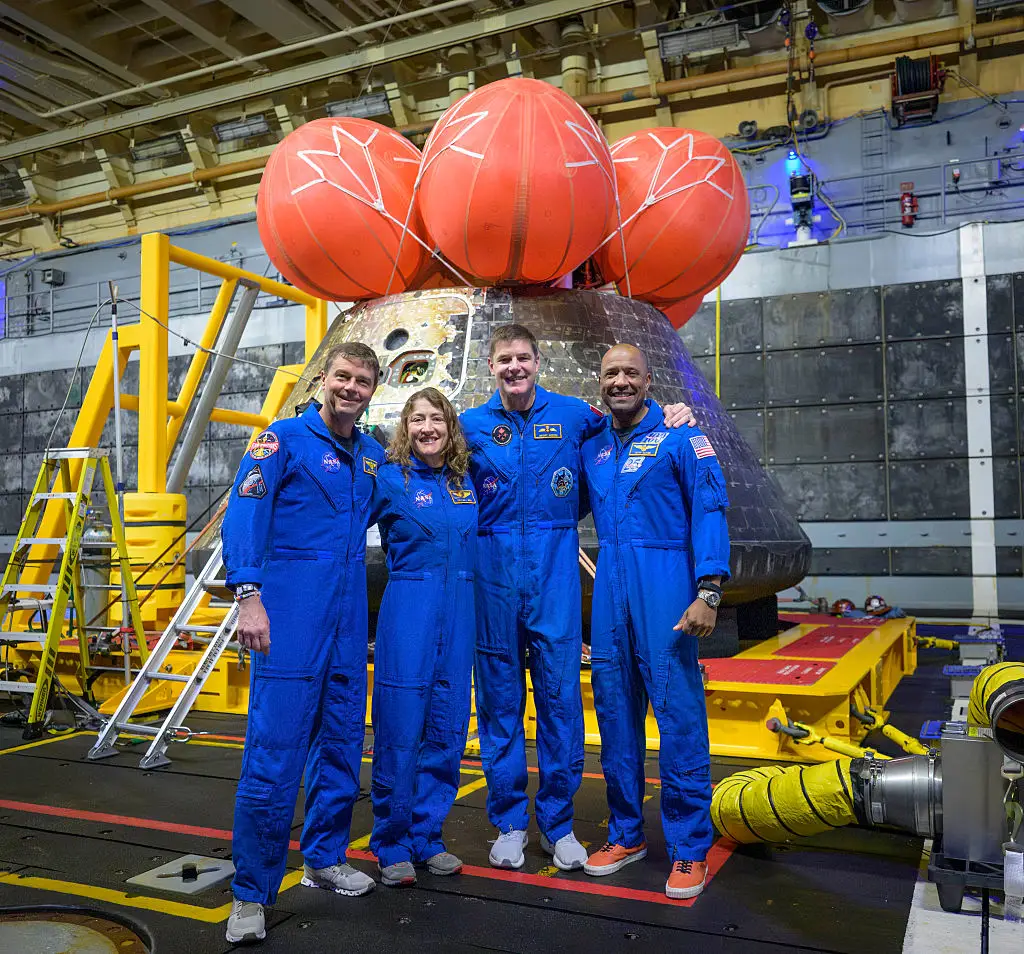
The Orion, named Integrity by crew, managed to splashdown at exactly 8.07pm ET on Friday, which was on schedule to the minute.
Since the historic moment, people have been left in awe about how the spacecraft managed to achieve such a precise re-entry. But alongside all the NASA teams who made the successful splashdown happen, there's a hidden figure you might not know about.
Her name is Katherine Johnson.
When NASA first began, mathematical predictions used for launches, trajectories and re-entries were all done by hand. One woman, Katherine Johnson - who was a specialist in analytical geometry - has shaped the work that NASA do today.
Some of her biggest successes include completing the trajectory analysis for Alan Shepard’s May 1961 mission Freedom 7, as well as co-authoring Determination of Azimuth Angle at Burnout for Placing a Satellite Over a Selected Earth Position, in 1960. This was a report which demonstrated the equations of an orbital spaceflight.
One astronaut, John Glenn, even requested Johnson to 'check the numbers' calculated via digital orbital equations, following NASA's introduction of computers to carry out such calculations in the early 1960s.
For Glenn's Mercury-Atlas 6 mission, he asked for Johnson to personally check the figures.
NASA explained: "In 1962, as NASA prepared for the orbital mission of John Glenn, Johnson was called upon to do the work that she would become most known for... The computers had been programmed with the orbital equations that would control the trajectory of the capsule in Glenn’s Friendship 7 mission from liftoff to splashdown, but the astronauts were wary of putting their lives in the care of the electronic calculating machines, which were prone to hiccups and blackouts. As a part of the preflight checklist, Glenn asked engineers to 'get the girl'—Johnson—to run the same numbers through the same equations that had been programmed into the computer, but by hand, on her desktop mechanical calculating machine."
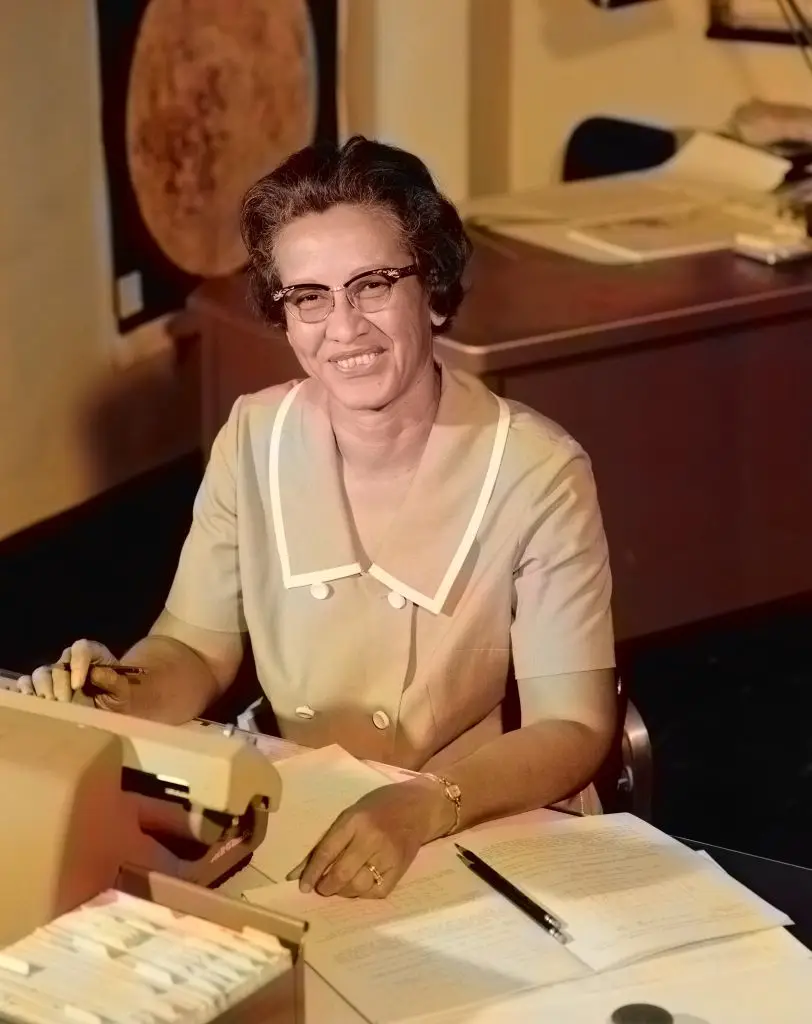
Johnson also helped with the trajectory of Apollo 11, in which humans first landed on the Moon. During the mission, she worked to ensure the spacecraft launched and re-entered the Earth's atmosphere at the correct angle.
While much of the calculations used today are of course, digitally formulated, they still rely on the basic mathematical principles laid out by Johnson decades ago.
When Johnson passed away in 2020 at the age of 101, NASA Administrator James Bridenstine said: “Our NASA family is sad to learn the news that Katherine Johnson passed away this morning at 101 years old. She was an American hero and her pioneering legacy will never be forgotten.”
 Lucy Devine