
Dan Bongino wants Americans to buy an emergency radio – what to know before purchasing one

Dan Bongino recently warned all Americans that they should purchase an emergency radio as the Pentagon, and government overseas, plan for emergency.
“Get your stuff today. Please. Do it for your family,” the ex-FBI boss said on the The Dan Bongino Show podcast earlier this week, referring to food, rain collections, water filtration and filtration tablets.
But what does he mean by an emergency radio?
Sean Gold, who was an Emergency Manager in the US Air Force, and owner of prepping and survival website TruePrepper, tells UNILAD: "Emergency radios are communication devices to keep you informed during an emergency. NOAA weather radio (NWR) provides critical information during disasters on weather bands, as does the Emergency Alert System (EAS) on FM/AM stations."
Advert
The information that is shared 'can be key for evacuation, shelter-in-place, and other warnings, watches, and hazards.'
Here's what you should look out for before purchasing one for their emergency stash.
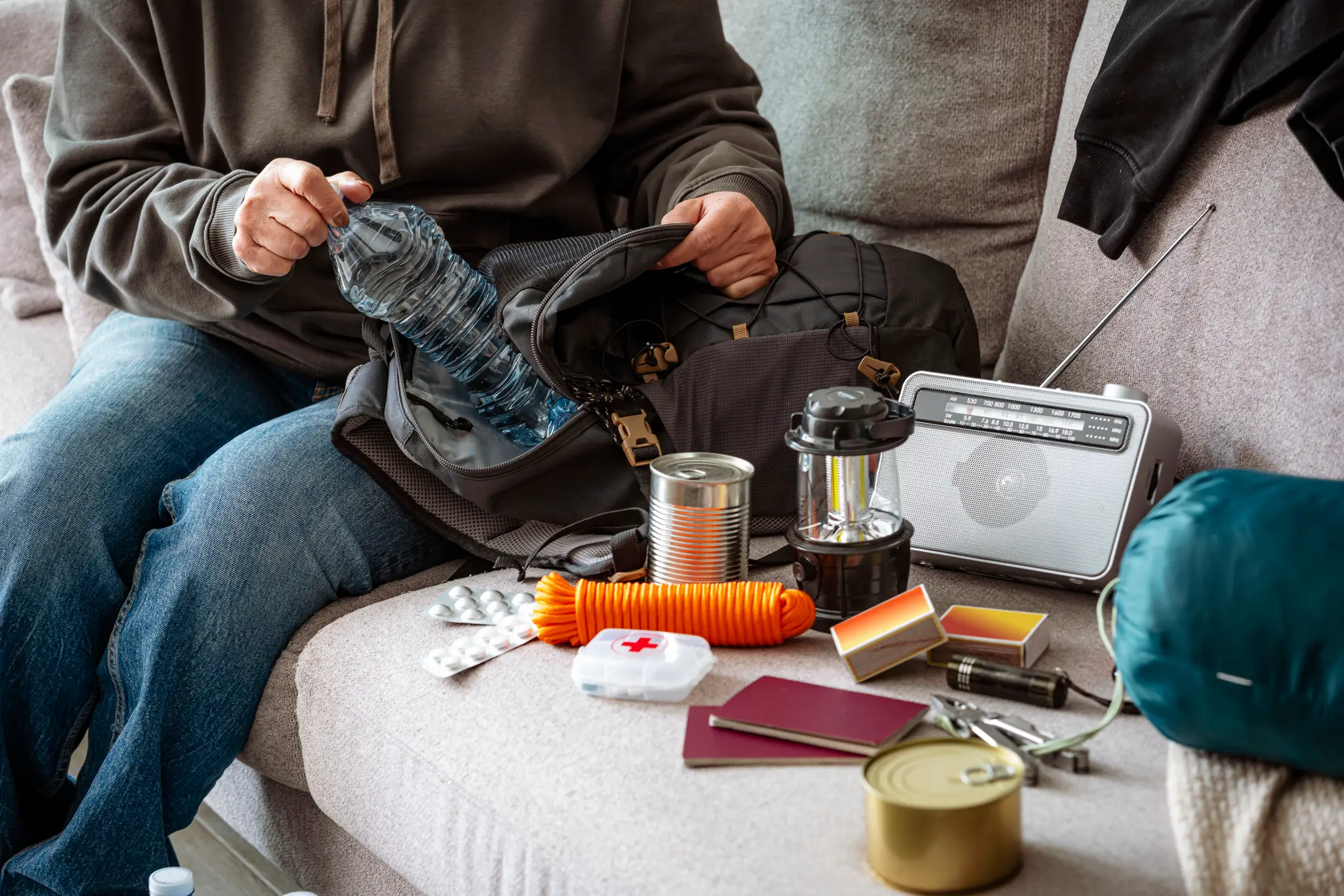
What should I look out for when purchasing an emergency radio?
Sean stresses that Americans should make sure the radio they purchase 'picks up the NOAA weather bands easily and effectively.'
"Radios with a dedicated WB switch make them very easy to use and test before emergencies," he says.
Citizens should also check for a dedicated WB switch, as these 'make them very easy to use and test before emergencies,' as per the expert.
He also advises that citizens should prioritize radio reception and battery capacity rather than extra technology and gadgets, including 'an array of lights, and Bluetooth capability.'
"As long as you plan ahead with spare batteries, power banks, or other charging options, this should matter less," he adds, warning that some radios can lose battery life in storage.

What are the common mistakes people make when purchasing emergency radios?
Sean tells UNILAD that the most common mistake he sees with people buying emergency radios is that they purchase one without 'becoming familiar with its operation.'
He advises that after buying the product, people should put batteries in and charge it, rather than storing it away straight away and forgetting about it.
Then, they should 'extend the antenna to see which WB channels you can pick up.'
"Once you take just a few minutes to test it and understand how it works, you’ll be set up much better to operate it in a true emergency," he adds.
Although there's no 100% guarantee that this 'survival kit' will be needed, but Bongino said on the podcast: "The best day of your life, you don't need them. And in 10 years, you're like, 'Ah, I wasted $1,000 or whatever.'
"The worst day in your life is your kids looking you in the face like, 'Hey Dad, Mom, where's the water?' And, 'Well, we don't have any.'"
Topics: Technology, US News
 Kiesha Dosanjh