Scientists predicted the world could end next month – here are the safest places in the world to survive disaster

Doomsday has been brought forward, and now it could be here as soon as November, according to scientists from decades ago.
The prospect of the world facing its end has been depicted in almost every form of expression we have.
From religious books, to films, books, and the news – it’s obviously something we’re all worried about.
In modern times, however, this worry has been amplified with the introduction of climate change and artificial intelligence, leading people to have serious thoughts on surviving the end times.
Advert
Thankfully, there are some places in the world that have a far more likely chance of surviving things that could kill humanity. Like nuclear war, nuclear winter, famine, a non-nuclear war, and whatever else comes our way.
So, what’s the potential world-ender that could see us face extinction next month?
It all began when scientists attempted to calculate how long humanity could continue as normal before things would go wrong.
According to their scientific paper titled 'Doomsday: Friday, 13 November, A.D. 2026', which was led by physicist Heinz von Foerster, we might have weeks to live.
The team’s calculations used things like population estimates from Jesus’s time to 1958, as Foerster told Time Magazine: "For obvious reasons t0 shall be called 'doomsday', since it is on that date that N (the number of ‘elements,’ or people) goes to infinity, and the clever population annihilates itself. Our great-great-grandchildren will not starve. They will be squeezed to death."
If you fancy yourself a survivalist after having watched The Walking Dead or The Road, then there are some places you could go to avoid facing the brunt of it all.
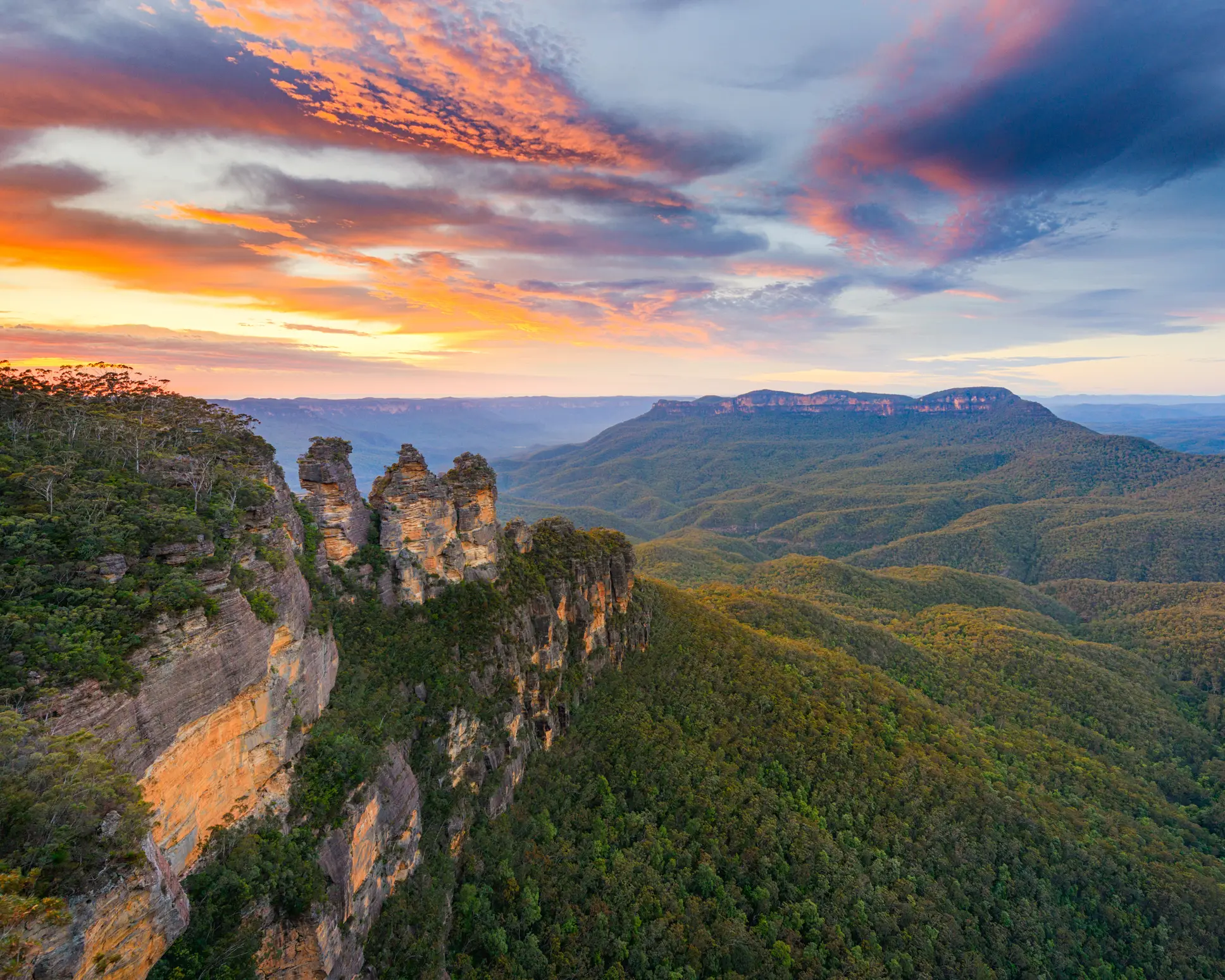
Firstly, Australia is the place to be.
This answer came after study first author Florian Ulrich Jehn, a researcher at FernUniversität in Hagen, Germany, and his team, looked at the places that were most resilient to global catastrophic risks that could kill upwards of 10 per cent of the population.
"These kinds of catastrophes are under-researched" because they are not very likely,” he told Live Science. "That makes them easy to ignore."
In the new study, published August 23 in the journal Global Challenges, researchers took data on food security, biological weapons, and volcanism, to calculate the global catastrophic risks.
They also researched the factors that helped communities endure them throughout history.
When looking at all of the data, the answer was clear: countries with nuclear capabilities and poverty fared less than those with higher governance, local produce and were out of the way of the nuke-bearing locations.
Australia came out as the best location in an event which decimated global populations as it’s far from those capable of starting a nuclear conflict.
As its own food producer with a great energy infrastructure, it’s the obvious choice to attempt to survive the apocalypse.
Per the study, the next best spots are Argentina, Brazil and New Zealand.
Places that are unlikely to be good places to hide would be Brazil, and Argentina, which have high levels of inequality, the authors wrote.
Topics: Climate Change, Science
 Britt Jones