Expert details whether Friday 13th really is an unlucky day - and there's surprising science behind it

It's Friday the 13th, countries are suffering a major tech outage, and if you believe the predictions of scientists in 1960, today was supposed to be the day the world ended - but is it really as unlucky as its reputation suggests?
If you've woken up feeling like the universe has it in for you today, you're certainly not alone.
But experts have now weighed in on whether there's any truth behind the infamous date, and the science behind why we fear it is surprisingly fascinating.
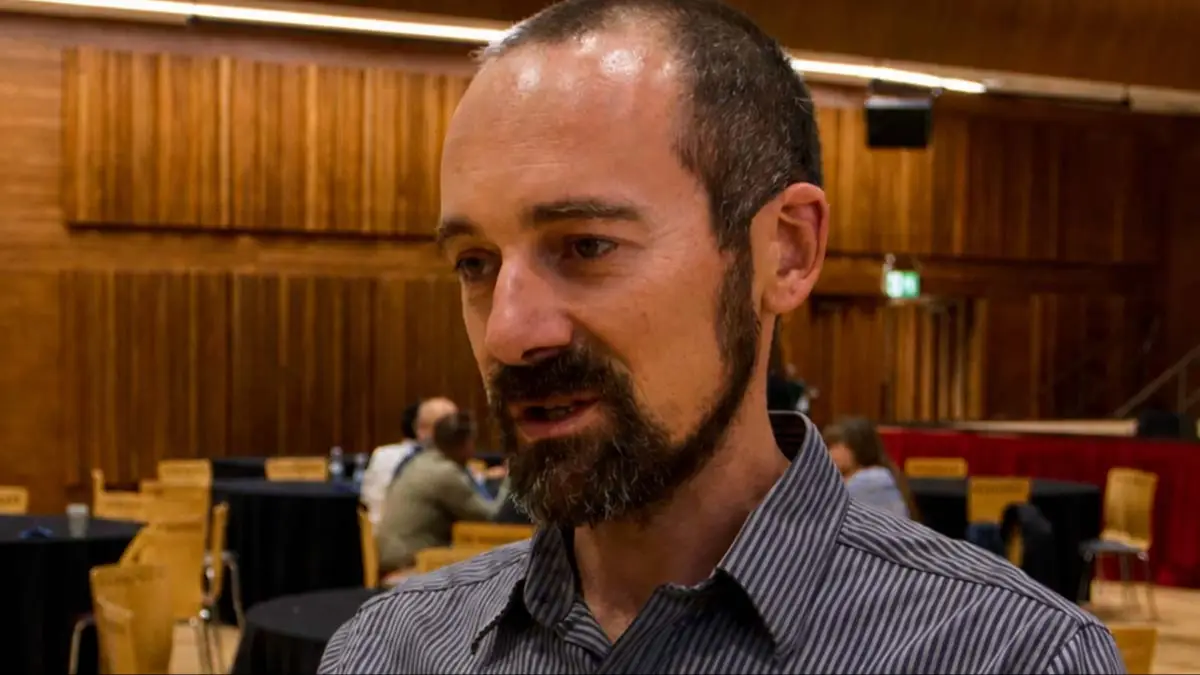
Ilya Nikitin, an independent researcher and founder who published his findings in the Null Institute, claimed that while there is 'no convincing evidence' that Friday 13th is unlucky in particular, 'fear itself might change how people behave'.
Advert
But he noted that initially, some of the scientific evidence appeared quite 'alarming'.
"A British study published in 1993 reported 65 hospital admissions after transport accidents on Friday the 13th, compared with 45 on Friday the 6th. That’s 44% more."

He added: "In July 2026, researchers published a Canadian study involving more than 254,000 deaths investigated by coroners over 15 years.
"Across 27 Fridays the 13th, they found an average of 45.7 deaths per day, compared with 46.4 across the study period. There was no statistically significant increase."
While the study examined a different outcome to the British research, its findings further challenge the idea that Friday the 13th is inherently dangerous.
Interestingly, a scientific paper from more than 60 years ago gave the world a rather specific date for doomsday - Friday, November 13, 2026.
It was published in the journal Science on November 4, 1960, by physicist Heinz von Foerster and colleagues Patricia M. Mora and Lawrence W. Amiot, and suggested that the human population would approach infinity if the growth trend they studied continued.

Where does the Friday 13th myth come from?
The origins of the Friday the 13th superstition are somewhat murky, with no single event credited with creating the fear.
However, the number 13 has been considered unlucky for centuries, with some tracing the belief back to the Last Supper, where Judas Iscariot was the 13th person to sit at the table before betraying Jesus.
Friday has also historically carried negative associations more widely in Christian tradition, with Jesus believed to have been crucified on the day.
Over time, the two superstitions became intertwined, giving rise to the belief that Friday the 13th is particularly unlucky.
Topics: Science
 Mia Williams