
Scientist chooses to sleep with bedbugs for years to show what they're really like and has surprising results

A scientist in England has spent the past five years sleeping alongside bedbugs as part of his work testing pest control products.
Entomologist Dr Richard Naylor, who breeds the insects at a lab in the Forest of Dean in Gloucestershire, told the BBC that the bites do not bother him.
"I must have been bitten millions of times by now, so I stopped reacting a long time ago," he said. "I get a red patch on my arm after the bugs have fed, but it disappears after about half an hour."
Naylor sleeps with the bugs on nights when he needs to test new devices or repellents, because the insects go on standby without a host.
Advert
"If there is no-one sleeping in a bed, the bedbugs just sleep, they just go on standby. And so I can't test anything in the test bedrooms without there being a host in there," he explained.
Naylor runs a not-for-profit called the Bed Bug Foundation and has a research laboratory in a self-contained two-bedroom suite in his garden.
On a 'feeding day', which comes around twice a week, he straps some of his 50,000 to 60,000 bugs to his arm and carries on working.
He ships the bugs worldwide, often to canine detection teams that help hotels spot infestations.
According to Naylor, bedbugs have become resistant to modern insecticide sprays, which makes them very difficult to kill, and an infestation can have long-lasting effects.
"I don't know of any other pest that has the same level of emotional and psychological impact on people," he said. "It can leave people with lasting PTSD-type symptoms," he added.
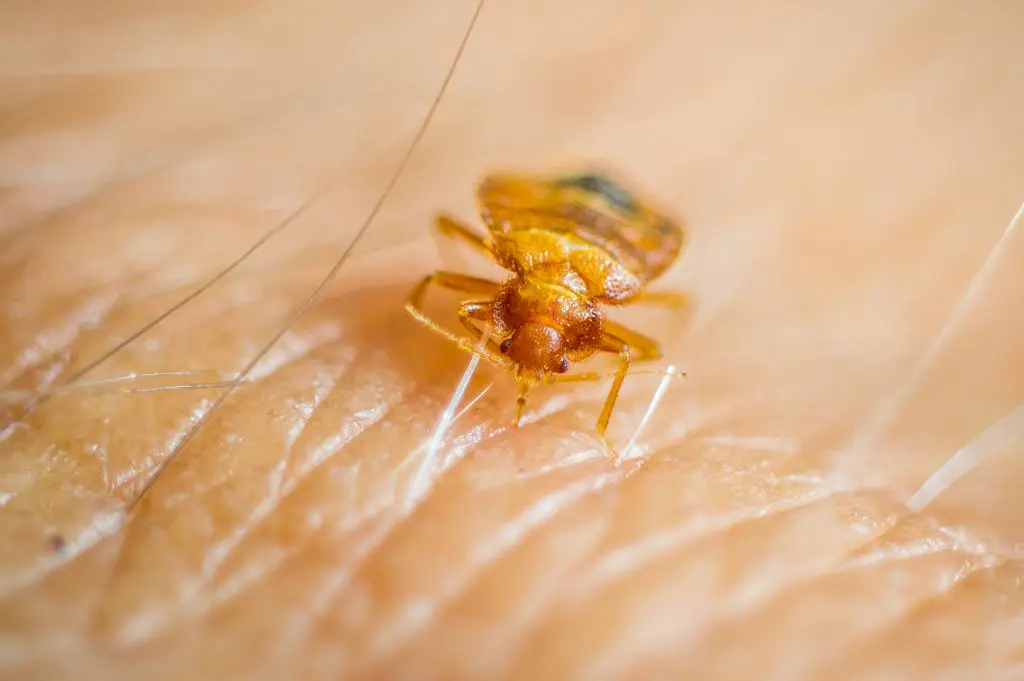
What are the signs of bedbugs?
Naylor says the insects tend to stay close to where people sleep.
"They don't hide in the bedding, they want to hide nearby in a little dark crevice. It would probably be somewhere down the back of the bed or around zips and the piping around the edge of a mattress," he said. "A key sign you have bedbugs is the inky black spots the bugs leave behind, often in the shape of an x."
Naylor advises anyone who suspects an infestation to contact a professional.
The Bed Bug Foundation also recommends decluttering around the bed, which helps spot bugs trying to run away, and bagging up bedding and soft furnishings for washing.
It suggests inspecting the mattress and bed frame, vacuuming thoroughly and fitting bed isolation devices to stop the bugs returning.
How do you treat bedbug bites?
Ade Williams, lead pharmacist at Bedminster Pharmacy in Bristol, England, says bites tend to appear in a cluster or spread out in a line. "Outside of the immense discomfort they cause by itching, they don't usually carry any health risks," he said.
Williams advised people not to scratch bites, as they could become infected, and said antihistamine tablets and emollient creams could help.
The UK's National Health Service (NHS) says a severe allergic reaction to bedbugs is possible but rare. It advises putting something cool, such as a clean, damp cloth, on the affected area to ease itching and swelling.
 Thomas Bamford