Reason why three scientists in 1960 predicted the world will end tomorrow

A scientific paper published more than 60 years ago gave the world a rather specific date for doomsday: Friday, November 13, 2026.
And with that date now just one day away, the prediction has resurfaced - although the scientists' reasoning was rather different from what you might expect.
The date came from a paper in the journal Science, published on November 4, 1960, by physicist Heinz von Foerster and colleagues Patricia M. Mora and Lawrence W. Amiot.
Its title was Doomsday: Friday, 13 November, A.D. 2026, and its calculation suggested the human population would approach infinity if the growth trend they studied continued.
Advert
They argued that humanity's population was increasing at an accelerating rate, eventually reaching a mathematical point their equation could no longer meaningfully describe.

The calculation described a mathematical singularity, not a timetable for shortages, famine or physical destruction of the planet.
Von Foerster and his co-authors used population estimates from around 400 BC to 1958. They observed that the time needed for the global population to double was getting shorter, then built an equation around that pattern.
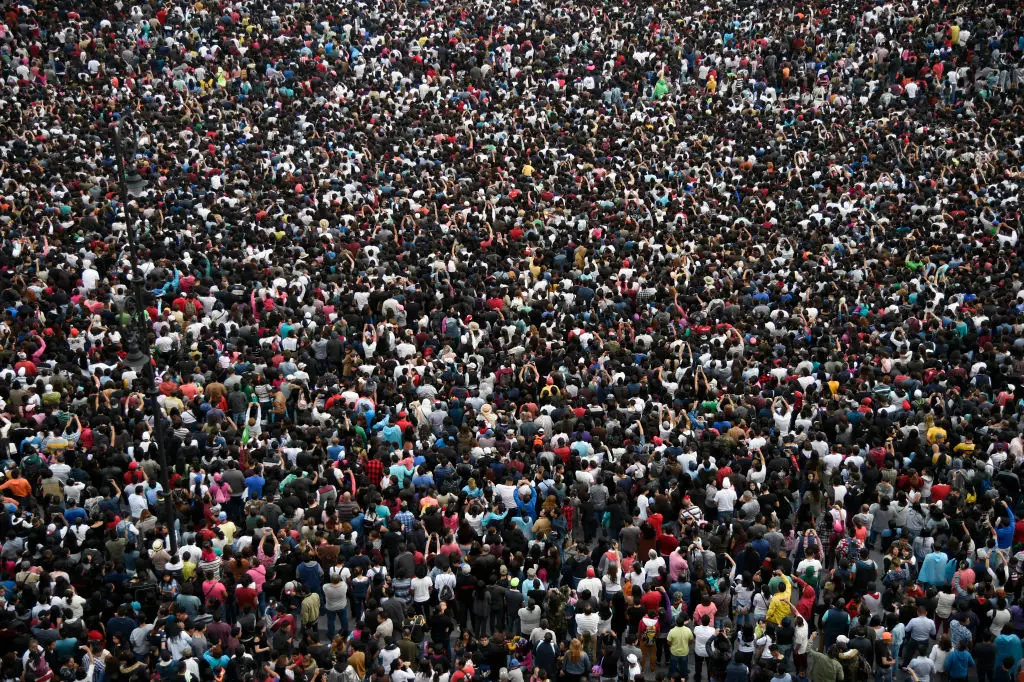
Under their model, the world's population would pass 25 billion by 2020.
The paper did not calculate when people would run out of food, land or energy; it suggested the numbers would race towards infinity at some point in 2026.
The authors summed up the danger in stark terms: "Our great-great-grandchildren will not starve. They will be squeezed to death."
Historian Alan MacEachern, writing for The Conversation, said the claims caused an 'immediate stir'.
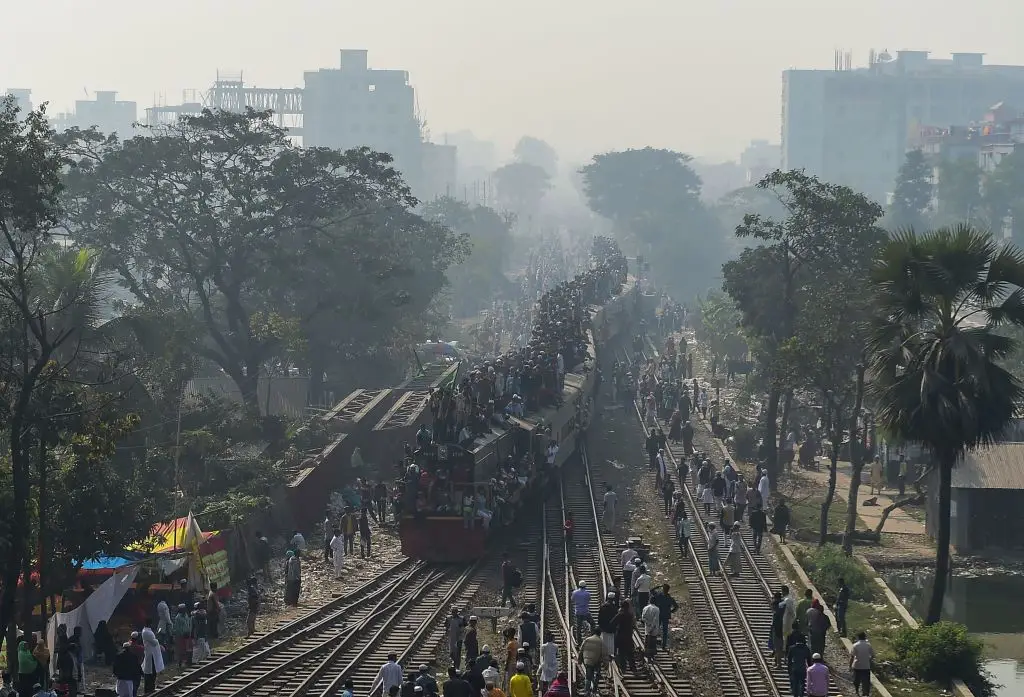
The paper entered political arguments. In 1963, a chemical industry witness cited it before a Canadian parliamentary committee while arguing pesticides would be needed to feed a growing population.
In a 1971 US Supreme Court abortion case ahead of Roe v. Wade, it was cited against government efforts to encourage population growth.
Skeptics also challenged the paper. Two years later, Harold F. Dorn criticized it in Science, predicting its reliability would be disproved quickly.
Demographers questioned whether population doubling times could keep shrinking without limit.
The equation continued to look persuasive for years, and the article was regularly cited.
But the trajectory began to diverge from reality around 1993, roughly halfway to the date named in the title, MacEachern noted.
One flaw was the assumption that ever-faster growth could continue indefinitely.
The time between population doublings could not keep falling forever - not least because a human pregnancy takes nine months. The global birth rate is now slightly less than half what it was in 1960.
The population has therefore not followed the path set out in the paper, and its prediction of numbers approaching infinity has not come to pass.
 Thomas Bamford