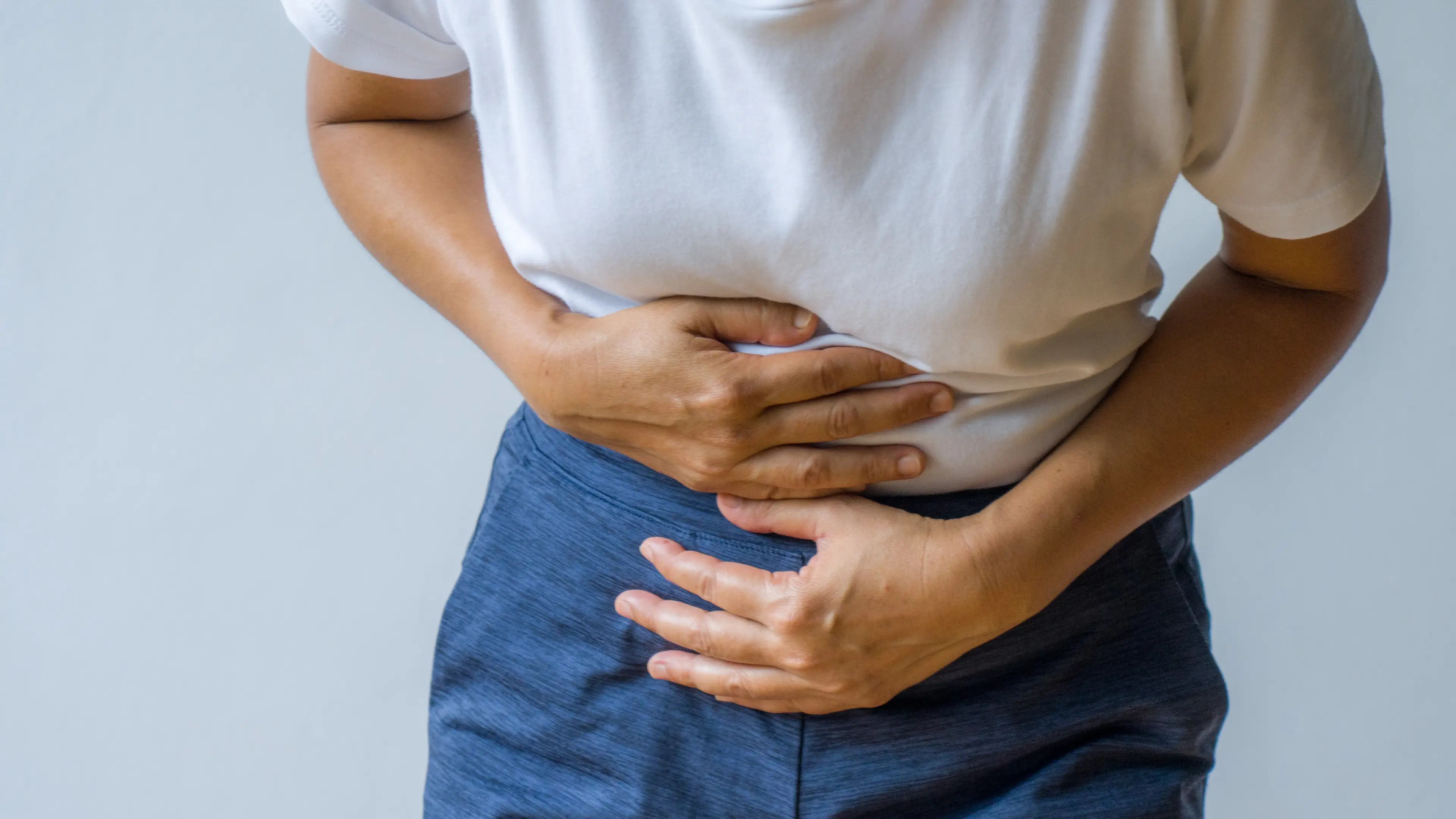
Expert reveals the surprising clues your farts could be giving you about your health

Nobody likes to talk about it, but your farts might actually be trying to tell you something important, with a leading health coach says it's time to start listening.
Dan Go, a high-performance health coach who has spent over a decade helping entrepreneurs, founders, and executives optimise their bodies, has gone viral for breaking down exactly what the smell, or lack thereof, of your flatulence reveals about what's happening inside your gut. And the results are, shall we say, eye-watering.
It all comes down to what your gut bacteria are feasting on.
Go took to X to explain the science, and it's surprisingly straightforward once you get past the embarrassment of the topic.
What causes bad farts?
When your diet is rich in fibre, your gut bacteria get to work fermenting it: a process that produces carbon dioxide, hydrogen, and methane.
Advert
Here's the key bit: those gases are completely odourless. On top of that, fibre fermentation also produces short-chain fatty acids, which are anti-inflammatory and actively good for your gut health.
But when fibre is low and protein is high? That's where things get unpleasant.
Undigested protein makes its way to your colon, where bacteria ferment it instead. That process produces hydrogen sulfide, along with compounds called skatole and indole. The result is what Go colourfully describes as the "silent but deadly" fart, and it's a red flag that your gut is not in a happy place.

Why do your farts smell so bad?
At roughly the 140-word mark of understanding the problem, Go gets to the part that should make you sit up: protein fermentation produces branched-chain fatty acids rather than the beneficial short-chain variety. Both branched-chain fatty acids and hydrogen sulfide have been linked to gut inflammation and something called intestinal permeability, more commonly known as leaky gut.
"Your farts are a gut health report card," Go said bluntly.
He speaks from personal experience. Go admitted that his wife had to endure what he calls "protein farts" every time he ate steak: silent, deadly, and, by his own admission, dangerous to be near.
The culprit turned out not to be the protein itself, but the fact he was getting nowhere near the recommended 30–35g of fibre a day.

How to fix bad smelling farts
Go's solution wasn't to ditch the protein, it was to dramatically increase his fibre intake. He started hitting his daily fibre target without fail, using psyllium husk to bridge the gap. The protein farts stopped and his digestion improved. His inflammation markers also plummeted.
The logic behind it is straightforward: your gut bacteria will always choose to ferment fibre over protein when both are available.
High protein plus high fibre keeps your bacteria in the good, odourless fermentation mode.
Healthline backs this up, noting that the rotten-egg smell in flatulence typically comes from hydrogen sulfide produced when gut bacteria break down sulfur compounds, found in eggs, meat, garlic, and cruciferous vegetables. Food intolerances and swallowed air can also play a role.
What you can actually do about it
Go's advice is simple: aim for 25–35g of fibre per day. If your diet falls short, and most people's does, psyllium husk is a cheap and effective top-up.
Your gut, your partner, and anyone sharing a confined space with you will thank you for it.
 Thomas Bamford