
Simple string test reveals when you should be concerned about metabolic health, doctor claims

A GP who has put 157 patients into drug-free Type 2 diabetes remission has claimed a 10-second test with a piece of string could reveal more about your health than you'd expect.
Dr. David Unwin, an insulin expert and low-carb advocate, appeared on Stephen Bartlett's The Diary Of A CEO podcast to break down one of the simplest ways to check your metabolic health.
No blood tests, or long sessions in the gym - all you need is a piece of string.
The test relates to visceral fat - because not all fat is created equal, and Dr. Unwin is keen to make that clear.
Advert
Fat on your arms or legs is relatively harmless compared to fat that builds up around your midsection. Visceral fat, the kind that accumulates around your organs, is far more concerning for long-term metabolic health, and the waist-to-height ratio is one of the most accessible ways to gauge it.
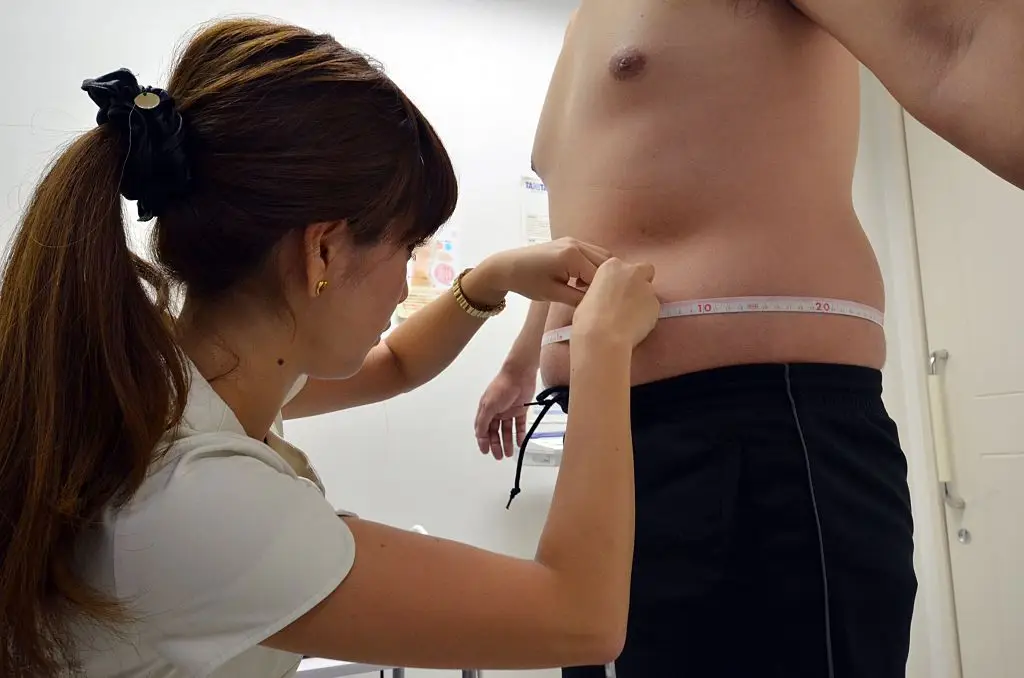
How do you do the string test?
Here's how it works: take a length of string equal to your height, cut it in half, and wrap it around the widest part of your belly. If it fits, you're in a healthy range.
If it doesn't? That's your cue to start paying attention.
Demonstrating the test live on Bartlett, Dr. Unwin explained: "One recognized way of looking at metabolic health is your waist should be less than half your height.
"So if we have a piece of string... half of that string should go around the fattest bit of your belly."
The principle is a lot easier to track at home than your blood sugar levels, and according to Dr. Unwin, a lot more revealing than most people realize.
How dangerous is visceral fat?
Here's the part that should make you sit up: by the time your belly is telling the story, the problem may have been building for a decade.
Dr. Unwin references research by Professor Roy Taylor, which found that a person can carry a fatty liver for around 10 years before any outward signs appear, with no symptoms or warning that something's going wrong.

As that process continues, fat begins to deposit in the pancreas, the gland responsible for producing insulin. Once that happens, the body's ability to regulate blood glucose can start to collapse.
Before that point, many people will already be stuck in a cycle of insulin resistance, where the body's cells stop responding properly to insulin.
The pancreas tries to compensate, as Dr. Unwin puts it, 'cranking up the supply of insulin', which only delays the inevitable if diet and lifestyle don't change.
Dr. Unwin has seen this play out with hundreds of his own patients, which is exactly why he leans so hard on early, low-cost tools like the string test.
In the pre-diabetes stage, a low-carbohydrate diet can dramatically reverse the course of the condition, with remission rates far higher than once full Type 2 diabetes has taken hold. The longer you wait, the harder it gets.
That's the uncomfortable truth sitting behind a seemingly simple party trick with a piece of string.
 Thomas Bamford