Study identifies the surprising age when protein powder may stop helping build muscle

For years, people have understood that if you want to bulk up your muscles, you need to increase your protein intake. But if you're using powder to do so, you might want to rethink this method if you're over a certain age.
When taking a look at your health, protein is usually part of the conversation.
Needed to regrow and help cells to function, per Better Health, protein is something that not many people truly think about in their diets.
But it's something that should be a priority, particularly for those who are hoping to increase their strength and health.
Advert
However, according to the Mayo Clinic, the amount of protein we all need varies based on factors like our biological sex, and also how old we are.
Now, a study has shed light on what point it becomes moot to supplement protein, as research finds it doesn't help certain people to strengthen.

This year, a Tufts University study has suggested that over-65s are no better off for taking whey protein supplementation alone to accommodate their protein needs.
Surprisingly, this comes after previous research found that older people needed more protein in their diets than those younger than them.
This research, which tested 141 participants over 65, gave a focus group whey protein supplement for 24 weeks, and others a simple placebo.
To test whether or not it helped to gain muscle mass and strengthen the body, the groups were tasked with completing a series of strength tests, like balance exercises, leg presses, and finally scans to determine their mass before and after the study.
But at the end, even though the group taking the real supplement showed signs of a growth hormone called IGF-1 in their blood tests, they didn't gain any additional mass, shocking the researchers.
So, what happened?
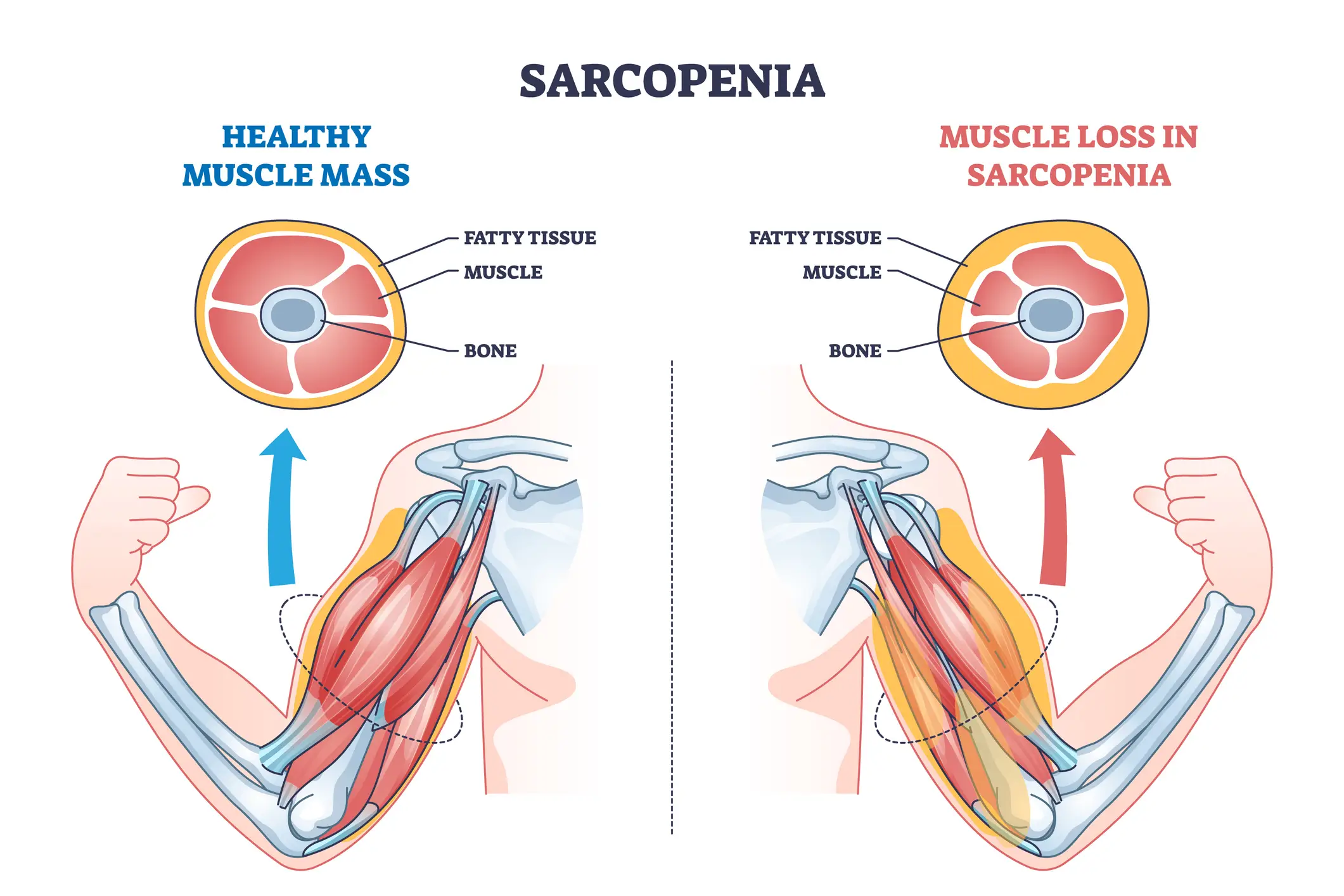
It could be because of a medical term which causes muscle loss in older people, which has been attributed to falls and fractures, as well as the loss of balance in those over 60, per Verywell Health.
Thankfully, protein can help to strengthen muscles and account for the lost mass, but it doesn't mean it'll increase the mass if it's already deteriorating – just that it's not letting the mass fall further to the point where it could become a health hazard to the person.
Per the Mayo Clinic, protein should account for between ten and 35 per cent of your total calories every day.
As an average adult, it's recommended that you eat 0.8 grams per kilogram of body weight.
Then, if you're 40-50, you’re going to start to need to increase this due to a medical condition called sarcopenia, which is where you lose muscle mass as you age.
Because of this, the age group is likely to need to eat between 1-1.2 grams per kilogram per day if you're not one for exercise.
If you do like to be active, however, it says to eat about 1.1-1.5 grams per kilogram.
Anything beyond two grams is listed as 'excessive'.
 Britt Jones