
Russian media claims a second victim has died from 'plague outbreak' as fears grow it could spread worldwide

Roughly 200 people are being monitored in Siberia after a laboratory worker's death raised fears of a plague outbreak in Russia.
Now, local media claimed on Tuesday that a second person has died of the plague in the Irkutsk region, at Irkutsk district hospital, after allegedly contracting the disease.
Russia insists the first victim, 28-year-old Darya Shipilova, died of 'unidentified pneumonia'.
But neighboring Mongolia, Kyrgyzstan and Uzbekistan are tightening border health controls amid reports it was pneumonic plague, with fears she was killed by the bacterium behind the Black Death, which caused millions of deaths in Europe during the Middle Ages.
Advert
Reports concerning the plague have allegedly been disappearing, including one from Russia's Channel 5 broadcaster and one nationally distributed daily newspaper, Kommersant.
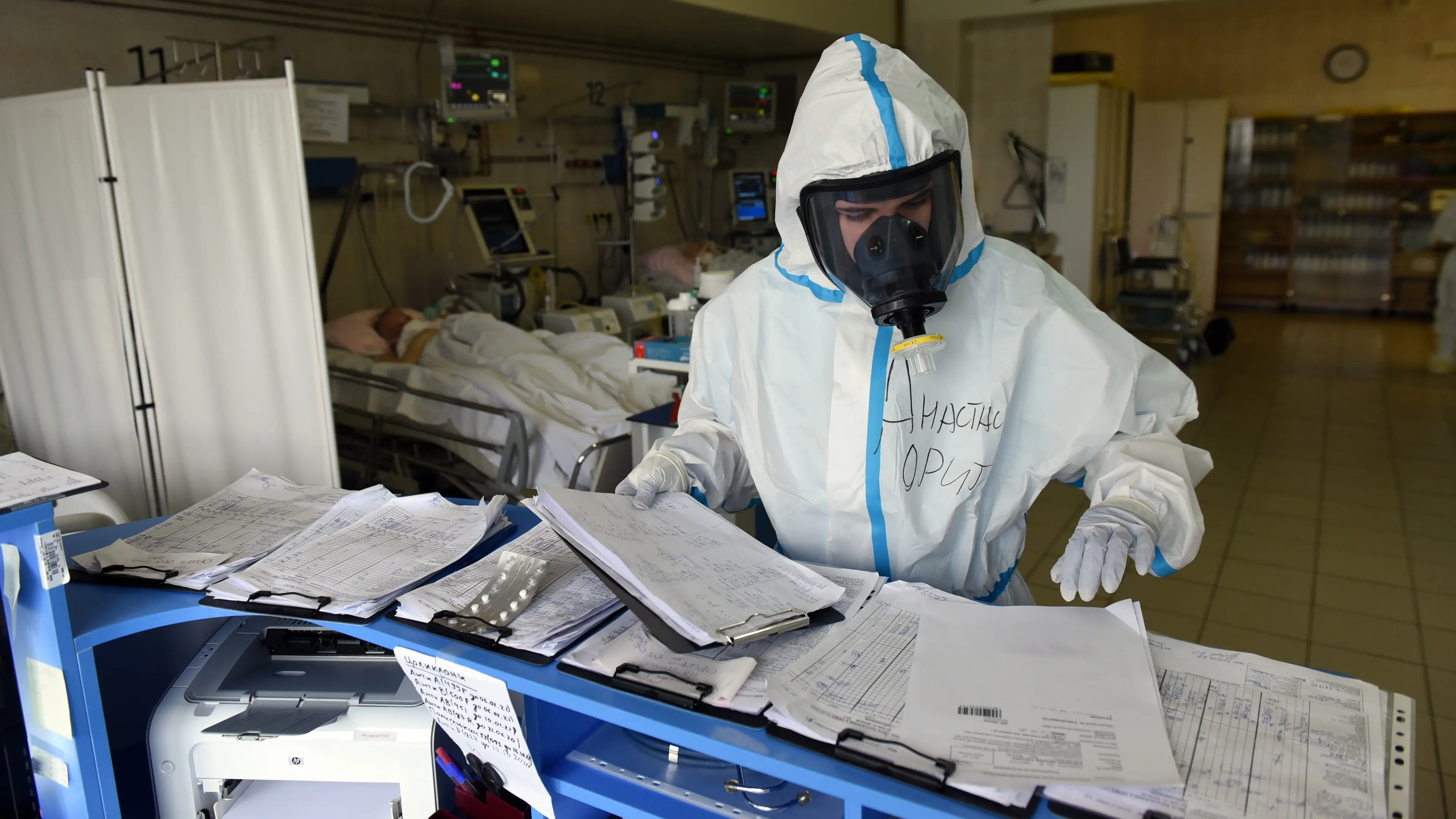
How did Darya Shipilova die?
Shipilova worked at the Irkutsk Anti-Plague Institute. She reportedly told medical staff she had accidentally broken a test tube containing live bacteria, prompting her contacts to be quarantined.
She fell ill during a field expedition with colleagues in Buryatia, beside Russia's eastern border with Mongolia, and was admitted to hospital on September 29 and placed on a ventilator.
She died on October 2 in Shelekhov, a satellite city of Irkutsk. She had also personally worked with Yersinia pestis, the bacterium behind plague.
Coverage has also been vanishing.
The Insider, an independent Russian outlet, said REN TV deleted all five of its publications about the plague in the Irkutsk region, while Channel 5 and Kommersant reports have also allegedly vanished.
Kremlin press secretary Dmitry Peskov said the public should trust only Rospotrebnadzor, Russia's federal health agency.
He said: "One should rely on official statements from Rospotrebnadzor rather than listening to various rumors and speculation."
The agency stated on October 4 that Shipilova died of 'pneumonia of an unspecified type' and has denied there is an outbreak.

US Secretary of State Marco Rubio said on Monday that Washington was monitoring the reports. "I don't think it's cause for alarm, but it is cause for focus and a cause to just keep an eye on it," he told reporters.
Trump, also speaking Monday, said the US will 'help' Russia.
"The microbes and the germs have gotten stronger disproportionately, but we'll help them," he said.
Rospotrebnadzor replied on Tuesday that Russia is ready to assist the US with outbreaks, pointing to 'significantly worsened' measles in three states and a 'fatal case of plague' in New Mexico in June.
What are the symptoms of pneumonic plague?
Pneumonic plague causes a severe lung infection, with fever, shortness of breath and coughing up blood typically appearing three to seven days after contact.
According to the Centers for Disease Control and Prevention (CDC), pneumonic plague is a rare, severe, and rapidly progressing form of pneumonia caused by the bacterium Yersinia pestis.
It is distinct as the only form of plague that can be transmitted from person to person through respiratory droplets.

Fatalities fall to around 17 percent if treated with antibiotics within the first 24 hours, but it is almost always fatal if left untreated.
According to the World Health Organization, it is even more severe than bubonic plague, the form associated with the Black Death.
Lyudi Baikala reported that City Clinical Hospitals No. 1, 3 and 10 and the Ivano-Matreninskaya Children's Hospital have been closed for a three-week quarantine, and reports claim drugs used to treat the disease are running out.
 Thomas Bamford