
People who mostly stand up at work are 'twice as likely' to develop heart disease, according to expert

Many different professions are on their feet most of the time, but it’s not often a role requires a person to stand rooted to the spot, causing potential risks to employee health.
How often do you stand without moving? If your answer is ‘a lot’. Then you’ll know that after a while, you might develop some uncomfortable symptoms, such as stiff joints, sore feet or swollen ankles due to blood circulation problems.
But what happens when this goes on for weeks, months, or years?
According to research, and an expert, it increases people’s likelihood of developing deadly heart disease.
Advert
This news comes after it was announced that the Transportation Security Administration (TSA) agents will no longer be able to sit down while checking passports, and instead will have to stand.
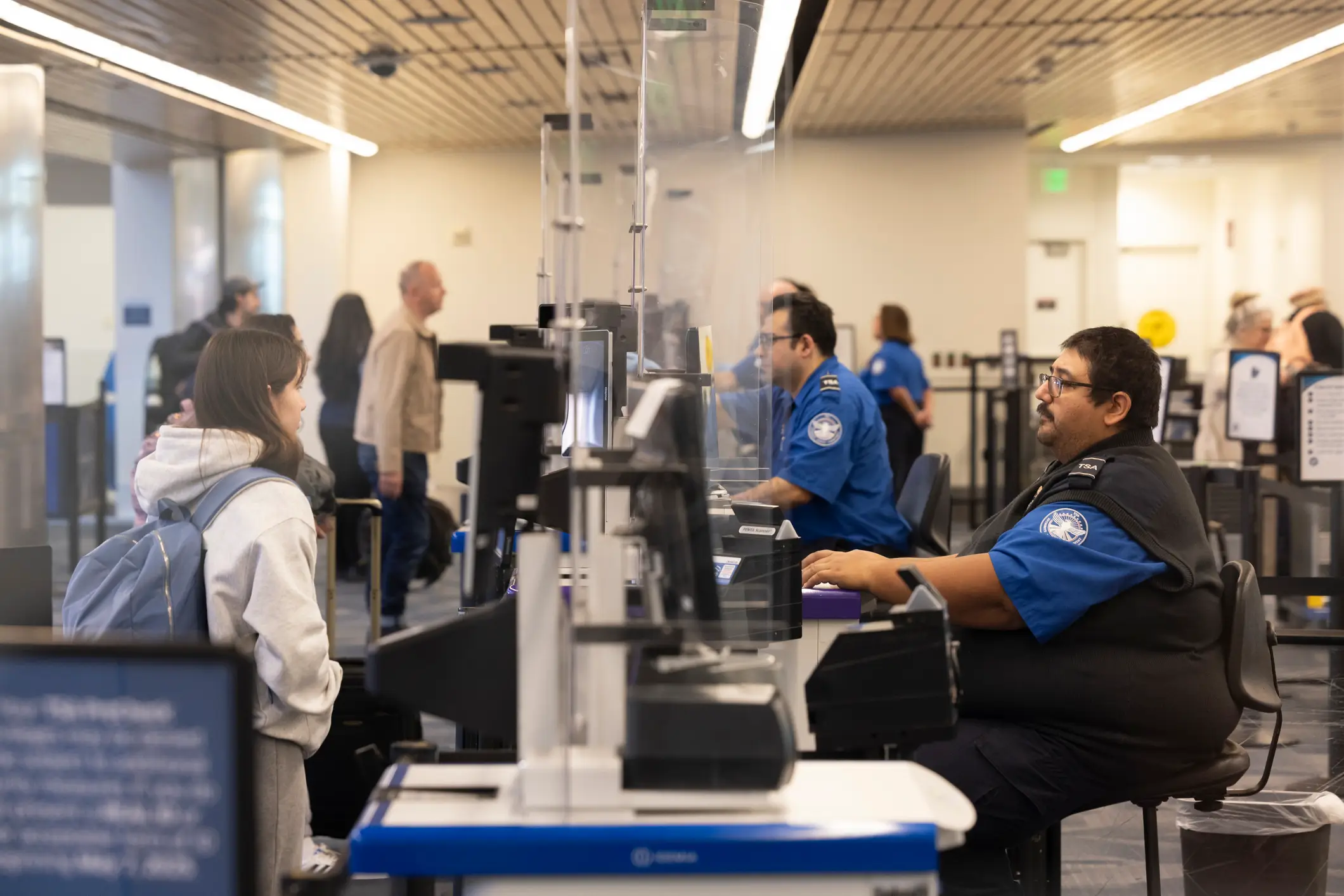
A TSA spokesperson explained the situation with the new way of working in a statement to Fortune, noting that this is a ‘welcome change’ that ‘reinforces both our security posture and our commitment to hospitality by having these officers on their feet and alert.’
However, the American Federation of Government Employees TSA Council 100, called the move a 'disregard for workers rights and safety’, and the Federation of Government employees, went on to protest the agency's decision to take away their chairs, ABC News reported.
But the backlash wasn’t limited to organizations, as former and current workers took to social media to air their grievances.
In fact, experts also agree, with Dr. Turner Osler, an emeritus professor at the University of Vermont telling UNILAD: "It's shocking that the TSA would impose this health risk upon their employees.
"Because sitting is known to be a health risk, many people reasonably assume standing is the healthy alternative to sitting. But the evidence says otherwise."
The expert referenced a study in the American Journal of Epidemiology that followed 7,320 Ontario workers for about 12 years, and found startling results.
"People whose jobs were mostly standing had roughly twice the risk of developing heart disease compared with people whose jobs were mostly sitting," he claims.
"That gap held up after the researchers adjusted for age, education, health, shift work and how physically demanding the job was. Standing isn't the opposite of sitting. Movement is."

The 2017 study found its results by analyzing data from 7,320 employed labor-market participants, in a group of 50 per cent male workers who, on average, were working 15 hours a week or more and were ‘free of heart disease at baseline.’
The study revealed that after a 12-year follow-up period from 2003 to 2015, ‘occupations involving predominantly standing were associated with an approximately 2-fold risk of heart disease compared with occupations involving predominantly sitting’.
It concluded: “This association was robust to adjustment for other health, sociodemographic, and work variables. Cardiovascular risk associated with occupations that involve combinations of sitting, standing, and walking differed for men and women, with these occupations associated with lower cardiovascular risk estimates among men but elevated risk estimates among women.”
UNILAD reached out to the Transportation Security Administration for comment.
 Britt Jones