M&M's may scrap two iconic colors to become 'Make America Healthy Again' friendly

M&M's are set to scrap two colors of their famous confectionary as part of the 'Make America Healthy Again' campaign, but an executive has said it's the 'hardest thing I’ve had to do in my career'.
The multi-million dollar makeover comes as the MAHA movement pushes food manufacturers to phase out synthetic dyes, which doctors have linked to various health concerns, particularly in children.
But for Mars, the parent company of M&M's, the task is proving much harder and more expensive than it sounds.
Blue and brown are among a half-dozen classic M&M’s colors. And researchers at Mars figured out how to deliver convincing replicas of its red, orange and yellow candies using natural ingredients like beets and turmeric.
Advert
But the blue flavor, which the company added to the mix in 1995, is a different story.
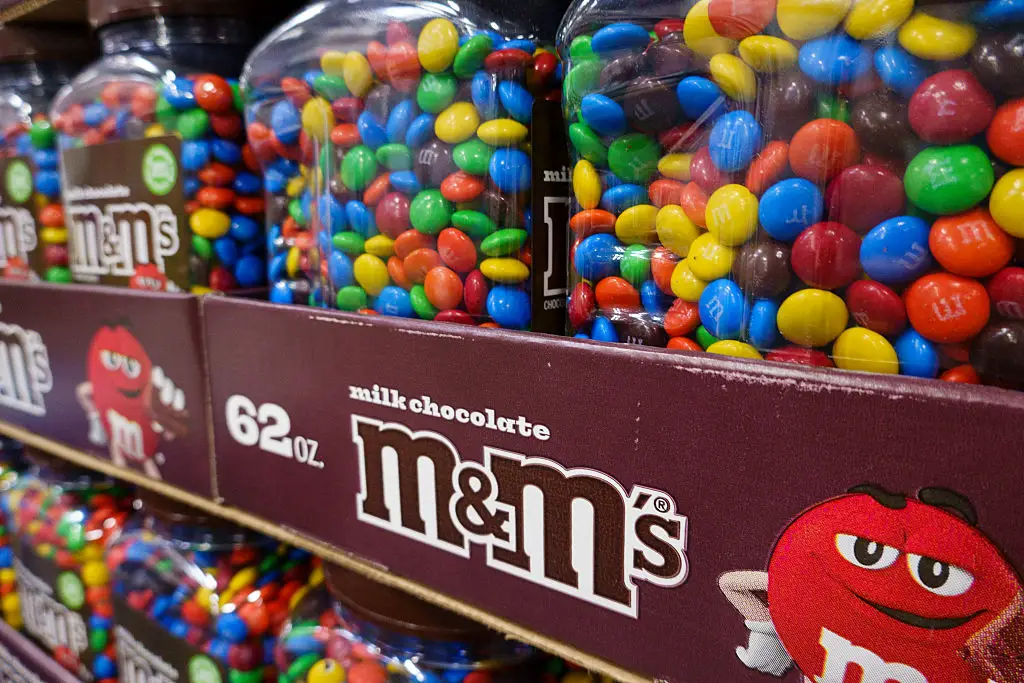
And the same can be said for brown, which, it turns out, includes a fair bit of blue.
According to a Wall Street Journal report, they selected spirulina - widely known as a superfood - as the best natural substitute for the artificial dye Blue 1.
But the algae-based ingredient requires roughly seven times as much pigment to achieve that M&M blue, and creates a thick, foamy mixture that leaves an unwanted plaque, much like what you try to avoid after eating candy.
Claire Hewitt, the Mars executive overseeing the multimillion-dollar initiative and self-described 'chief color officer', said: "It’s the hardest thing I’ve had to do in my career."
And the problem has become so complex that Mars will debut a new range of naturally colored M&M’s in August, without two of its classic shades.
Consumers looking to purchase the naturally colored M&M’s will initially find them exclusively on Amazon, while the artificially colored version isn’t going anywhere just now.
However, the ultimate goal is to recreate all six classic M&M colors using natural ingredients by 2028.
The MAHA movement, led by Secretary of Health and Human Services Robert F. Kennedy Jr., unites parents, wellness influencers, and political figures around shared anxieties regarding chronic disease.
The goal is to remove ultra-processed foods, artificial dyes, and chemical additives from the American diet.
Outlining the broad strategy to improve children's health in 2025, Robert F. Kennedy Jr. said during a press conference: "There's never been an effort like this across all the government agencies."
Topics: Health, Food and Drink, Politics, US News
 Mia Williams