
Ophthalmologist reveals the devastating impact Trump's '80-hour rule' could have if you're 'forced to pay'

More than 65,000,000 people were enrolled in Medicaid as of July 2026, but a new eligibility rule from January 1st could change who gets to keep their coverage.
Adults aged 19 to 64, particularly those enrolled through the Affordable Care Act's Medicaid expansion, must complete 80 hours of qualifying activity each month.
'Qualifying activity' is paid employment, participation in a work or job training program, community service, or at least half-time enrollment in an educational program.
This amounts to approximately $580 worth of monthly income at the federal minimum wage, The Center for Health Care Strategies explained.
Advert
Now, ophthalmologist Dr. Samer Al-Diri, Director of Healthcare Services at Sharjah Consultancy Center, has set out what he believes is at stake.

Speaking to UNILAD, he said his main concern is continuity of care for people who are already economically and medically vulnerable.
Dr. Al-Diri argued that good health is often a precondition for employment, not just a result of it. If people lost coverage because they cannot document their hours, even when they are working or qualify for an exemptions he said their health can decline and make work harder still.
"That is a cycle of illness, lost income and financial strain," he added.
The rule exempts people who are medically frail, pregnant or postpartum, and eligible parents or caregivers of children aged 13 or younger or of individuals with disabilities, but Dr. Al-Diri said these only work if people can understand them and prove they qualify.
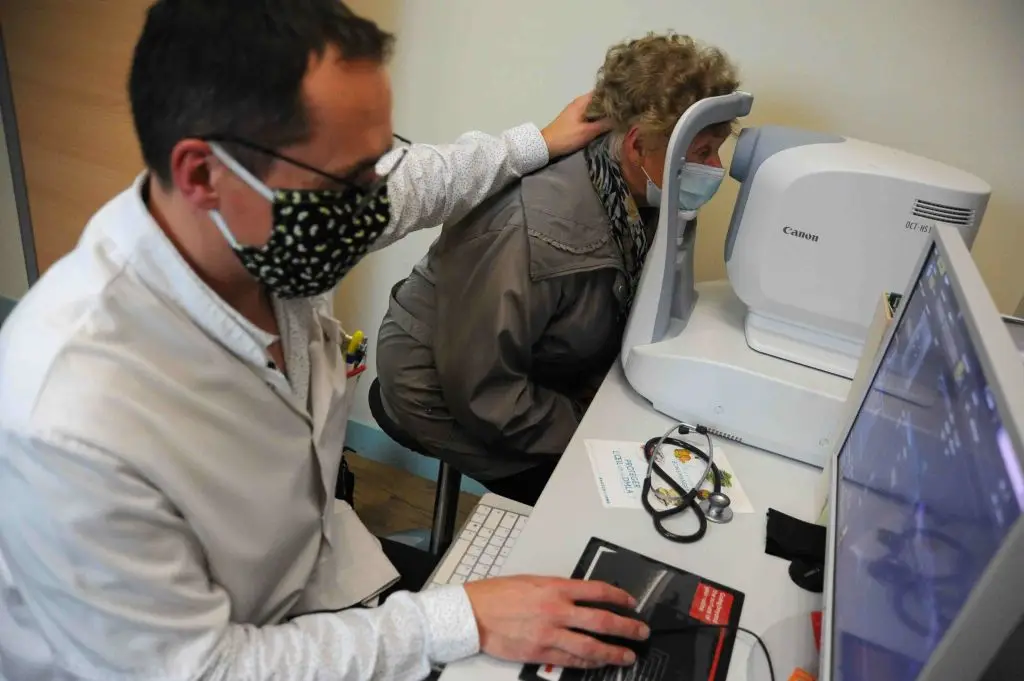
Diabetic retinopathy is a leading cause of vision loss among working-age adults, according to the ophthalmologist, and it can progress silently until damage is advanced and, in some cases, irreversible.
Regular retinal screening and timely treatment substantially reduce the risk of severe vision loss, but a lapse in coverage could mean a missed examination, delayed laser or injection treatment and potentially permanent sight loss for someone trying to remain in work.
What happened when Arkansas introduced Medicaid work requirements?
Arkansas was the first state to implement a comparable requirement, in 2018, before a federal court halted it. Harvard researchers evaluated the impact in the New England Journal of Medicine in 2019 and Health Affairs in 2020.
They found more than 18,000 adults were disenrolled, with no statistically significant improvement in employment. Among surveyed adults aged 30 to 49 who lost coverage, 56% postponed medical care because of financial constraints, 64% delayed taking medication for the same reason and half had serious difficulty repaying medical debt.
Awareness was also poor, with more than 70% of low-income Arkansas residents surveyed unsure whether the policy was in effect. Al-Diri said this suggests administrative barriers may have contributed substantially to the coverage losses.
He also pointed to the Congressional Budget Office, which has projected that work requirements would have only a limited effect on labor supply. Most of the roughly $326 billion in federal savings over 10 years from the provision would come from people losing coverage, with estimated losses in the millions.
He concluded: “Policy should help people stay healthy enough to work, not make them too unwell to do so.”
 Thomas Bamford-Sidwell