Healthcare expert urges people to try simple 60-second test that could indicate dementia risk

Most people assume that forgetting names or constantly misplacing your house keys is the very first clear sign of dementia setting in.
However, a healthcare expert has revealed that the earliest detectable changes actually show up in our speech patterns long before memory problems become obvious.
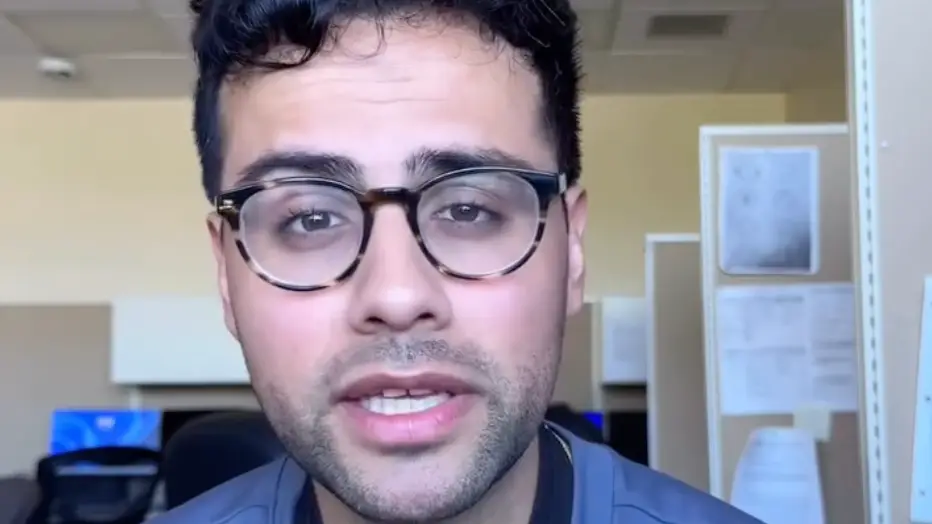
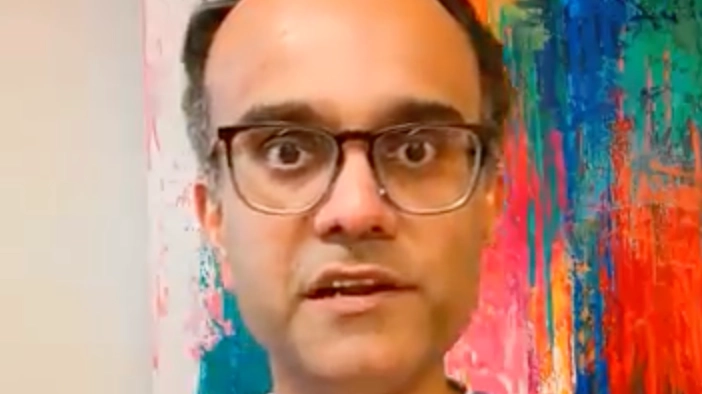
Neal K. Shah, dubbed America’s Chief Elder Officer, took to YouTube to share a simple 60-second screening tool families can easily try at home.
The CEO of CareYaya - a care platform that connects families with college and university students studying in healthcare fields to provide affordable, non-medical in-home elder care and companion support - explained that a National Institute on Aging study linked early Alzheimer's disease signs to subtle speech changes.
Advert
Shah, who is also a Johns Hopkins-backed expert, noted these changes include taking longer pauses before answering questions or replacing specific words with vague terms like 'thing' or 'that stuff'.
He noted that losing the thread of a sentence midway through and starting over is also something worth paying attention to if it happens progressively.
To help identify early cognitive decline, he shared a quick and easy exercise that professional clinicians currently use in practice.
"Ask your spouse or aging parent who you're concerned about to name as many animals as they can in 60 seconds," Shah instructed.

He explained that naming fewer than 15 animals is clinically suggestive of potential dementia risk, while hitting 15 or more is considered normal.
"All it takes is one minute and it costs nothing," he said, urging people to consult a doctor if the results are concerning.
The video sparked a lively conversation online, with some users rushing to defend their own unique speech habits.
"Been calling things thingamajig since childhood," one person joked.
Another user added: "I have lost my keys and forgotten names since I was a kid."
Meanwhile, a third viewer claimed they paused mid-conversation so that they could properly think before speaking.
They said: "I pause long enough before answering any questions. That saves me a lot of trouble. It gives me time to think about the consequences and filter out any statements that can be misconstrued."
"Not all long pauses are signs of dementia."
However, others praised the animal-naming exercise for being far less stressful than other traditional medical screenings.
"An excellent cognitive early exam that reserves the dignity of an aging person as opposed to drawing clocks and given 5 random words to remember and recall minutes later," one user commented.
Of course, they were referring to the well-known clock-drawing test, which is used by medical professionals to check for signs of dementia.
During that specific assessment, patients are asked to draw a clock with hands pointing to a specific time - it is then scored based on the sequence of numbers, the placement of the numbers, and the placement of the hands.
According to Verywell Health, this exercise measures several cognitive abilities at once, including attention, hearing comprehension, visual memory, and motor skills.
As for the animal test - I'm a 'fit and healthy' 29-year-old, and I only managed to name 22 in one minute so Lord help me when I'm a little more senior!
 Joe Yates