unilad homepage
unilad homepage
  • News
    • UK News
    • US News
    • World News
    • Crime
    • Health
    • Money
    • Sport
    • Travel
  • Music
  • Technology
  • Film and TV
    • News
    • DC Comics
    • Disney
    • Marvel
    • Netflix
  • Celebrity
  • Politics
  • Advertise
  • Terms
  • Privacy & Cookies
  • LADbible Group
  • LADbible
  • SPORTbible
  • GAMINGbible
  • Tyla
  • UNILAD Tech
  • FOODbible
  • License Our Content
  • About Us & Contact
  • Jobs
  • Latest
  • Archive
  • Topics A-Z
  • Authors
Facebook
Instagram
X
Threads
TikTok
YouTube
Submit Your Content
Scientists reveal how simple finger test could determine risk of developing deadly diseases
Home>News>Health
Published 15:56 14 Jul 2026 GMT+1

Scientists reveal how simple finger test could determine risk of developing deadly diseases

A straight-forward finger prick test could identify a person's risk of developing non-communicable diseases (NCDs)

Niamh Shackleton

Niamh Shackleton

google discoverFollow us on Google Discover
Featured Image Credit: Getty Stock

Topics: Health, News

Niamh Shackleton
Niamh Shackleton

Niamh Shackleton is an experienced journalist for UNILAD, specialising in topics including mental health and showbiz, as well as anything Henry Cavill and cat related. She has previously worked for OK! Magazine, Caters and Kennedy.

X

@niamhshackleton

Advert

Advert

Advert

A finger prick test could help doctors identify a person's risk of developing serious diseases like cancer.

The test involves collecting a small drop of blood from your finger, which is then sent off for analysis.

Typically these tests are used to track things like blood sugar, cholesterol, vitamins and minerals, hormones, and allergies.

However, researchers have now suggested that finger prick tests should be used to track metabolic health in non-communicable diseases (NCDs).

Advert

The World Health Organization said that these diseases 'tend to be of long duration and are the result of a combination of genetic, physiological, environmental and behavioural factors'. The main types of NCDs are cardiovascular diseases, cancers, chronic respiratory diseases, and diabetes.

These illnesses kill millions of people each year. In 2021 alone, 43,000,000 people across the globe died from NCDs. But, with the help of these simple tests, people at risk of developing an NCD could find out sooner and get early intervention.

This may be game-changing for health services worldwide as NCDs are expected to overtake infectious diseases for health burden by 2050, News Medical reports.
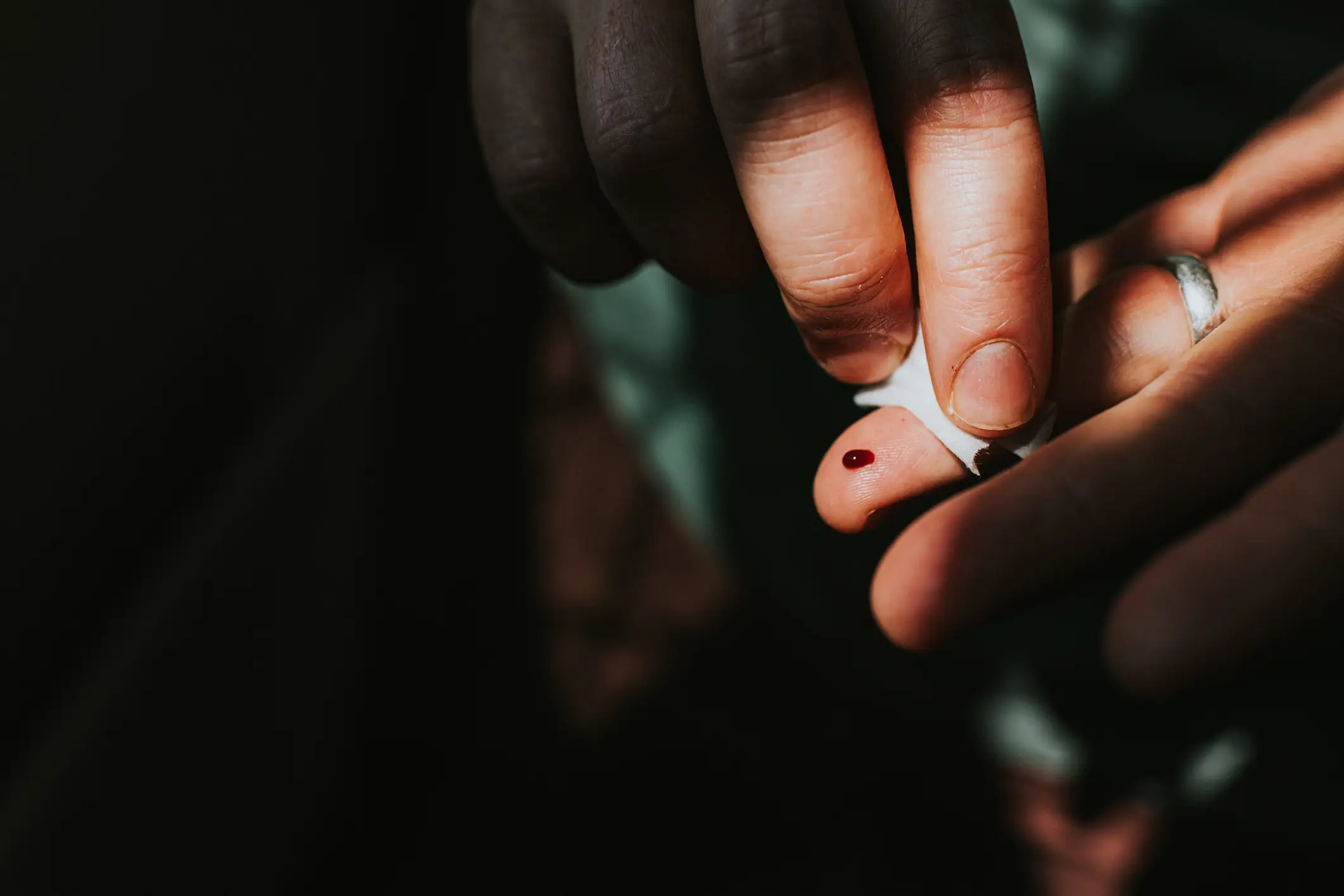
A new study has been released that researched finger prick tests (Getty Stock)

How the test can help

Researchers writing in Frontiers in Science have suggested that glucose ketone index (GKI), which requires a finger prick test, could play a key part in identifying NCD risk factors.

GKI tracks the ratio of blood glucose to ketones in your body, providing a clearer pictures of someone's metabolic health.

Should someone be found to be at risk of developing an NCD, they could then make lifestyle changes in a bid to prevent this from happening – for example, someone at risk of cardiovascular disease could cut back on saturated fats and sodium in their diet, or start exercising more regularly.

Millions of people die from NCDs annual across the globe (Getty Stock)

What researchers say

Discussing how GKI and finger prick tests could prove beneficial in cutting down in the number of people developing NCDs, lead author Thomas Seyfried, Professor of biology and genetics from Boston College, said (per News Medical): "Within the next few decades, NCDs could account for up to 75 percent of all disability-adjusted life-years, contributing to a substantial decline in life expectancy.

"These conditions are not the result of genetic fate but are largely shaped by lifestyle factors. This GKI-based metabolic roadmap outlines a proposed clinical pathway that could support the prevention and management of cancer and chronic disease."

While researchers like Seyfried seem optimistic about the information that can be gathered from finger prick tests, they have stressed that further clinical studies need to be carried out prove if the test can accurately predict disease risk or not.

Choose your content:

an hour ago
2 hours ago
  • Getty Stock Images
    an hour ago

    Scientists reveal what the 'most attractive' facial features are in men and women

    The study found that 'facial shape significantly influences perceived attractiveness'

    News
  • Andrew Leyden/Bloomberg via Getty Images
    an hour ago

    Trump gives update on algae-infested Reflecting Pool as he hits out at ABC anchor's brutal theory

    Donald Trump's Lincoln Memorial Reflecting Pool has been a controversial topic after millions were spent on its renovation

    News
  • Koji Watanabe/Getty Images
    an hour ago

    Decision made on Argentina's 'special request' ahead of World Cup semi-final

    Argentina is set to take on England at the World Cup on Wednesday, July 15, in Atlanta

    News
  • Getty Stock
    2 hours ago

    Millions are guilty of this 'dangerous' bedtime phone habit, experts warn

    The common habit could lead to you being seriously injured

    News
  • Chilling 'D test' lets you determine how strong the 'dark aspects' of your personality really are
  • The one facial feature that could reveal if you are at risk of developing dementia
  • Doctor explains how GLP-1 weight loss drugs could slash Alzheimer's risk
  • Scientists reveal new eye test that could predict dementia decades early