
Dermatologist explains why you shouldn't scratch a bug bite even if it feels good

If you find pleasure in scratching bug bites, then the experts have some bad news for you.
You’ve probably been told this before, and brushed it off, but if you scratch a bite, it’s going to get worse.
But why does it feel so good? It just doesn’t make any sense to have something so satisfying, ultimately cause you health problems.
Well, sadly there’s a whole science to it.
Advert
Basically, scientists rounded up a group of mice and donned them with ‘cones of shame’ to find out what happens when an itch is scratched vs when it’s left alone to fester.
Obviously, you’re probably getting the urge to itch something right now because of how many times it’s being brought up, but you’re going to want to read about the conclusion of the tiny mice before doing so.

Essentially, it all comes down to germs and contamination that can become an irritating force to scratches, causing inflammation and even swelling.
Dr Daniel Kaplan, a University of Pittsburgh dermatologist, was simply exploring allergic contact dermatitis, when they stumbled upon so much more.
Kaplan began by applying a rash-inducing irritant on the ears of mice, and while mice who were bred with dulled itch sensing experienced mild issues, the normal mice that scratched those ears experienced inflammatory immune cells swarming the area.
It also caused additional swelling.
According to the study, when mice who were then given cones around their heads, much like you’d expect a dog to wear after surgery, something else was apparent.
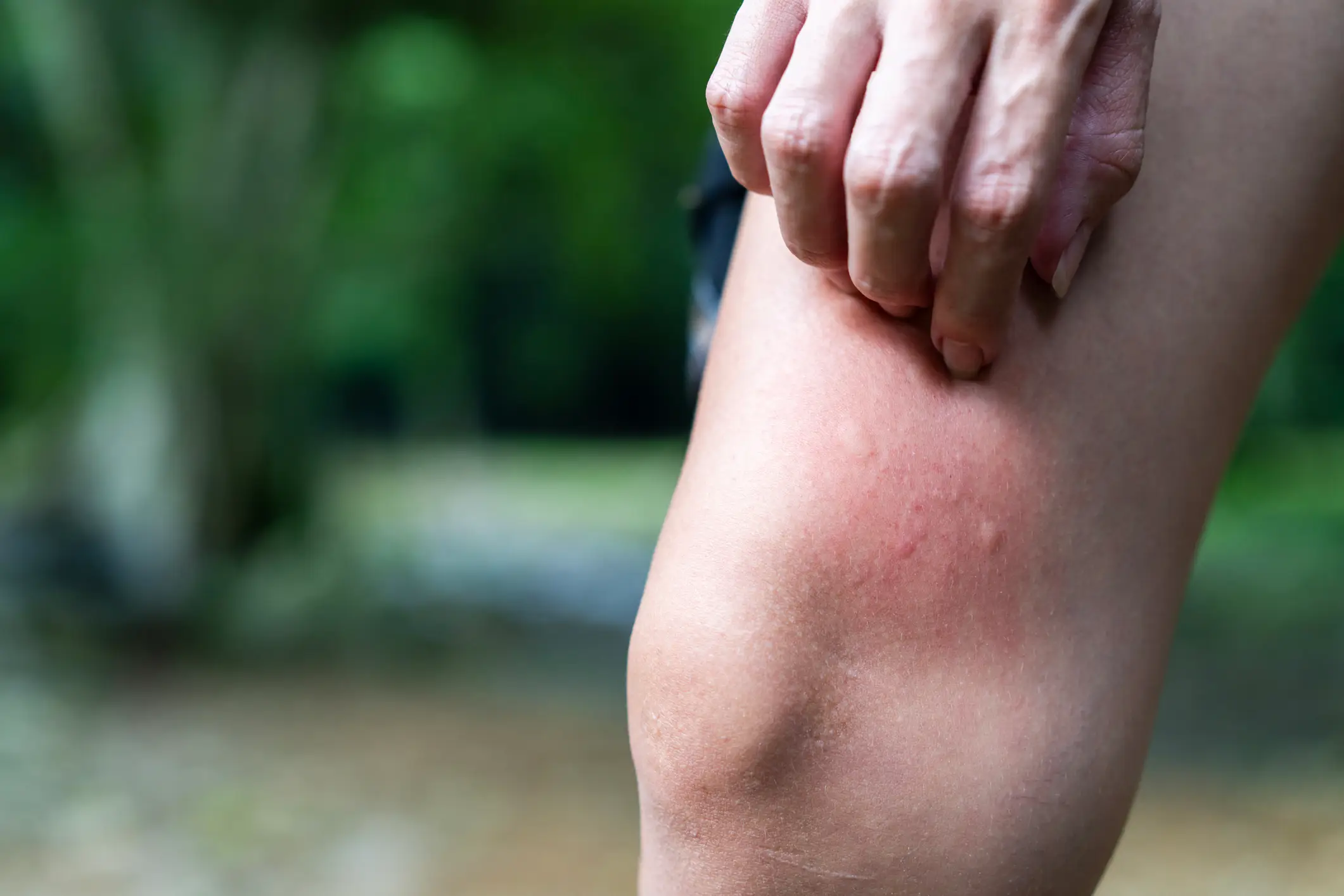
Because they couldn’t physically scratch the itch, they too (like the bred mice) experienced much less severe swelling and fewer inflammatory cells in the area.
Kaplan explained that similarly, if you have a mosquito bite and leave it alone, it’ll be ‘gone in five or 10 minutes for most people’.
“But if you start scratching it, it’s your friend for a week,” he said.
What this revealed was that the immune system’s mast cells release compounds that can help fight germs or toxins but also release histamine – which is what triggers allergies.
Once we start to scratch, it then releases pain-sensing nerve cells because he says, ‘we tend to scratch until it starts to hurt', which leads to the release of a chemical messenger called substance P.
P exacerbates mast cells, making the reaction much worse.
“Ultimately, scratching is deleterious,” Kaplan said. “You should avoid scratching.”
Say no more.
 Britt Jones