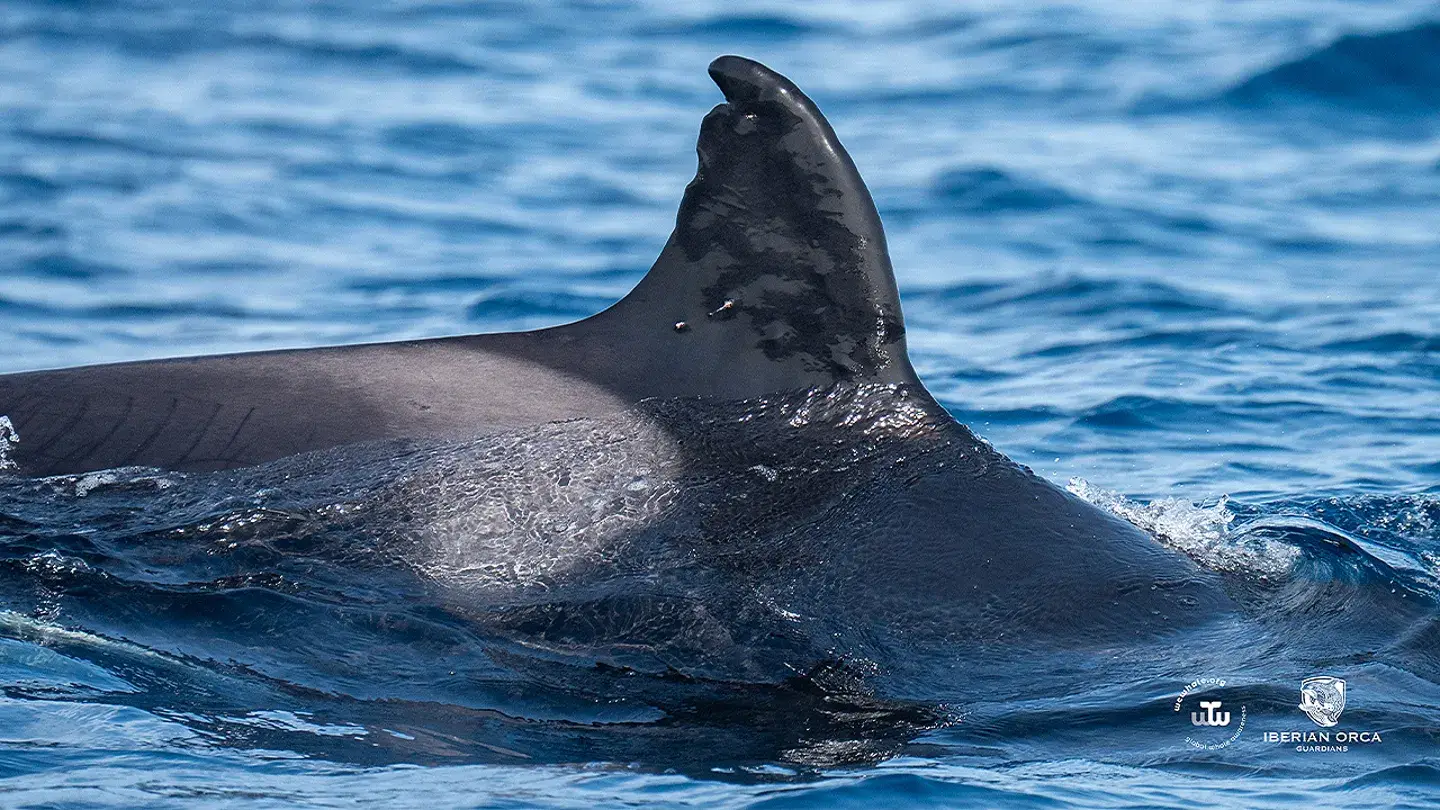
Heartbreaking photos show world's oldest Iberian orca with suspected gunshot wounds

An investigation has been launched after one of the world's oldest known orcas was discovered with a series of unexplained wounds that experts believe may have been caused by a shotgun.
Toñi, thought to be around 60 years old and the oldest documented member of the Iberian orca population, was spotted in the Strait of Gibraltar this week with multiple fresh marks across her dorsal fin and back.
According to Spain's Ministry for the Ecological Transition and the Demographic Challenge (MITECO), the wounds were not present in photographs taken of her just weeks earlier.
The ministry said it was alerted to the injuries on August 11 after being contacted by marine conservation group WeWhale, which is authorized to operate in the area.
Advert
Officials opened a preliminary investigation the following day in an effort to establish what happened to Toñi and identify anyone who might be responsible.
The case comes against the backdrop of years of tension between Iberian orcas and boats.
Since 2020, orcas in the region have repeatedly made contact with vessels, prompting authorities to issue safety guidance to sailors that explicitly warns against using measures that could injure or kill the animals in response.
What caused the wounds on Toñi the orca?
While Spanish officials haven't confirmed a cause, both WeWhale and the Iberian Orca Guardians say the pattern of the injuries points to something more deliberate than an accident.
WeWhale's team reported counting around 10 apparent impact marks on the left side of Toñi's dorsal fin, with at least two or three appearing to have passed straight through it. Others pellets or bullets could still be lodged inside.
Janek Andre, founder and president of both organizations, told DIVE magazine that the timing made the sudden appearance of the wounds especially alarming.
"We know Toñi. We were with her a few weeks ago and these wounds were not there," he said.
Andre added that the pattern of damage was consistent with a shotgun blast, and did not hold back on what he believes it represents.
"If someone has deliberately fired a shotgun at her, this is not only an act of extreme cruelty against an individual animal," he said.
"It is an attack on one of the last remaining members of a critically endangered population."
Given her age, experts are especially concerned about how Toñi's body will cope with the damage.
WeWhale explained that a dorsal fin carries a rich blood supply and helps regulate body temperature, meaning the wounds could lead to swelling, tissue damage or infection, which could turn life-threatening if pellets remain trapped inside her.
Despite this, the group said Toñi has so far continued to swim and hunt normally, and her condition is being closely monitored.
Is it legal to shoot at orcas in Spain?
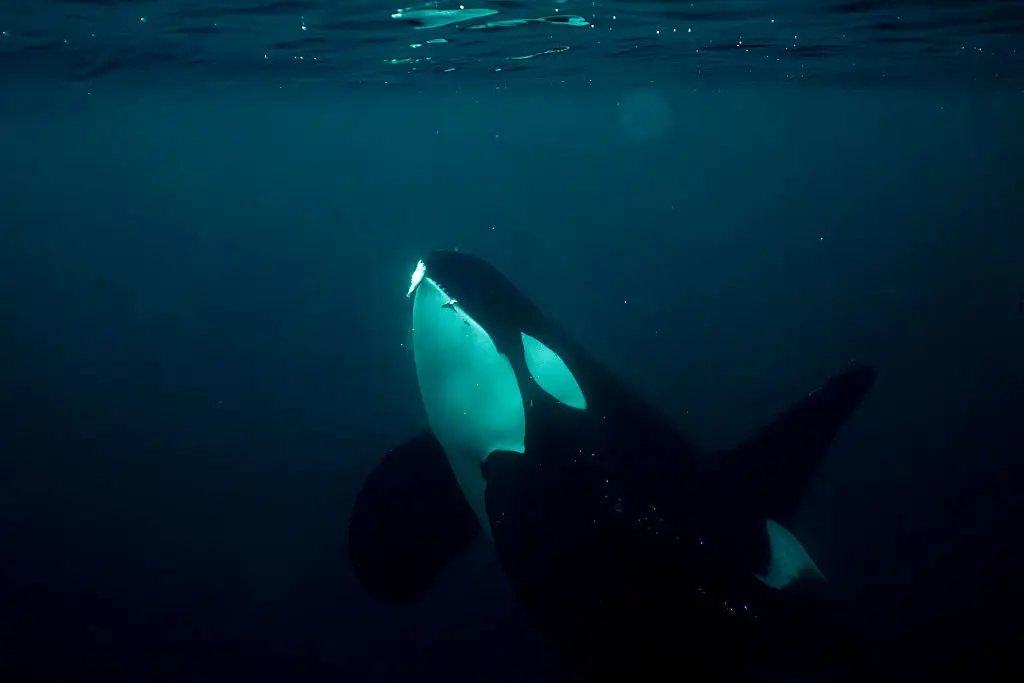
Toñi, also known as 'La Abuela,' which means 'the grandmother,' belongs to a population of orcas in the Strait of Gibraltar and Gulf of Cádiz that's officially classified as vulnerable under Spain's Catalog of Endangered Species.
Under Spanish law, killing, capturing or disturbing protected species can result in fines of up to two million euros, around $2.3 million, alongside possible criminal charges.
Andre said that regardless of how people feel about those encounters, using a firearm on the orcas could never be justified.
"Whatever someone's opinion about those interactions may be, shooting at these animals can never be an acceptable response," he added.
Conservationists say they're preserving their original photographs and records as the government's investigation continues, with no suspect yet named.
Topics: Animals, Nature, Animal Cruelty, Spain
 Thomas Bamford