Scientists are tracking astronaut health on Artemis II which could unlock insights

NASA has changed how it tracks the health of its astronauts in space, and it could lead to new ways of ensuring people who leave Earth can be safe for the duration of their travel.
The four crew members will be re-entering Earth’s atmosphere later today, riding a fireball' at around 25,000mph, as they complete their mission of going to the Moon 50 years after the last time something similar occurred.
But aside from some obvious differences - like not landing on the satellite - this journey was marked by a brand-new scientific test and tracking system that has ‘never’ been done before and its impact could be huge.
After their re-entry capsule plans to splashdown just after 8pm EST in the waters off San Diego, Artemis II crew will have brought back with them some essential information about their health, which could lead to a breakthrough in space health and safety advancements.
Advert
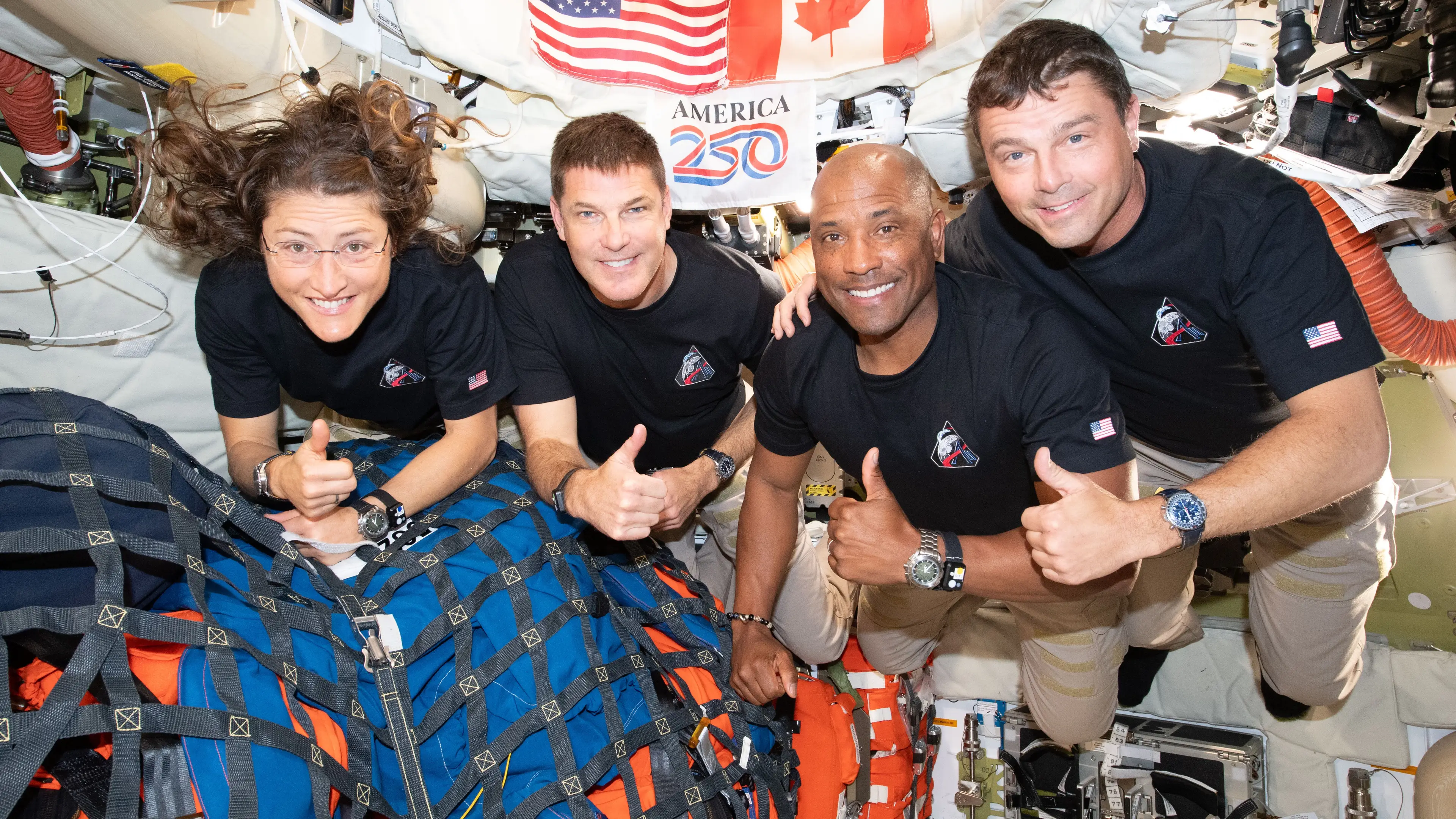
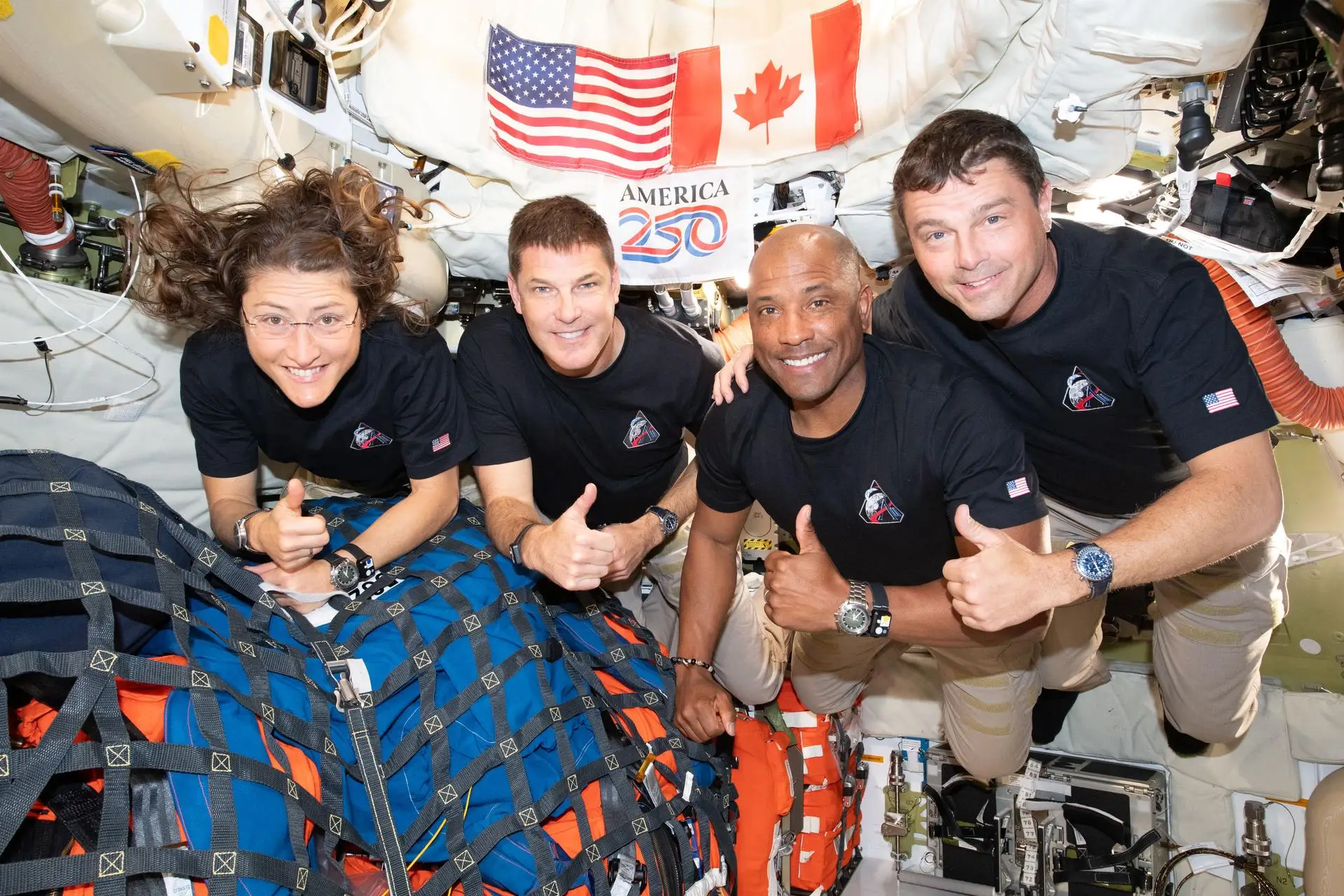
The Orion began its journey into space on April 1, with four additional visitors other than NASA’s Reid Wiseman, Victor Glover and Christina Koch, and Canadian Space Agency astronaut Jeremy Hansen.
However, the guests are pretty similar to their astronaut counterparts – mostly because they are tiny pieces of their full-sized humans.
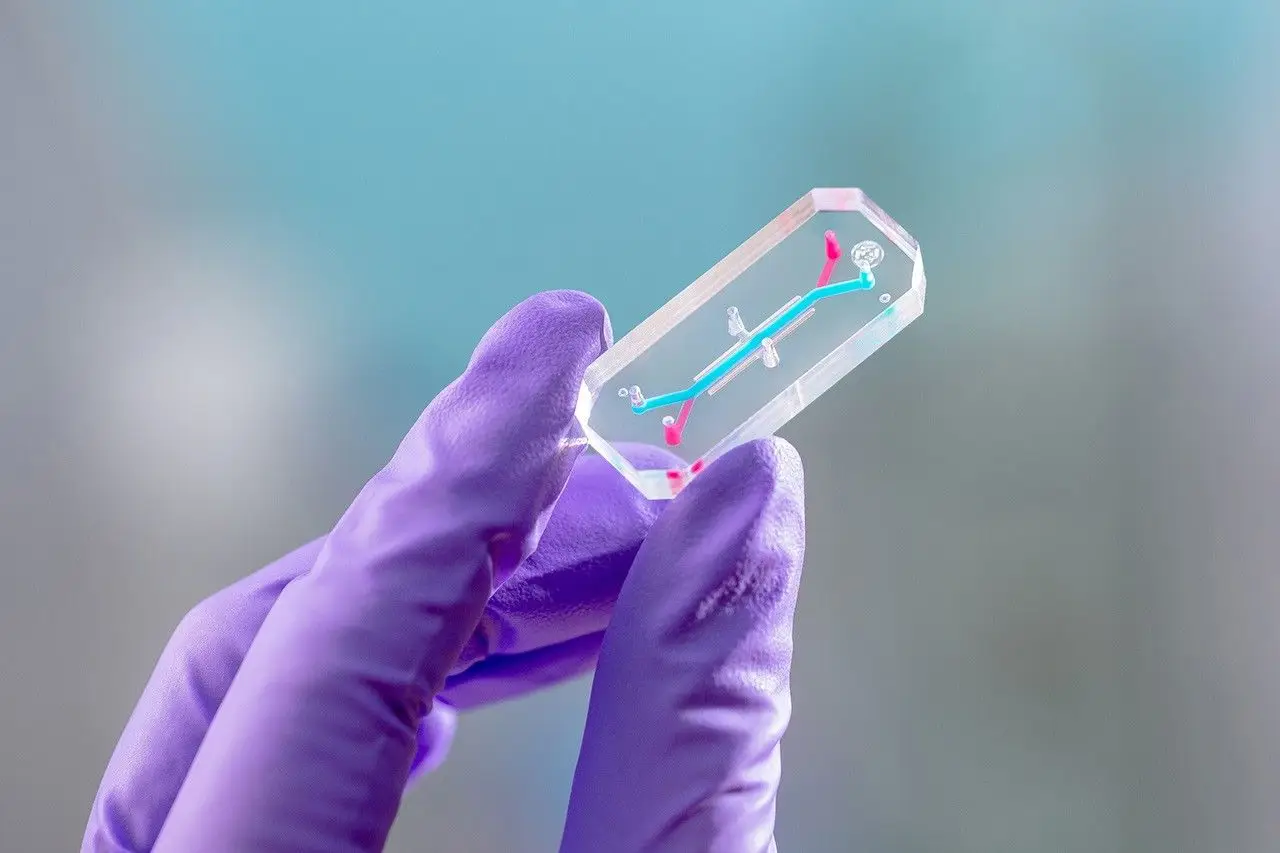
The USB-size ‘avatars,’ aka NASA’s A Virtual Astronaut Tissue Analog Response, are bits of the astronauts’ bone marrow, that allows scientists to simulate what happens to their organs deep in space.
According to NASA, this 'organ-on-a-chip devices, or organ chips' has been designed 'to study the effects of increased radiation and microgravity on human health.'
This, says Lisa Carnell, Director of NASA’s Biological and Physical Sciences Division, is something that 'we’ve never done’ before, and could lead us to ‘learn something new’ about how bodies react to being outside of Earth.
The space agency's site explained: "NASA’s organ chip research will study how different space stressors affect tissue before sending the first humans —Americans — to Mars. It could provide valuable information for developing measures to protect astronaut health on their journeys, such as personalized medical kits."
As of right now, the crew are collecting their saliva samples to test the effects of space before, during and after the mission.
But this is just another layer of trying to go deeper into learning about space and the human body.
“When we send these alongside Christina, Victor, Reid, Jeremy, they all may respond different to the deep space radiation environment. Somebody may be radio resistant and will learn something new, and you know, or maybe somebody is more extremely susceptible to radiation,” Carnell said, per CNN. “Well, now we can tailor medical kits that we can make personal lives for them on their journey. They go to Mars, they go to the moon, to live for long duration. We can send the right therapeutics with them to make sure they stay healthy and that they can thrive in those environments.”
She went on to say that the avatars could be sent into space ahead of time, to determine if there will be any problems before the actual crew is sent afterwards.
“In the Apollo days, it was just a few days on the surface. If we’re literally going to have people on the surface for a long period of time, even 30 days or longer, I mean, we don’t have data on that at all, right?” Carnell said. “We like to say, ‘Know before we go.’ It’s that simple. Like, how do we know before we send them to ensure that we bring them back healthy and that they’re as safe as can be? And this is such a simple … eloquent way to do that.”
What happens next after splashdown?
Getting the astronauts out of the Orion
Helping Wiseman, Glover, Koch and Hansen safely out of the Orion spacecraft falls to NASA and the Department of War.
Once they land back on Earth, a team of four helicopters will circle the spacecraft - two for rescue, the other two for pictures, according to Florida Today.
One of them will lower a stabilizing collar, which will keep the Orion floating the right way up.
Then, once they’re ready, a basket will be sent down to lift the first astronaut up.
They’ll all be taken to a nearby naval vessel, the USS John P. Murtha, for a medical checkup, and then transported back to Houston.
What effect will 10 days in space have had on the astronauts’ bodies?
Even though the Artemis II crew have spent a relatively short time in space - poor Suni Williams and Butch Wilmore spent 608 days away from Earth over 2024 and 2025, remember - it will still have had an effect on their bodies.
Kevin Fong, founder of the Centre for Altitude, Space and Extreme Environment Medicine at University College London, told the BBC: “In some experiments with rats, they’ve seen up to a third of muscle from particular muscle groups being lost within seven to 10 days of flight – that’s a huge, huge loss.”
To try and combat muscle loss, the Artemis II team have incorporated workouts into their schedule, on something called a flywheel.
Since the Orion capsule is only 316 cubic feet, about the size of a smallish bedroom according to NPR, workout gear needs to be compact. The flywheel is a bit like a multi-purpose rowing machine.
Jeremy Hansen explained before launch: “We can change the dynamics of this device so that we can do weightlifting with it. So we can do squats. We can do dead lifts. We can do curls. We can do high pulls.”
What have other astronauts said about readjusting to life on Earth?
NASA astronaut Jasmin Moghbeli, who returned to Earth in 2024 after 200 days in space, said: “With eyes closed, it was almost impossible to walk in a straight line.”
That’s because the inner-ear balance humans use to orient themselves on Earth is effectively tuned out when they are in space.
ESA astronaut Andreas Mogensen, who was on the same mission, said: “I felt wobbly for the first two days. My neck was very tired from holding up my head.”
While NASA’s Jeanette Epps, who spent 235 days in space and returned in October 2024, said the main thing that took some getting used to was the heaviness of Earth.
She said: “You have to move and exercise every day, regardless of how exhausted you feel.”
 Britt Jones