
People may be getting one of the biggest signs of lying completely wrong, expert warns

A retired Secret Service agent has laid out a five-part method for spotting a lie, and says much of what people believe about catching liars is simply wrong.
Brad Beeler explained the approach during a recent episode of LADBible's Explainer for a Stranger.
Beeler, who has around 25 years of experience questioning suspects, began with an image.
"The truth is like a movie reel. You can rewind it, you can fast forward it, and you can hit play, you should get an immediate response," he said.
Advert
A made-up story is different, he explained, because liars struggle to rewind and fast forward through a situation they created.
Beeler said liars often make better eye contact than truthful people, because they know how much it matters and so ‘really kind of hone in’.
Some of the most popular advice for catching a liar, he argued, should be dropped altogether.

What we get wrong about lying body language
Body language can be an 'unreliable' method of working out if someone is lying to you, according to Beeler.
He called it 'a terrible predictor of truth and fiction' because many liars are smooth with it, and dismissed the idea that looking up to the left or down to the right gives someone away as 'nonsense'.
The host of the episode then tried two truth and a lie, to see whether he could work out if he was telling lies. Beeler claimed to be a brown belt in Brazilian jiu-jitsu, to have had his teeth knocked out with a golf club and to be a Secret Service rescue swimmer.
After follow-up questions, Isaac correctly picked the golf club story as the lie.
The LIARS method, explained
Beeler also explained the LIARS method, which can help to figure out whether people were telling untruths.
L is for latency, the gap before an answer. A question about what you did five years ago should take time to answer, but whether you robbed a bank that day should not. “It shouldn't be squishy,” Beeler said.
I is for incongruence, when words and delivery clash.
A is for avoidance, getting a response without getting an answer. “So when you hear normally, usually or typically, that's a check engine light,” Beeler said.
R is for resistance, which he called ‘friction’, when you are made out to be the bad person, for example, when you're asking awkward questions.
S is for shifting vocal inflection, such as a ‘no’ that sounds like a question. “That's a big time check engine light,” he said.
How to beat a lie detector test?
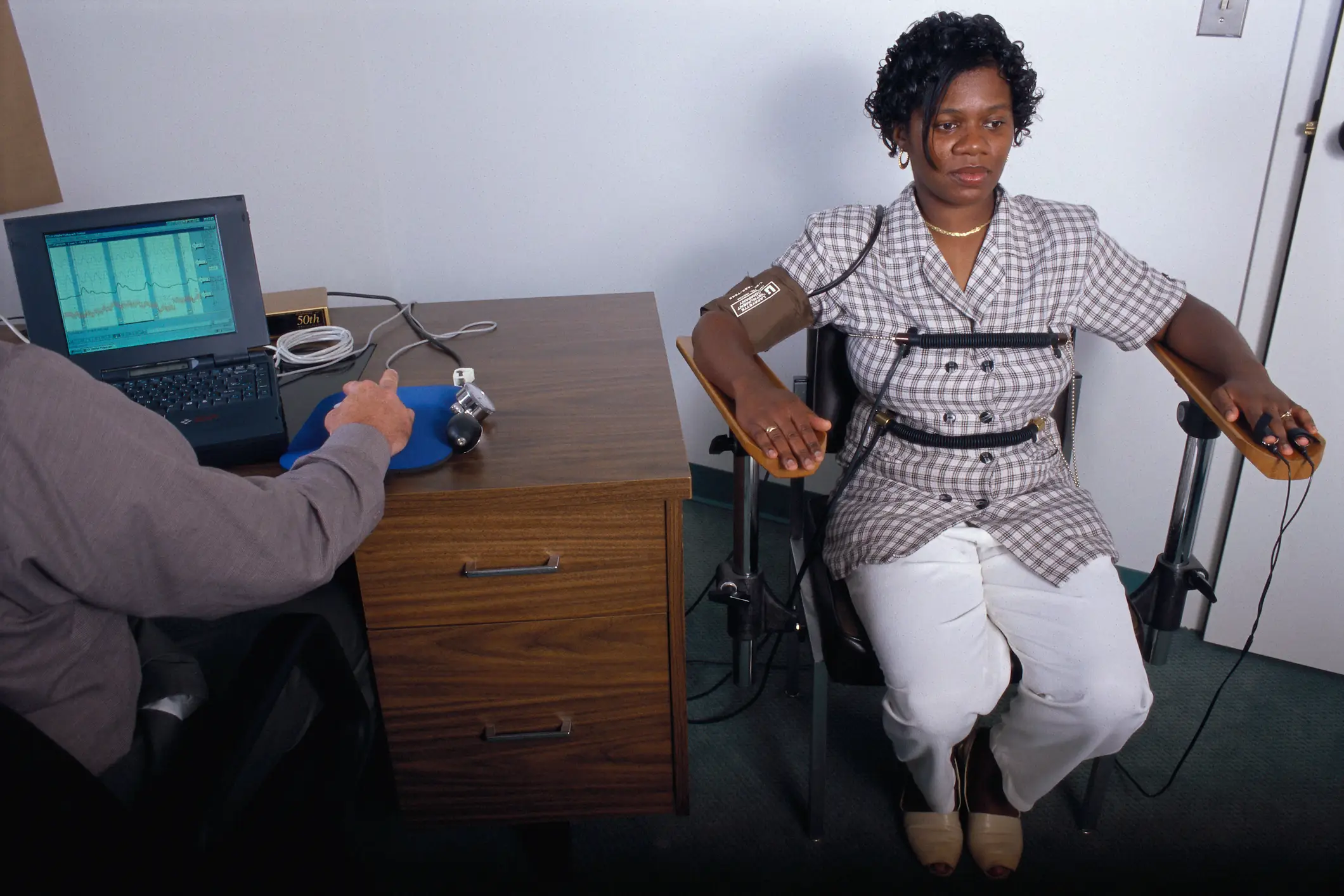
Polygraphs are often called lie detectors, but Beeler said that is not what they do.
“They don't detect lies,” he said, explaining that they record heart rate, blood flow, breathing and galvanic skin response, ‘a fancy way of saying sweat’.
People can make their physiology look different, he said, but examiners know what normal and abnormal readings look like: “They don't see what I see.”
Beeler also described questioning a man he thought was ‘probably a psychopath’, who was accused of abducting and potentially killing a woman. The suspect invented a fictional third person, and Beeler let him talk about him for two hours, covering where he went to high school and his batting average.
Investigators later proved in court that the man did not exist, and the suspect led them to the woman's body.
“It's about trying to get the truth,” Beeler said.
He stressed none of this is foolproof, likening the signs to a ‘yellow or orange check engine light’.
Topics: Psychology, True crime
 Thomas Bamford