Top scientists confirm Antarctica's ozone hole is actually recovering and could completely disappear

Scientists have revealed the hole in the Antarctic ozone layer is showing 'signs of recovery'.
A 'hole' was discovered in the Antarctic ozone layer in 1985 and it was quickly ascertained its primary cause was man-made ozone-depleting substances (ODSs).
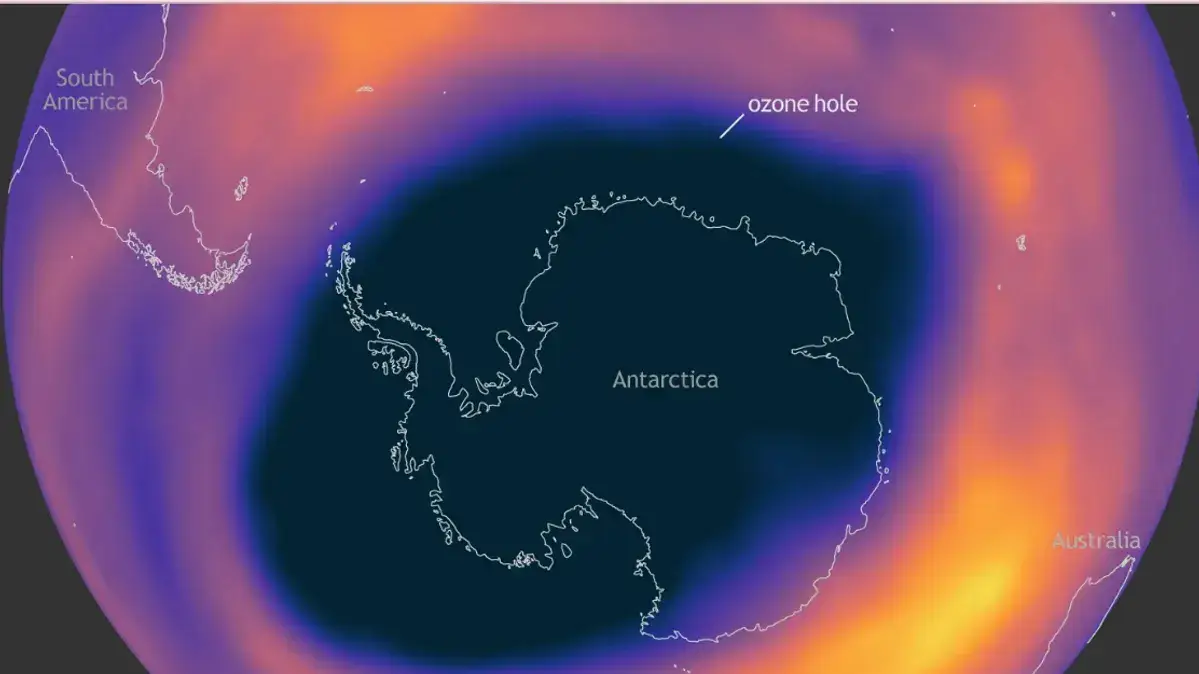
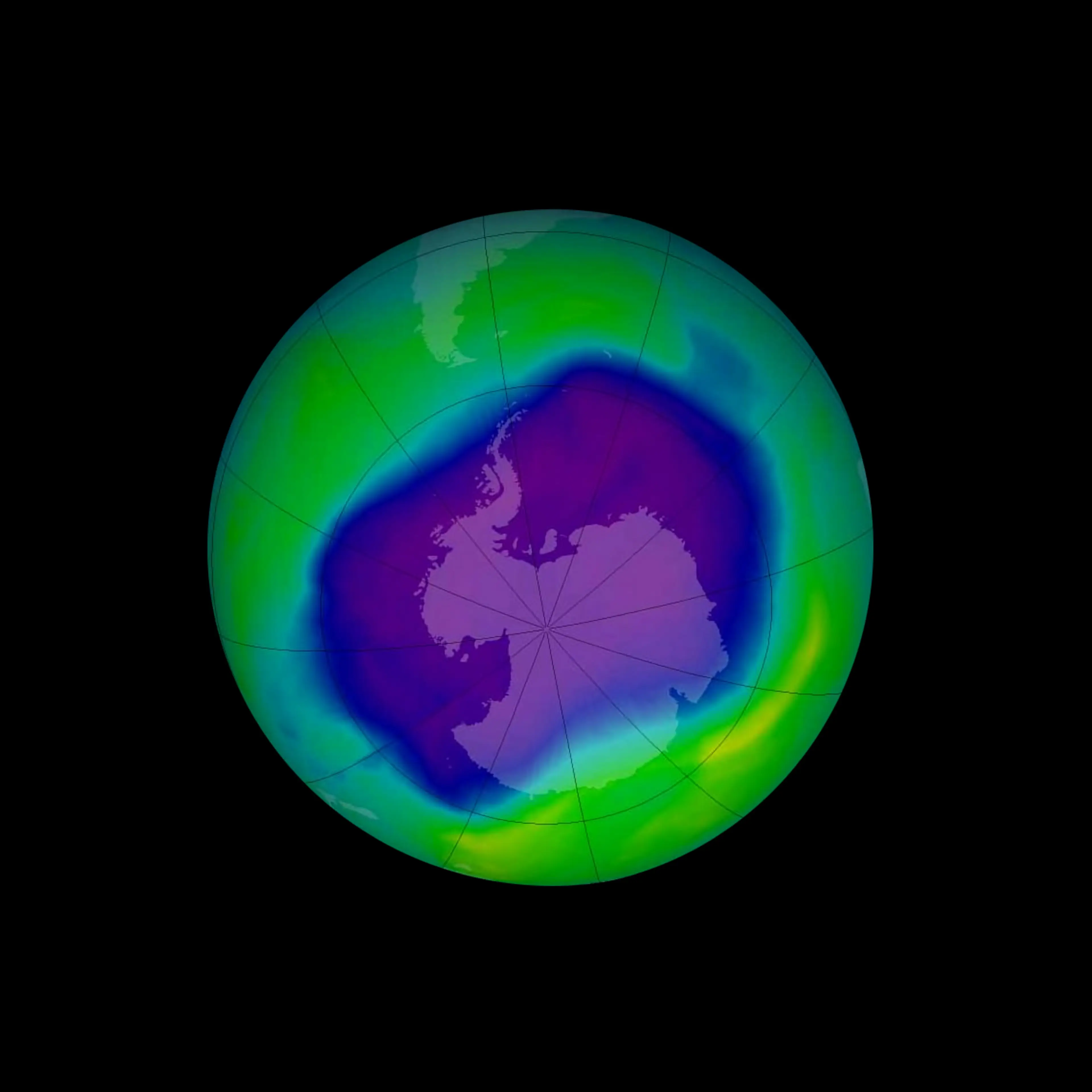
In 2023, the Copernicus Sentinel-5P satellite measured the size of the hole and it was determined to be one of the biggest sizes on record - the hole's size fluctuating - shockingly measuring bigger than North America.
Advert
The development
At 26 million square kilometers, the hole measured more than three times the size of Brazil, which is 8.51 million square kilometers, and more than North America as a whole, which is 24.71 square kilometers.
It was ascertained the hole was majorly being caused by CFCs - chemicals which at the time were being used in refrigeration, air conditioning, insulation, and aerosol propellants.
The following year, the Montreal Protocol - an international agreement to phase out ozone-depleting substances (ODS) - was put into action and there's now signs it's working, the hole reportedly now shrinking.
A study led by scientists from the Massachusetts Institute of Technology - titled Fingerprinting the recovery of the Antarctic ozone and published in Nature on March 5 - has revealed ' signs of ozone recovery have been reported, based largely on observations and broad yet compelling model-data comparisons'.
And not only this, but using satellite observations combined with 'single-model and multi-model ensemble simulations,' the study explains the 'results' of the 'data and simulations' have shown a 'compelling' argument, providing 'robust statistical and physical evidence that actions taken under the Montreal Protocol to reduce ODSs are indeed resulting in the beginning of Antarctic ozone recovery, defined as increases in ozone consistent with expected month–height patterns'.
Graduate student Peidong Wang noted, as quoted by Eurekalert: "While detecting a statistically significant increase in ozone is relatively straightforward, attributing these changes to specific forcings is more challenging." But what's the evidence?
The proof
Well, the team of researchers used a method known as 'fingerprinting' - a technique pioneered by Klaus Hasselmann and which saw awarded the Nobel Prize in Physics in 2021.
Nobel Prize explains the technique helps 'distinguish between natural and human causes (fingerprints) of atmospheric heating'.
Building on observations of ozone recovery she reported in 201, study author Susan Solomon, the Lee and Geraldine Martin Professor of Environmental Studies and Chemistry, looked into applying the method to figure out how humans reducing ODSs could be helping the hole recover.
Solomon and Wang used simulations of Earth's atmosphere under various conditions including testing what happened when there were different increases and decreases in ODSs or greenhouse gases alongside how the weather impacted the atmosphere.
They then compared this to how the hole has changed over time, looking at actual satellite observations of the hole and resolved with '95 percent confidence' the recovery of the ozone is mainly because of the successful reduction in ODSs - which the Montreal Protocol really pushed into action.
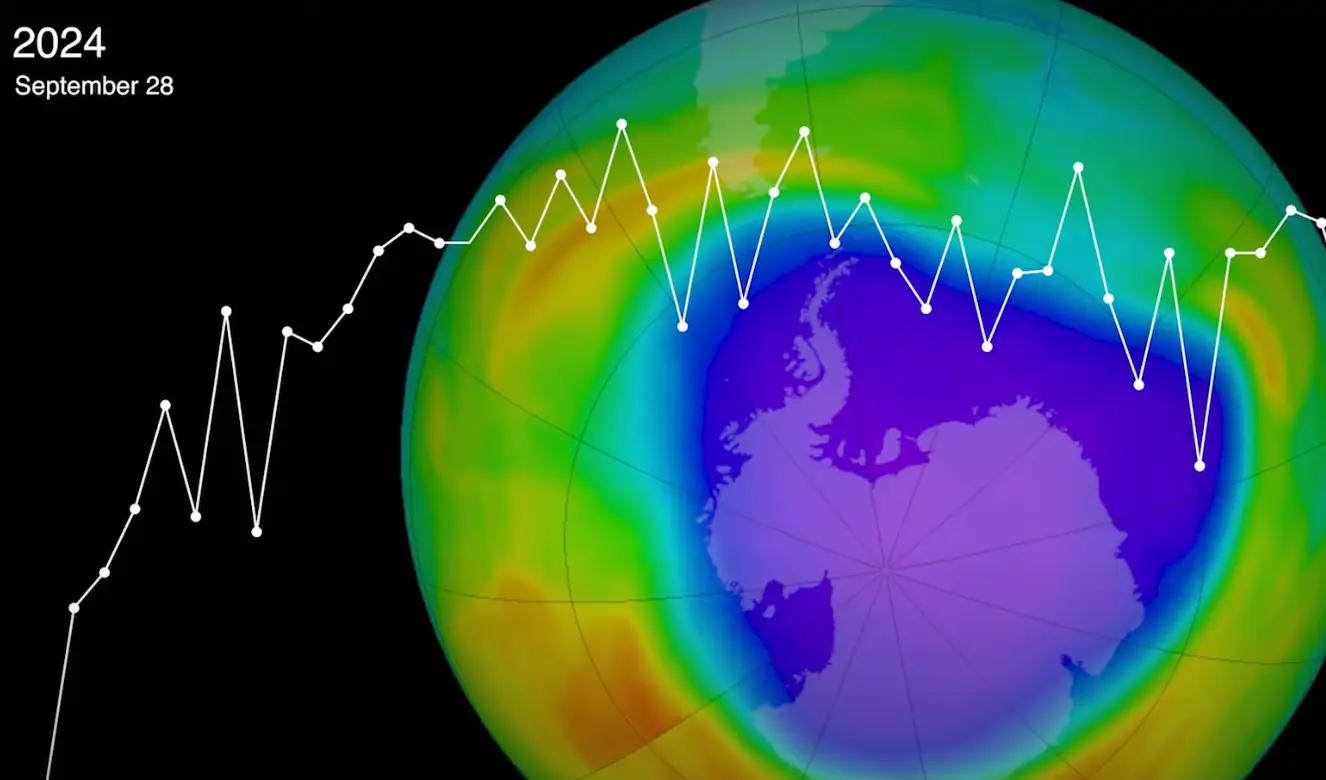
Wang reflected: "After 15 years of observational records, we see this signal to noise with 95 percent confidence, suggesting there’s only a very small chance that the observed pattern similarity can be explained by variability noise.
"This gives us confidence in the fingerprint. It also gives us confidence that we can solve environmental problems. What we can learn from ozone studies is how different countries can swiftly follow these treaties to decrease emissions.”
Solomon echoed: "There’s been a lot of qualitative evidence showing that the Antarctic ozone hole is getting better. This is really the first study that has quantified confidence in the recovery of the ozone hole."
She resolved the ozone is 'recovering' and the study proves 'we can actually solve environmental problems' with the year of 'something like 2035' potentially ending up with 'no ozone hole depletion at all in the Antarctic' with some of us potentially seeing 'the ozone hole go away completely'.
Topics: Science, World News
 Poppy Bilderbeck