
Scientists discover 'useless' organ is actually 'far more important' than they realized

A small organ that was once thought to be pretty boring has now had its potential realized by scientists, who say it's critical for developing children's immune systems and even fighting cancer.
For years, this little blob behind the breastbone was misunderstood, and even overlooked, but now that's finally over.
Known as the thymus, this tiny organ shrinks with age, becoming a shrivelled little blip when we reach adulthood and beyond.
However, despite scientists believing this would mean that its functions ended along with its good texture, apparently that's just not true.
Advert
According to a study published in Nature, the thymus could have a long-term health impact and even do things like protect us from disease.
The shocking find came as scientists analyzed health data from over 27,000 people from both the Framingham Heart Study (FHS) and the National Lung Screening Trial (NLST).
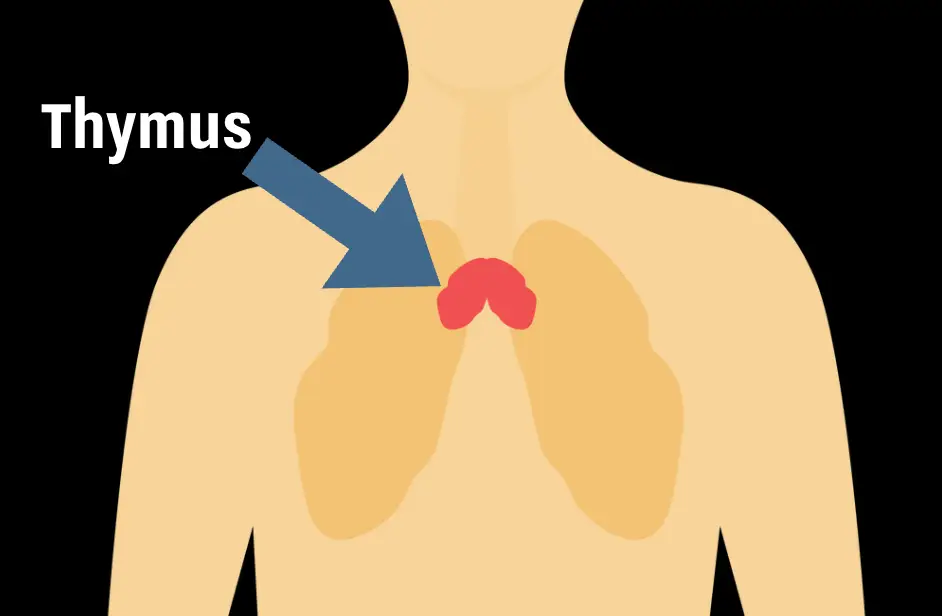
In each of the tests, the two groups took part in computed tomography (CT) scans, taking in the size, shape, and composition of their thymus organs.
Using AI, the scans were then used to determine the health of their organ based on a thymic health score of low, average, or high.
Over the years, researchers realized that the health of a person's thymus was directly linked to health outcomes after being adjusted for things like smoking, age, sex, and risk of health problems.
What they found that that those in the high health group, had a 50 percent lower relative risk of death 12 years later.
"We suspected the adult thymus might still matter, but we were surprised," oncologist Hugo Aerts of Harvard University, and director of the Artificial Intelligence in Medicine (AIM) Program at Mass General Brigham, told ScienceAlert.
He added: "We did not expect these differences to be so strongly and consistently associated with longevity, cancer incidence, cardiovascular disease, and cancer therapy response across multiple large, independent cohorts. That suggested the adult thymus is far more important than previously appreciated."

The research also revealed that those in the high thymic health category were about 36 percent less likely to develop lung cancer, and 50 percent less likely to die from lung cancer compared to the low thymus health group.
Not only that, but having a high thymus health came with a 63 percent lower risk of cardiovascular death in the NLST test, and up to 92 percent lower risk in the FHS group.
"These findings change how we think about the immune system in medicine," Aerts told the outlet. "Our work suggests that thymic health is a fundamental component of that immune fitness and that it can now be measured using routine medical imaging. This opens the possibility of identifying patients who are most likely to benefit from certain therapies, tailoring treatments to preserve immune health, and developing new strategies to maintain immune function as we age."
Aerts was also part of a different thymus study which revealed that thymic health was linked to immunotherapy responses to lung cancer, melanoma, breast cancer, and more.
He explained that subjects of the study with high thymus health reacted better to 'immunotherapy and survived longer'.
"I'm excited because this is more than the discovery of a new biomarker," Aerts said. "It suggests that we've overlooked a major aspect of human biology for decades. If these findings continue to be confirmed, preserving and measuring immune health could become a new principle of medicine, much like we currently monitor heart or kidney function. The thymus may be one of the first organs that allows us to do that in a practical way."
 Britt Jones