
Scientists finally discover why some smokers are more likely to get cancer than others

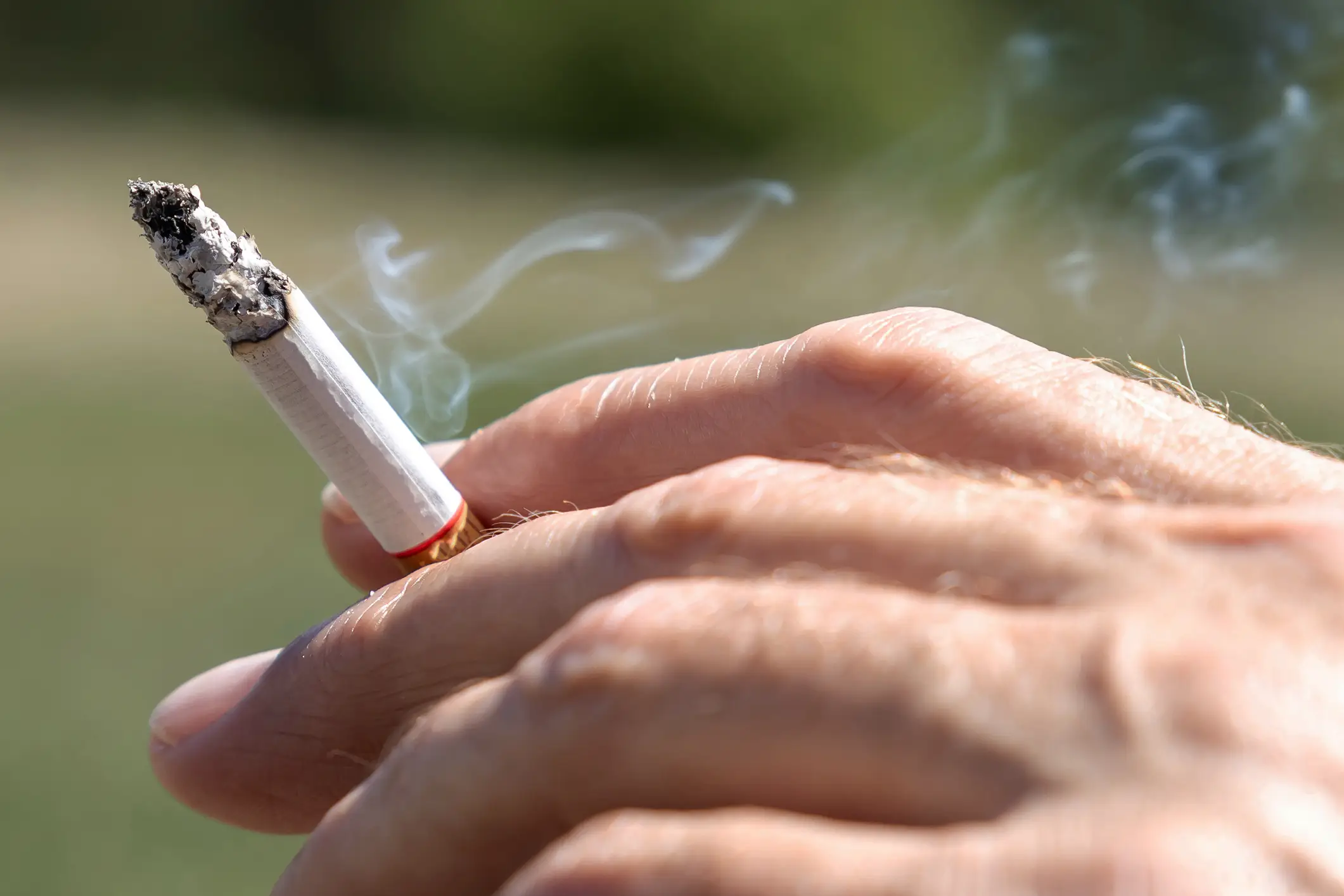
Scientists have uncovered why some tobacco smokers are more likely to get cancer at sometime in their lifetime compared to others.
Smoking is linked to at least 15 different types of cancer overall, while smokers are 15 to 30 times more likely to be diagnosed with lung cancer compared to non-smokers.
While it's common knowledge smoking increases your chances of developing the disease, genetic makeup also plays a key role in influencing our risk of cancer, according to a new study.
The research, conducted by scientists at the University of Cambridge and published in Nature, revealed that 'inherited genes interacting with acquired genetic mutations shape how tumours evolve'.
Advert
Involving mice, experts at the Cancer Research UK (CRUK) Cambridge Institute at the University of Cambridge worked on an experimental approach to demonstrate how a genetic background can alter how cancer can arise and even evolve.

What did the study entail?
Four strains of mice were bred with varying susceptibility to liver cancer, which spanned different genetic makeups comparable to that seen in humans.
The mice were then exposed to a single dose of the liver carcinogen diethylnitrosamine (DEN), which is found in tobacco and is known to cause damage to DNA in liver cells that can ultimately lead to cancer.
Experts were able to eliminate environmental factors as the four mice were bred at 15 days of age under 'controlled conditions'.
What did the study find?
The genomes of almost 600 tumors were then studied by the health experts, and they discovered that cancers, for the most part, 'acquired a cancer-driving mutation that activated the same cancer-promoting signalling system'.
To put this in more simple terms, this system controls cell growth and cell differentiation, while it's also important in a number of cancer variants.
The inherited genetics of the mouse played a crucial role in this though, ultimately deciding if cancer develops.
'Genetic background influences both the mutation processes and the pathways leading to tumour development'
Senior author on the study, Professor Duncan Odom, said: "Cancer does not arise entirely by chance. Although tumours often reach the same biological endpoint, the path to that endpoint is determined by an individual’s genetic background.
"We’ve been able to show for the first time the extent to which genetic background influences both the mutation processes and the pathways leading to tumour development.”
Meanwhile, Dr Sarah Aitken, Assistant Professor at Yale School of Medicine and first author on the research, added: "If genetic background influences both cancer risk and the evolutionary trajectory of tumours, future cancer prevention and screening strategies will need to take into account inherited genetics and population diversity.
“Similarly, how people respond to cancer drugs is likely to differ depending on their inherited genetics, and so we may need to tailor our diagnostics and treatments accordingly.”
 Callum Jones