unilad homepage
  • News
    • UK News
    • US News
    • World News
    • Crime
    • Health
    • Money
    • Sport
    • Travel
  • Film and TV
    • Netflix
  • Music
  • Tech
  • Features
  • Celebrity
  • Politics
  • Advertise
  • Terms
  • Privacy & Cookies
  • LADbible Group
  • LADbible
  • SPORTbible
  • GAMINGbible
  • Tyla
  • UNILAD Tech
  • FOODbible
  • License Our Content
  • About Us & Contact
  • Jobs
  • Latest
  • Archive
  • Topics A-Z
  • Authors
Facebook
Instagram
X
Threads
TikTok
YouTube
Submit Your Content
Scientists discover how dog contact improves survival in cancer patients in shocking new study

Home> News> Animals

Published 19:16 15 Mar 2026 GMT

Scientists discover how dog contact improves survival in cancer patients in shocking new study

It turns out that dogs could be more useful than just companionship and adorableness

Niamh Shackleton

Niamh Shackleton

google discoverFollow us on Google Discover
Featured Image Credit: Getty Stock

Topics: Dogs, Health, Cancer, Science, Animals

Niamh Shackleton
Niamh Shackleton

Niamh Shackleton is an experienced journalist for UNILAD, specialising in topics including mental health and showbiz, as well as anything Henry Cavill and cat related. She has previously worked for OK! Magazine, Caters and Kennedy.

X

@niamhshackleton

Advert

Advert

Advert

I know we didn't need another reason to love dogs, but scientists have found one that will make us appreciate our four-legged friends even more.

Dogs are great. They're amazing company, they're adorable to look at, and you can't help but feel happy when you're around them.

Our pooches also come with health benefits for us, some of which include reducing anxiety and stress, lower blood pressure, and improved cardiovascular health as the pets need daily walking.

And another health perk of having a dog has now been revealed following a scientific study. The groundbreaking research was published in the National Library of Medicine on February 17, 2026.

Advert

"For cardiovascular diseases, diabetes, and asthma, the positive effects of dog ownership are shown," the research states. "Cancer is a leading cause of death, but the influence of dogs on cancer incidence and survival is not well examined."
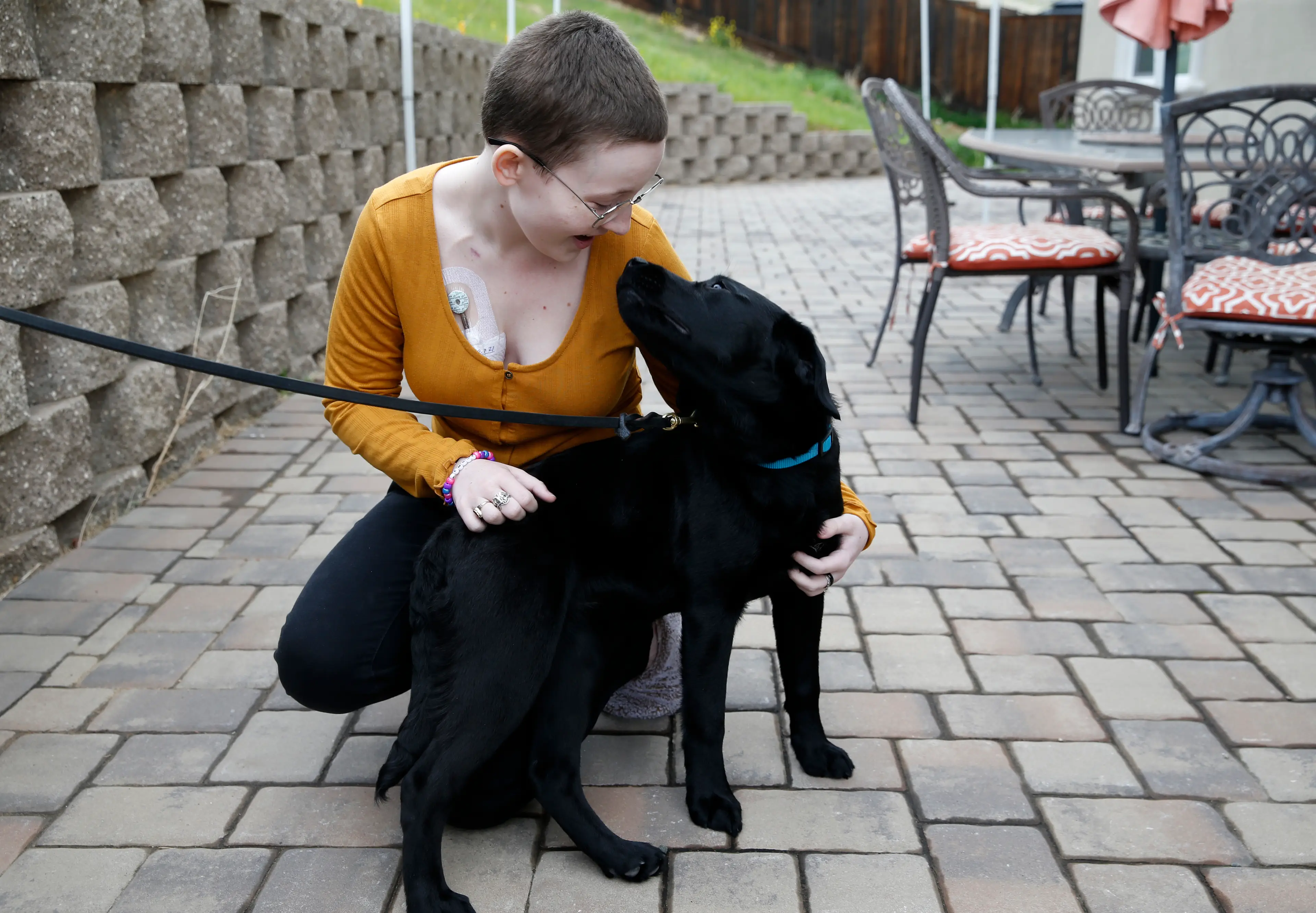
A study looked into how contact with a dog can help a cancer patient's survival rate (Jane Tyska/Digital First Media/East Bay Times via Getty Images)

To investigate further, a team of scientists analyzed clinical data from a federated global health research network and focused their attention on patients with cancer. These patients were then split into two cohorts: one would have contact with dogs, the other wouldn't.

"After propensity score matching for age and sex, a total of about 55,000 patients were included," said the study.

It added: "Analysis of the matched cohort demonstrated that dog ownership was significantly associated with reduced 5-year all-cause mortality in cancer patients compared to non-owners."

To conclude, cancer patients who had contact with a dog were associated with a 64 percent relative risk reduction in cancer mortality.

As to why that is, it's thought that it comes from 'increased physical activity, psychosocial support, and microbiome modulation' that comes with dog ownership.

If that wasn't enough to make you want to get a dog, it's also said that the animals are able to sense cancer as well – as proven by Chase Johnson and Ben Byrn's pooch Cato.
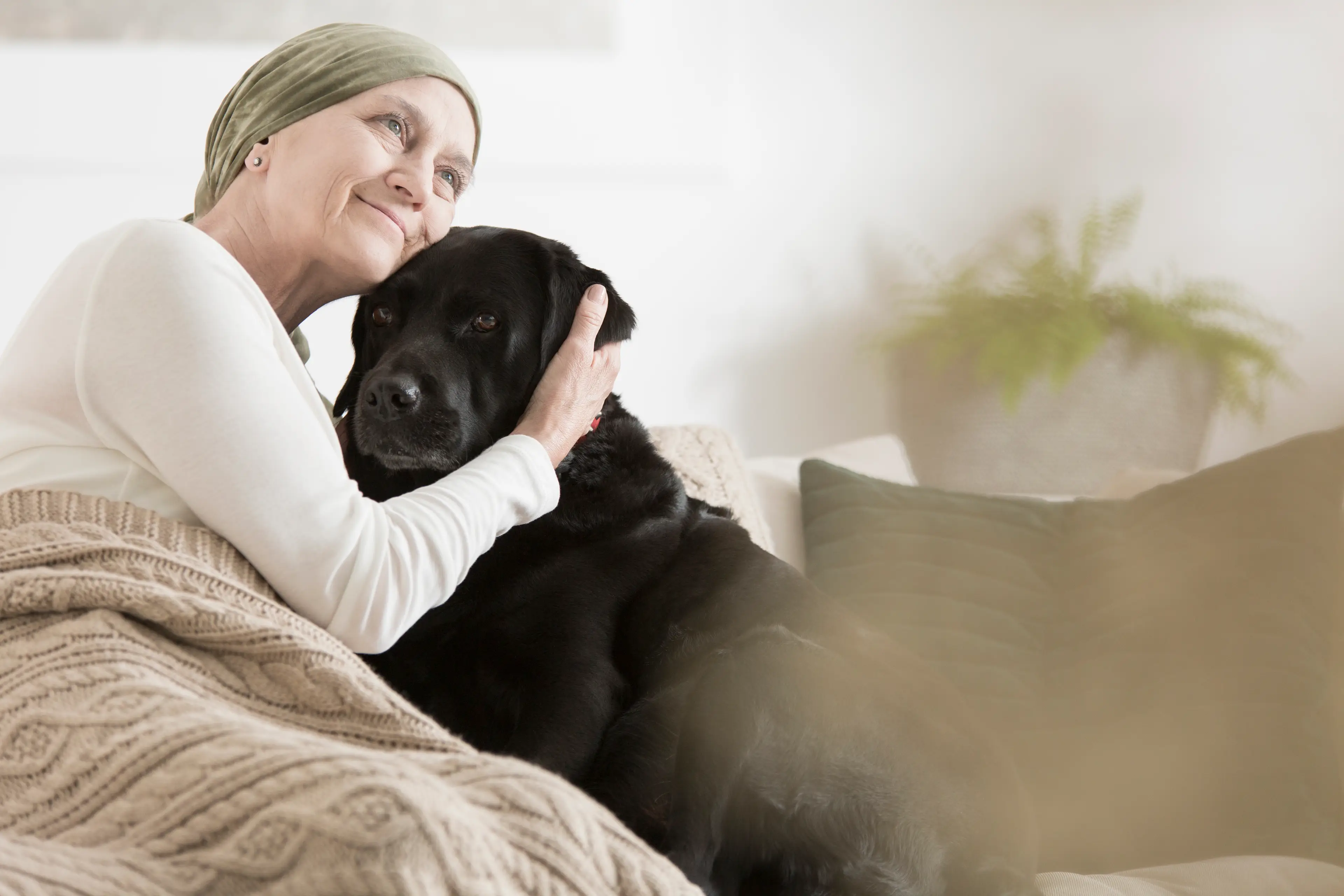
Contact with a dog is thought to reduce a person's risk of dying from cancer by 64 percent (Getty Stock)

Cato had started acting anxiously around Ben and following him around and he was later diagnosed with colon cancer.

He then started acting anxiously around Chase as well. Two weeks later, she found a lump in her breast after Cato pushed his nose against her bosom.

"We were trying to figure out what was going on, until he got so worked up one day and poked his nose to my breast," Chase recalled.

"He did it a second time, which hurt; that is when I started searching and found the lump," Chase said. "If he had not done that, I would not have found it."

She went on to be diagnosed with triple-negative breast cancer and had to undergo chemotherapy to treat it.

As of February 2026, there was no sign of Chase's cancer still being there.

She credits her beloved dog for saving her life.

If you’ve been affected by any of these issues and want to speak to someone in confidence, contact the American Cancer Society on 1-800-227-2345 or via their live chat feature, available 24/7 every day of the year.

Choose your content:

2 mins ago
5 hours ago
6 hours ago
  • Jimmy Kimmel Live / YouTube
    2 mins ago

    Jimmy Kimmel calls out Donald Trump for cracking joke about his own death

    The late night host called out the president in the latest development in the ‘expectant widow’ row.

    News
  • Getty Stock Images
    5 hours ago

    11 cancers on the rise in under 50s as scientists claim they may have explanation

    There are 11 types of cancer that are increasing among people aged 20 to 49

    News
  • Getty Stock
    5 hours ago

    DEA warns of 'weapon grade' drug that is surging through US cities killing hundreds

    The drug is said to be 10,000 times stronger than morphine

    News
  • WDSU
    6 hours ago

    Breakthrough in 40-year-old Louisiana murder case as crime podcast uncovers evidence

    The case has finally been cracked more than four decades after the Louisiana teenager was murdered

    News
  • Scientists successfully achieve 'permanent disappearance of pancreatic cancer' in new study for cure
  • Scientists reveal how colon cancer is only type of cancer where deaths are increasing for people under 50
  • Scientists develop vaccine that could wipe out world's deadliest cancer
  • Scientists discover first ever dolphin with 'thumbs' and reveal shocking reason why it could have happened