
Scientists successfully achieve 'permanent disappearance of pancreatic cancer' in new study for cure

Spanish researchers have had a clinical breakthrough in how to treat pancreatic cancer after managing to completely cure it in mice.
The scientists from the Spanish National Cancer Research Centre (CNIO) wiped out tumors and detailed how it happened in the Proceedings of the National Academy of Sciences (PNAS).
Less than 10 percent of people diagnosed with pancreatic cancer survive for more than five years after their diagnosis. It impacts 67,530 people and kills 52,740 in the US each year, per the American Institute for Cancer Research.
A study last year however might offer some more hope. It was led by Dr Mariano Barbacid, who previously played a vital role in identifying the first human oncogene, which are genetic mutations that cause cancer.
Advert
The new research focuses on the KRAS oncogene, which is mutated in 90 percent of people who have pancreatic cancer.
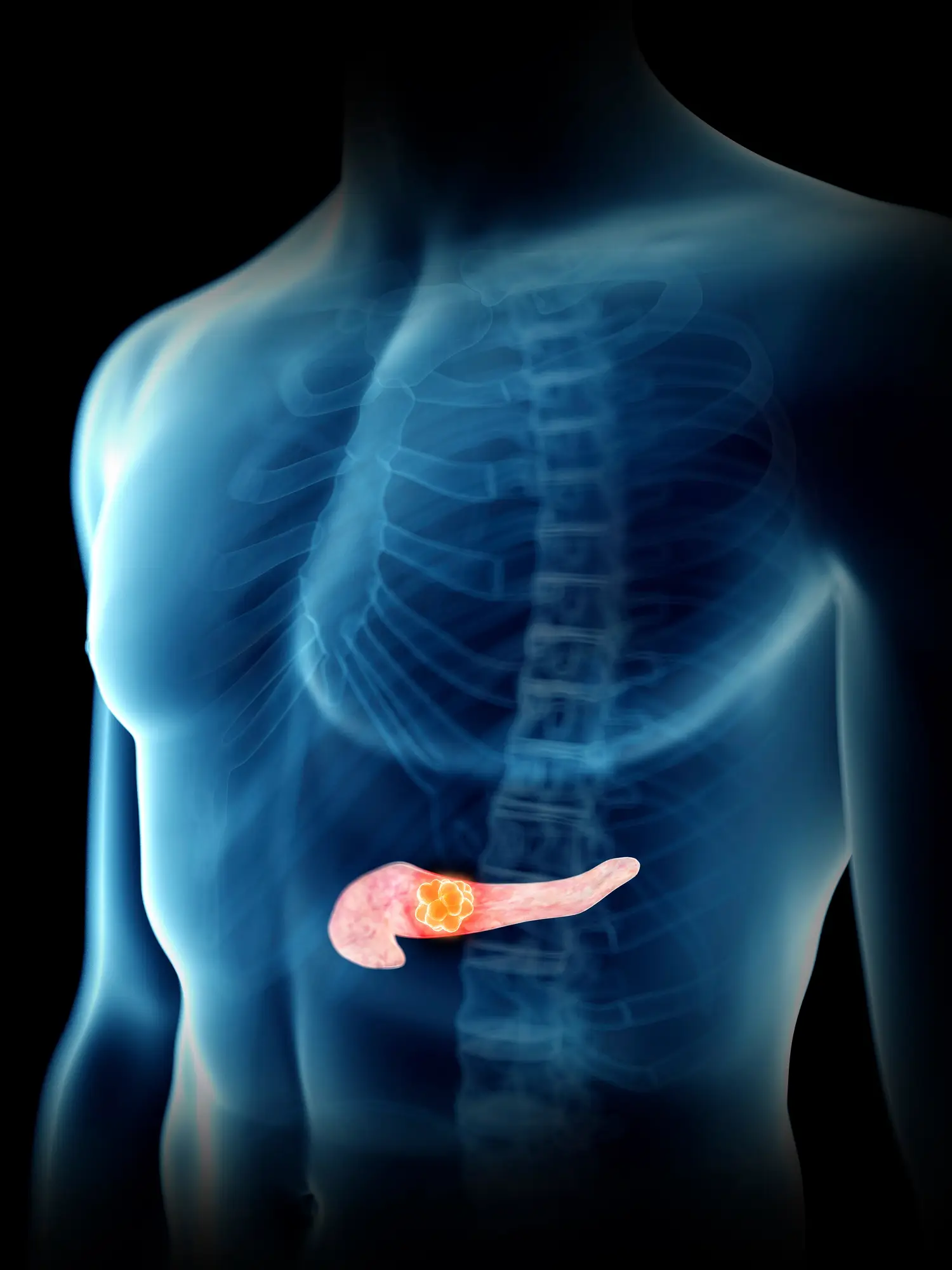
The problem with previous attempts to target the KRAS gene is that the tumor can become resistant to the therapies within a few months.
But the new approach uses a cocktail of three drugs to inhibit the gene at three different points, which means the tumor is less likely to become resistant to the treatment.
When they tested it on mice, they found it permanently eliminated pancreatic tumors without any major side effects.
The scientists wrote in the study: "These studies open a path to designing new combination therapies that can improve survival for patients with pancreatic ductal adenocarcinoma [the most common pancreatic cancer].
“These results point the way for developing new clinical trials.”
The Embassy of Spain in the UK went on to share the achievement on X yesterday (January 28), explaining how this can impact the future of medicine.
They wrote: "A team of scientists from the Spanish Cancer Research Centre, led by the renowned Dr Mariano Barbacid, has achieved the complete and permanent disappearance of pancreatic cancer in experimental models. This discovery could make a difference in the fight against this disease."
However, human trials are not yet available, with Barbacid explaining in a press release: "It is important to understand that, although experimental results like those described here have never been obtained before, we are not yet in a position to carry out clinical trials with the triple therapy."
While acknowledging that utilising this breakthrough to treat humans 'will not be easy', the authors said it 'could open the door to new therapeutic options to improve the clinical outcome of patients with pancreatic ductal adenocarcinoma in the not-too-distant future'.
That sounds like something worth celebrating.
 Britt Jones