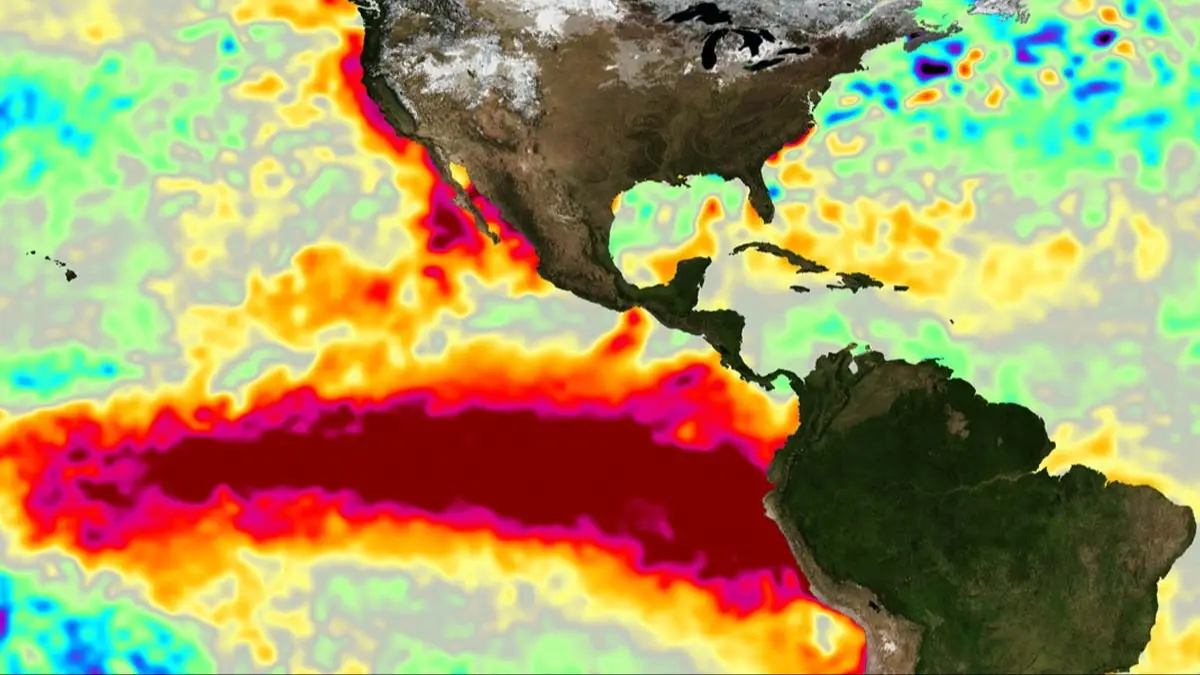
Chilling map reveals exactly where El Niño will hit the hardest as 450,000 deaths in nine months estimated

A recent report has detailed where El Niño will likely hit the hardest in the coming months after a recent report claimed as many as 450,000 people could die from heat-related deaths because of the natural weather pattern.
The report by the Climate Impact Lab stated these predicted deaths commenced this month and will carry on through to February 2027.
Michael Greenstone, a co-founder of the Climate Impact Lab and the Milton Friedman Distinguished Service Professor in Economics at the University of Chicago, said: "We have long been able to predict the impacts of temperatures on crops, and now we can predict their impact on the worst outcome—death. The result is that we now can estimate that 451,000 people may die in the coming months due to El Niño.
"This is such a large number that it can be numbing, but it is made up of parents and children, grandparents and neighbors, people going to work, caring for families, and living their lives."
Advert
He added: "This report allows decision-makers to see exactly where emergency actions can be taken now to save tens of thousands of lives in the coming months."
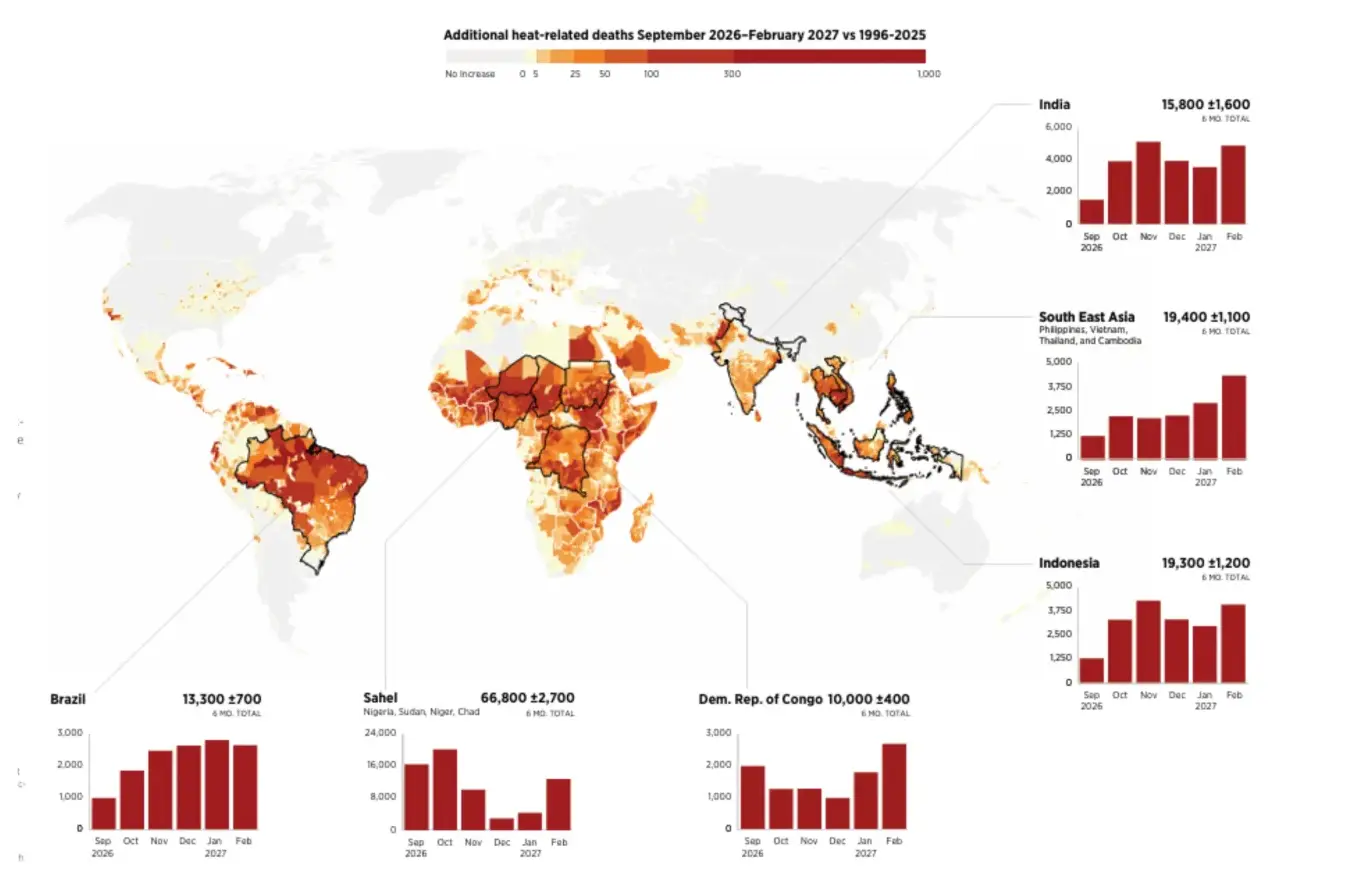
A map was released as part of the recently released report, which detailed the areas which are expected to be hit the hardest.
First of all, the Global South could well experience the most tragedy, according to experts involved in putting the report together.
66,800 deaths are forecast across the Sahel region of Africa, while Nigeria could experience a staggering 31,400 casualties alone.
Meanwhile, the predictions claim 17,500 people will die in Sudan, 10,000 in Niger and and 8,000 across Chad.
19,400 could pass away across the Philippines, Vietnam, Thailand and Cambodia, as well as 19,300 in Indonesia, according to the map.
As for the rest of the world, experts believe 13,300 could die in Brazil, while a slightly higher figure of 15,800 is expected in India.
Co-author of the report, Tamma Carleton, added in the release: "Increasing emergency response and better targeting our efforts can save many lives this year.
"But 20 years from now, once today’s extreme temperatures become the new normal, we don’t want to be in a constant state of emergency.
"We need to mobilize resources now to design, deploy, and evaluate the preparation and planning tools that will save lives in the years ahead."
What is El Niño?
The climate pattern occurs when the surface waters of the central and eastern tropical Pacific Ocean become unusually warm.
It can cause extreme weather events, from draught, to extreme rainfall and tropical storms.
Topics: Climate Change, El Niño, World News
 Callum Jones